Witch Hazel: Comedogenic Rating & Ingredient Analysis
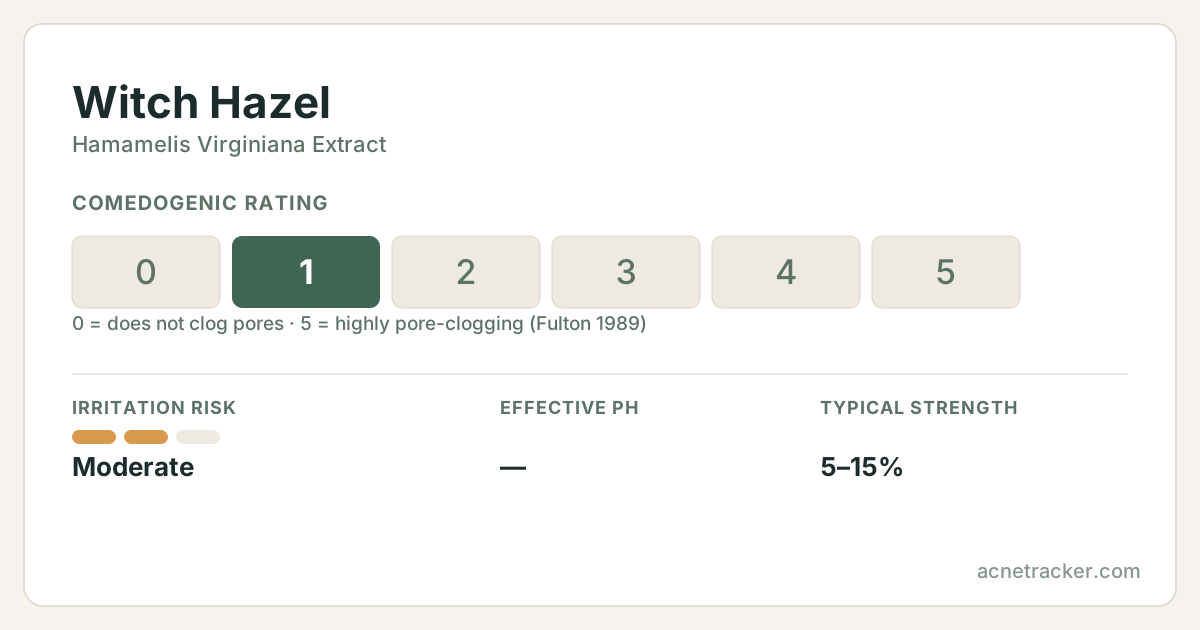
Witch hazel is a plant astringent distilled from the bark and leaves of Hamamelis virginiana, long popular in toners marketed to oily and acne-prone skin. Its appeal is the immediate tightened, mattified feeling it gives, thanks to natural tannins that constrict tissue and mop up surface oil. That same astringency is a double-edged sword: many commercial witch hazel toners are distilled with a high proportion of alcohol, which can over-dry and irritate skin, undermining the barrier and sometimes worsening the very breakouts they are meant to help. Understanding the difference between the extract and the alcohol carrier is the key to using it wisely.
Quick facts
- Comedogenic rating
- our estimate — not measured
- Irritation risk
- Moderate
- Effective pH
- —
- Typical strength
- 5–15%
- Pregnancy
- Considered safe
- Suits skin types
- oilycombinationacne-prone
Where this number comes from
No one has published a comedogenic rating for this ingredient. Fulton's 1989 table tested about 250 raw materials and this was not among them, and we found no later study measuring it. The figure shown is our own reasoning from the ingredient's chemistry and how it is used — treat it as an estimate, not a measurement.
Fulton read his own scale as 0-1 not significant, 2-3 borderline, 4-5 positive. The assay is the rabbit ear at 10% dilution, which the paper itself calls extremely sensitive and not fully predictive of human skin. Ratings describe the raw ingredient; concentration and formulation change real-world behaviour.
Caution profile
The four published fields on this page, on one 0–5 scale. Further from the centre means more care is needed — never that the ingredient is worse.
Derived, not measured: pore-clogging is the published comedogenic rating; irritation maps low/moderate/high to 1/3/5; pregnancy maps safe/caution/avoid to 0/3/5; skin-type limits is how many of the seven skin types this entry does NOT list. Every input is printed in words in the quick-facts card above.
Show the numbers
| Metric | 0–5 | Published field |
|---|---|---|
| Pore-clogging | 1 | 1/5 |
| Irritation | 3 | Moderate |
| Skin-type limits | 2.9 | 3/7 |
| Pregnancy | 0 | Considered safe |
Working pH and typical strength
Where this ingredient is formulated to sit, and at what concentration.
Both bars come from the fields above: the pH window and the typical strength range published for this ingredient. The tinted column is healthy skin's surface pH (about 4.7–5.75).
Show the numbers
| Metric | 0–5 |
|---|---|
| Typical strength | 5–15% |
What is it?
The active constituents of witch hazel are tannins and other polyphenols, which give it astringent, mildly anti-inflammatory and antioxidant properties. Applied to skin, the tannins tighten pores' appearance temporarily and reduce surface shine, while the anti-inflammatory action can calm minor redness. The complication is manufacturing: traditional distillation often yields a product preserved in 14–15% alcohol, and it is usually this alcohol, not the botanical itself, that causes dryness and stinging. Alcohol-free formulations, or those buffered with soothing ingredients, are far gentler and let you benefit from the tannins without the barrier cost.
Benefits
Reduces surface oil and shine
The tannins act as an astringent that temporarily tightens the skin and absorbs excess surface sebum, giving oily skin a fresher, less greasy feel after cleansing.
Tightens the look of pores
By constricting tissue briefly, witch hazel can make enlarged pores appear smaller for a while, a cosmetic effect that many find refreshing.
Mild anti-inflammatory action
Its polyphenols can soothe minor irritation and redness, which is why it turns up in after-shave and blemish products aimed at calming reactive areas.
Antioxidant tannin content
The same tannins provide a measure of antioxidant activity, offering some defence against free-radical stress on the skin's surface.
How to use
If you want to use witch hazel, choose an alcohol-free extract and treat it as an occasional toning step rather than a twice-daily habit, especially if your skin trends dry or sensitive. Apply on a cotton pad or with hands after cleansing, then always follow with a hydrating, barrier-supporting moisturiser. Do not layer it with strong exfoliating acids or retinoids, as stacking astringents and actives multiplies the irritation risk. If your skin feels tight, stripped or looks redder after use, it is a sign the product is too drying for you.
Side effects
The main risks are dryness, tightness, stinging and, with frequent use of high-alcohol formulas, a compromised barrier that becomes more reactive and paradoxically more breakout-prone. The tannins themselves can occasionally sensitise very reactive skin. Because the astringent tightening is temporary, over-relying on witch hazel to control oil can trap people in a cycle of stripping and rebound oiliness.
Who should avoid it
People with dry, sensitive, eczema-prone or already-irritated skin are best avoiding witch hazel, particularly alcohol-heavy versions. If your barrier is compromised, skip it until you have repaired it with gentler hydration. Those set on using it should stick to alcohol-free extracts and limit frequency to avoid over-drying.
Pairs well with
Avoid combining with
Frequently asked questions
Is witch hazel good for acne?
It can reduce surface oil and briefly calm redness, but many toners contain high alcohol that dries and irritates skin, which may worsen breakouts. If you use it, choose an alcohol-free version and moisturise afterwards.
Does witch hazel shrink pores?
It tightens tissue temporarily, making pores look smaller for a short time, but it does not permanently change pore size. The effect is cosmetic and fades as the skin relaxes.
Is witch hazel drying?
The botanical extract is mildly astringent, but the dryness people notice usually comes from the alcohol used to distil and preserve many toners. Alcohol-free formulas are far less drying.
Can I use witch hazel with other actives?
Be cautious. Layering it with exfoliating acids or retinoids stacks irritation and can damage the barrier. Keep it separate from strong actives and always follow with moisturiser.
Where this ingredient shows up here
Counted across this database, not the web — these are the pages on this site that reason about this ingredient.
Condition pages 1
Sources & further reading
Medical disclaimer
Find your personal acne triggers
Our free Acne Tracker lets you log breakouts, sleep, stress and diet, and shows you which factors correlate with your flare-ups.