Can You Mix Salicylic Acid and Tea Tree Oil?
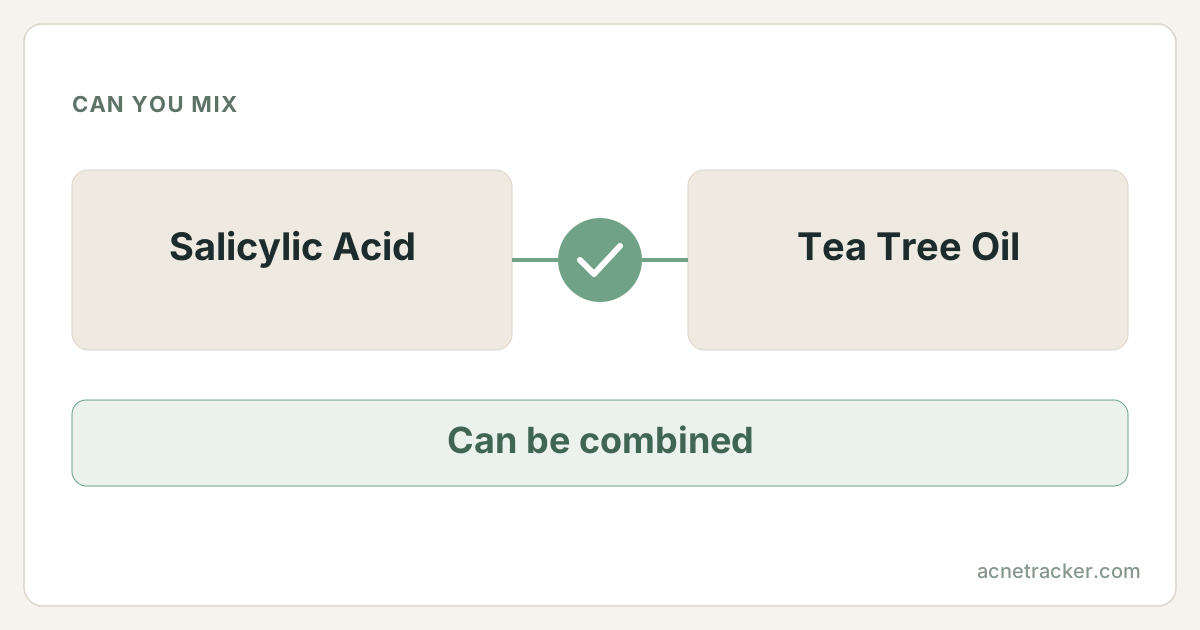
Yes, with care about dryness. Salicylic acid and tea tree oil are both anti-acne and target different problems — salicylic acid exfoliates inside the pore while tea tree oil provides antibacterial action against acne bacteria. Used sensibly they complement each other, especially as spot treatments. The main thing to manage is combined dryness and irritation, since both can be drying and tea tree oil must be properly diluted.
How this pairing resolves
The two ingredients, their published numbers, and where they land together.
The numbers beside each ingredient are its published comedogenic rating and effective pH window, taken from its own profile page.
Show the numbers
| Ingredients | Metric | 0–5 |
|---|---|---|
| Salicylic Acid | Comedogenic rating | 0/5 |
| Salicylic Acid | Effective pH | 3.0–4.0 |
| Tea Tree Oil | Comedogenic rating | 1/5 |
| Tea Tree Oil | Effective pH | no published pH |
Why
This is a two-pronged approach to breakouts. Salicylic acid is an oil-soluble beta-hydroxy acid that penetrates the pore and dissolves the sebum-and-cell plug behind blackheads and whiteheads, and it lightly exfoliates. Tea tree oil (Melaleuca alternifolia) is an essential oil whose main component, terpinen-4-ol, has demonstrated antibacterial and anti-inflammatory activity; small studies suggest diluted tea tree oil can reduce inflammatory acne, though more slowly than benzoyl peroxide. So salicylic acid clears the physical blockage and controls oil while tea tree oil works on the bacterial and inflammatory side. There is no chemical incompatibility, which is why they pair happily. The cautions are practical: tea tree oil is a potent essential oil that must be diluted, never applied neat, as it can sensitize skin and cause contact allergy in some people, and both ingredients can dry the skin, so overusing them together risks irritation. Patch testing tea tree oil first is wise.
How to combine them
Use salicylic acid across congested areas as your routine exfoliant, and reserve properly diluted tea tree oil as a targeted spot treatment on active blemishes rather than all over. On clean skin, apply salicylic acid first and let it absorb, then dab diluted tea tree oil on individual spots, then moisturize. Never apply undiluted tea tree oil; use a product that has already diluted it or blend a drop into a carrier. Because both can dry, keep frequency modest and moisturize well, with SPF 30+ each morning. Patch test the tea tree oil on your inner arm before facial use to rule out sensitivity, and stop if you develop itching or a rash.
Example routine
| When | Steps |
|---|---|
| Morning | Cleanser → Salicylic acid (optional) → Moisturizer → SPF 30+ |
| Evening | Cleanser → Salicylic acid → Diluted tea tree oil on spots → Moisturizer |
| Spot use | Diluted tea tree oil only on active blemishes |
| First time | Patch test tea tree oil before facial use |
Warning signs
Frequently asked questions
Do I need to dilute tea tree oil before using it with salicylic acid?
Yes, always. Undiluted tea tree oil can irritate and sensitize skin. Use a pre-formulated product or dilute a drop in a carrier, and apply it only to spots, not all over, especially alongside a drying acid.
Is tea tree oil as effective as benzoyl peroxide for acne?
Small studies suggest diluted tea tree oil can reduce inflammatory acne, but generally more slowly than benzoyl peroxide. It is a gentler botanical option; results vary and it is not a guaranteed cure.
Can I use tea tree oil all over my face with salicylic acid?
It is better used as a spot treatment on active blemishes rather than all over, since it is a potent essential oil. Salicylic acid can be applied more broadly on congested areas as your general exfoliant.
Can tea tree oil trigger an allergic reaction alongside salicylic acid?
Yes, tea tree oil is a known contact allergen for some people, and oxidized oil is more sensitizing. Patch test before facial use and stop immediately if you notice itching, redness or a rash.
Sources & further reading
There is no single study of this exact question. The guidance here is reasoned from the ingredient profiles below, each of which carries its own references:
- Salicylic Acid2 refs
- Tea Tree Oil2 refs
Show every reference behind this page (4)
- Salicylic acid as a peeling agent: a comprehensive review (PubMed)cited by Salicylic Acid
- FDA OTC monograph — acne drug products (salicylic acid 0.5–2%)cited by Salicylic Acid
- PubChem — Tea tree oilcited by Tea Tree Oil
- DermNet — Tea tree oilcited by Tea Tree Oil
Medical disclaimer
Ingredients mentioned on this page
Find your personal acne triggers
Our free Acne Tracker lets you log breakouts, sleep, stress and diet, and shows you which factors correlate with your flare-ups.