Borage Oil: Comedogenic Rating & Ingredient Analysis
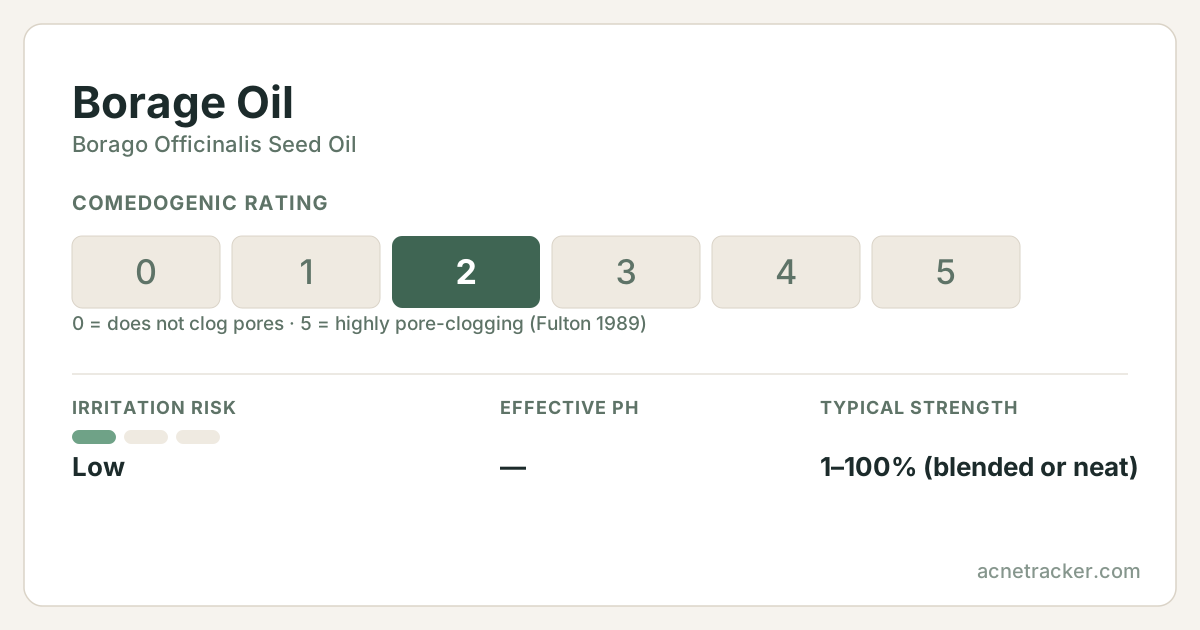
Borage oil, also sold as starflower oil, is a light seed oil pressed from the bright blue-flowered borage plant. It holds the highest natural concentration of gamma-linolenic acid (GLA) of any common plant oil — even more than evening-primrose-oil — which is the main reason it appears in facial oils and repair creams aimed at dry, sensitive and mature skin. This page covers topical use; borage is also taken as a supplement, but the barrier-comfort benefits described here refer to applying it on the skin.
Quick facts
- Comedogenic rating
- our estimate — not measured
- Irritation risk
- Low
- Effective pH
- —
- Typical strength
- 1–100% (blended or neat)
- Pregnancy
- Considered safe
- Suits skin types
- drysensitivenormalmature
Where this number comes from
No one has published a comedogenic rating for this ingredient. Fulton's 1989 table tested about 250 raw materials and this was not among them, and we found no later study measuring it. The figure shown is our own reasoning from the ingredient's chemistry and how it is used — treat it as an estimate, not a measurement.
Fulton read his own scale as 0-1 not significant, 2-3 borderline, 4-5 positive. The assay is the rabbit ear at 10% dilution, which the paper itself calls extremely sensitive and not fully predictive of human skin. Ratings describe the raw ingredient; concentration and formulation change real-world behaviour.
Caution profile
The four published fields on this page, on one 0–5 scale. Further from the centre means more care is needed — never that the ingredient is worse.
Derived, not measured: pore-clogging is the published comedogenic rating; irritation maps low/moderate/high to 1/3/5; pregnancy maps safe/caution/avoid to 0/3/5; skin-type limits is how many of the seven skin types this entry does NOT list. Every input is printed in words in the quick-facts card above.
Show the numbers
| Metric | 0–5 | Published field |
|---|---|---|
| Pore-clogging | 2 | 2/5 |
| Irritation | 1 | Low |
| Skin-type limits | 2.1 | 4/7 |
| Pregnancy | 0 | Considered safe |
Working pH and typical strength
Where this ingredient is formulated to sit, and at what concentration.
Both bars come from the fields above: the pH window and the typical strength range published for this ingredient. The tinted column is healthy skin's surface pH (about 4.7–5.75).
Show the numbers
| Metric | 0–5 |
|---|---|
| Typical strength | 1–100% (blended or neat) |
What is it?
Borage seed oil is high in linoleic acid and carries the largest GLA share of the widely used seed oils, typically around a fifth of its fatty acids. GLA is an omega-6 that the skin uses in its barrier lipids, and a linoleic-rich profile is generally more agreeable to congestion-prone skin than an oleic-rich one. The trade-off is stability: with so many polyunsaturated fats, borage oil oxidises readily and is usually blended with antioxidants and steadier oils. Its comedogenic rating is not in Fulton's tables; based on the linoleic-dominant but oxidation-prone profile we estimate it at roughly 2, low-to-moderate.
Benefits
Highest natural GLA content
Borage carries more gamma-linolenic acid than any other common seed oil, supplying a barrier lipid that dry, easily irritated skin often struggles to maintain on its own.
Calms the look of reactive skin
Its fatty-acid profile helps a tight, flaky or reddened surface feel more settled, which is why it is a staple in soothing serums for sensitive skin.
Light, non-heavy finish
Being linoleic-rich, it absorbs without the greasy weight of butters or oleic oils, so it layers comfortably under a cream or over a hydrating serum.
Restores comfort after actives
Applied after an exfoliant or retinoid has absorbed, borage adds barrier-supporting lipids that ease the dryness those actives can cause.
How to use
Use a few drops at night on cleansed, slightly damp skin, either neat on dry areas or mixed into a moisturiser. Because borage oxidises quickly, favour small bottles or blends that include vitamin E, store it cool and dark, and replace it once it smells sharp. It works well as the final barrier step after niacinamide or an exfoliating acid has settled. Patch test first if your skin is very reactive, and keep the amount thin if you are prone to congestion.
Side effects
Topical borage oil is generally well tolerated. Its high polyunsaturated content means it can go rancid faster than other oils, and oxidised oil is more likely to irritate, so freshness matters. Rare contact sensitivity is possible with any botanical oil. Very oily skin should apply it sparingly to avoid a heavy feel.
Who should avoid it
Few people need to avoid topical borage. Those with very oily or congestion-prone skin should use small amounts and observe how their skin responds. Because borage oxidises quickly, a stale bottle is a likelier source of irritation than a fresh one, so start with a well-stored oil and test it on the inner arm if GLA-rich oils are new to you. Topical use is generally considered acceptable in pregnancy, but discuss any oral borage supplement with your doctor separately, as the safety considerations differ from applying it on skin.
Pairs well with
Avoid combining with
Frequently asked questions
Is borage oil or evening primrose oil better for GLA?
Borage oil has the higher GLA concentration of the two, which is why it is often chosen when GLA is the priority. Evening-primrose-oil is a gentler, slightly more familiar alternative with a similar barrier-supporting role.
Does borage oil clog pores?
Its linoleic-rich profile is relatively pore-friendly, and we estimate its comedogenic rating at about 2. Apply it thinly if you are acne-prone and watch how congestion-prone areas respond, since tolerance varies by person.
Why does borage oil go rancid so fast?
It is very high in polyunsaturated fatty acids, which oxidise readily in air, light and warmth. Buy small quantities, store it cool and dark, choose blends with added antioxidants, and replace it if the smell turns sharp.
Can I apply borage oil in the morning?
You can, but its tendency to oxidise makes it better suited to a night step. If used in the daytime, apply a small amount under sunscreen and make sure the oil is fresh and well stored.
Sources & further reading
Medical disclaimer
Find your personal acne triggers
Our free Acne Tracker lets you log breakouts, sleep, stress and diet, and shows you which factors correlate with your flare-ups.