Calamine: Comedogenic Rating & Ingredient Analysis
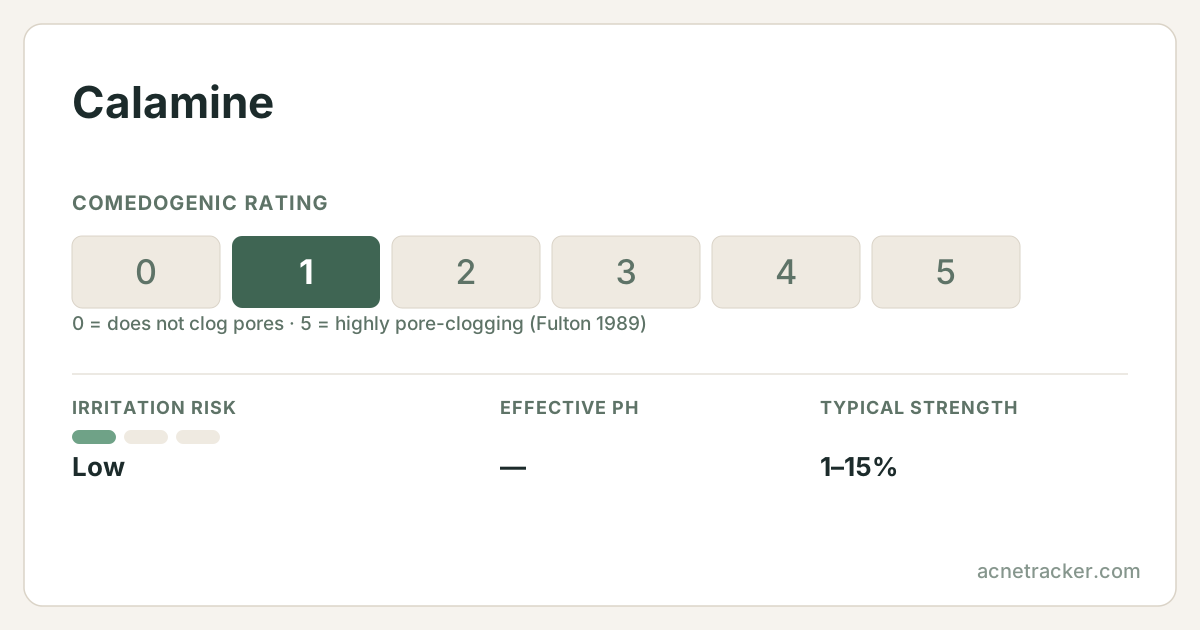
Calamine is the familiar pink lotion many people remember from childhood, used for generations to calm itchy, irritated skin. It is essentially zinc oxide with a small amount of ferric (iron) oxide, which gives it its characteristic colour. Calamine works as a mild soothing, anti-itch and protective agent, and its zinc content also helps absorb excess oil and gently dry weeping or inflamed spots. That combination has made it a popular ingredient in products for oily, blemish-prone and irritated skin, as well as a classic remedy for insect bites and minor rashes.
Quick facts
- Comedogenic rating
- our estimate — not measured
- Irritation risk
- Low
- Effective pH
- —
- Typical strength
- 1–15%
- Pregnancy
- Considered safe
- Suits skin types
- oilysensitivecombinationacne-prone
Where this number comes from
No one has published a comedogenic rating for this ingredient. Fulton's 1989 table tested about 250 raw materials and this was not among them, and we found no later study measuring it. The figure shown is our own reasoning from the ingredient's chemistry and how it is used — treat it as an estimate, not a measurement.
Fulton read his own scale as 0-1 not significant, 2-3 borderline, 4-5 positive. The assay is the rabbit ear at 10% dilution, which the paper itself calls extremely sensitive and not fully predictive of human skin. Ratings describe the raw ingredient; concentration and formulation change real-world behaviour.
Caution profile
The four published fields on this page, on one 0–5 scale. Further from the centre means more care is needed — never that the ingredient is worse.
Derived, not measured: pore-clogging is the published comedogenic rating; irritation maps low/moderate/high to 1/3/5; pregnancy maps safe/caution/avoid to 0/3/5; skin-type limits is how many of the seven skin types this entry does NOT list. Every input is printed in words in the quick-facts card above.
Show the numbers
| Metric | 0–5 | Published field |
|---|---|---|
| Pore-clogging | 1 | 1/5 |
| Irritation | 1 | Low |
| Skin-type limits | 2.1 | 4/7 |
| Pregnancy | 0 | Considered safe |
Working pH and typical strength
Where this ingredient is formulated to sit, and at what concentration.
Both bars come from the fields above: the pH window and the typical strength range published for this ingredient. The tinted column is healthy skin's surface pH (about 4.7–5.75).
Show the numbers
| Metric | 0–5 |
|---|---|
| Typical strength | 1–15% |
What is it?
Calamine is a formulated blend based on zinc oxide, with roughly half a percent of ferric oxide added for its pink tint. Zinc oxide is the active heart of it: it is mildly astringent, soothing and protective, forming a light layer on the skin that calms irritation and absorbs moisture and oil. This is why calamine can take the sting and itch out of insect bites, sunburn and rashes, and why it is used in skincare to settle inflamed, oily skin and dry out individual blemishes. It sits on the surface and is not a deep-acting treatment; its value lies in comfort, mild drying and protection rather than in changing the skin's biology.
Benefits
Soothes itch and irritation
Calamine's zinc oxide base has a long track record of calming itchy, irritated skin, insect bites and minor rashes, providing gentle relief and a protective surface layer.
Absorbs excess oil
The zinc content gives calamine a mild oil-absorbing, mattifying quality, which suits oily and blemish-prone skin and helps calm shiny, congested areas.
Dries out blemishes gently
Applied to an individual spot, calamine can help dry and settle a weeping or inflamed blemish, which is why it appears in some spot treatments and masks.
Gentle and protective
Calamine forms a mild protective layer and is generally well tolerated, making it a low-risk choice for soothing sensitive, reactive or irritated skin.
How to use
Calamine comes as a lotion, cream or mask. For soothing itch or irritation, dab or spread it on the affected area as needed and let it dry to its characteristic film. In skincare for oily or blemish-prone skin, it may be used as a spot treatment or an occasional mask; follow with moisturiser, as it can be drying with repeated use. It layers under other products once dry. Avoid getting it in the eyes, and patch test if your skin is sensitive.
Side effects
Calamine is generally very well tolerated and low in irritation potential. Its main drawback is dryness: the zinc oxide base absorbs oil and moisture, so repeated or widespread use can leave skin tight or flaky. Some formulas can feel chalky or leave a slight tint. Rarely, an individual may react to a component or added fragrance. Reduce use and moisturise if your skin feels dried out.
Who should avoid it
There is little reason to strictly avoid calamine, which is prized for being gentle and soothing. Very dry skin should use it sparingly, as its drying nature can worsen tightness. If a rash is severe, spreading or not improving, see a doctor rather than relying on calamine, which soothes symptoms rather than treating underlying conditions.
Pairs well with
Frequently asked questions
What is calamine made of?
Calamine is mostly zinc oxide with a small amount of ferric (iron) oxide, which gives it its pink colour. Zinc oxide is the soothing, mildly astringent active behind its effects.
Is calamine good for acne?
It can help oily, blemish-prone skin by absorbing excess oil and soothing inflammation, and it is used to gently dry out individual spots. It calms and settles rather than treating acne at its root.
Does calamine dry out the skin?
Yes, its zinc oxide base absorbs oil and moisture, so calamine can be drying with repeated or widespread use. Follow with moisturiser and use it more sparingly if your skin feels tight.
Can calamine soothe itching?
Yes. Calamine has a long history of relieving itch and irritation from insect bites, sunburn and minor rashes, forming a soothing, protective film as it dries on the skin.
Is calamine safe for sensitive skin?
Generally, yes. Calamine is mild, soothing and well tolerated, which is why it is used on irritated and sensitive skin, though very dry skin should apply it sparingly and moisturise.
Sources & further reading
Medical disclaimer
Find your personal acne triggers
Our free Acne Tracker lets you log breakouts, sleep, stress and diet, and shows you which factors correlate with your flare-ups.