Epsom Salt: Comedogenic Rating & Ingredient Analysis
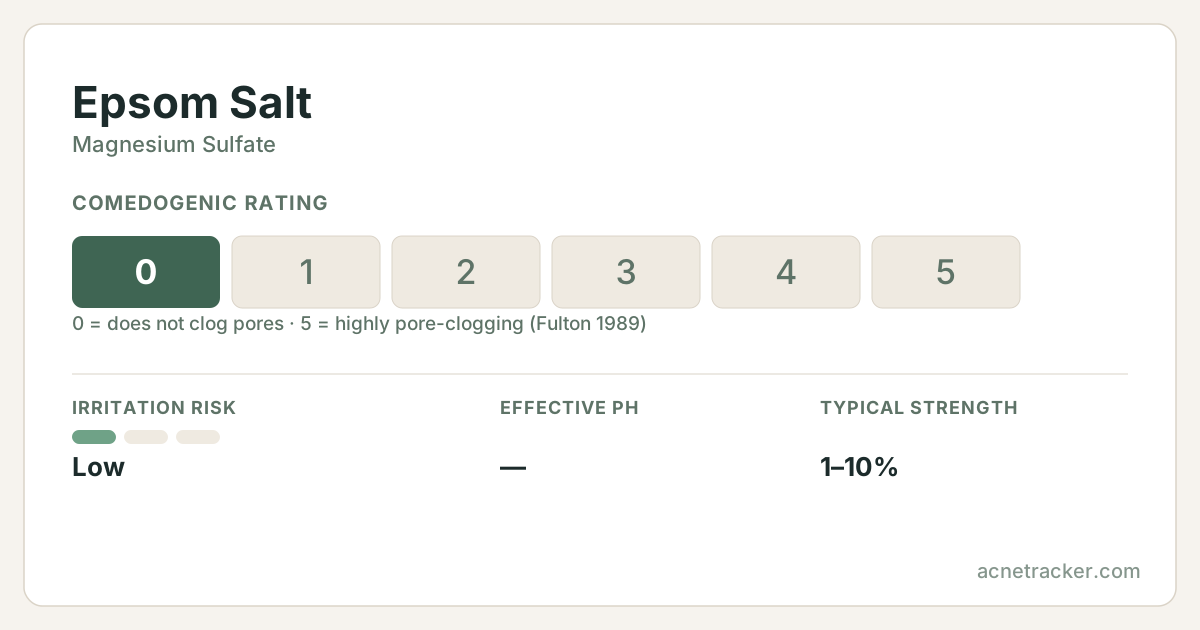
Epsom salt is the common name for magnesium sulfate, a crystalline salt best known for soothing bath soaks. It is not really a leave-on skincare active; instead it is dissolved in warm water for baths and foot soaks, prized for its relaxing feel and its magnesium and sulfate content. People use Epsom salt soaks for a sense of relief in tired skin and muscles, and it occasionally appears in scrubs and bath products. Its popularity outpaces the hard evidence, so it is best appreciated as a pleasant, low-risk ritual rather than a proven treatment.
Quick facts
- Comedogenic rating
- our estimate — not measured
- Irritation risk
- Low
- Effective pH
- —
- Typical strength
- 1–10%
- Pregnancy
- Considered safe
- Suits skin types
- oilycombinationnormal
Where this number comes from
No one has published a comedogenic rating for this ingredient. Fulton's 1989 table tested about 250 raw materials and this was not among them, and we found no later study measuring it. The figure shown is our own reasoning from the ingredient's chemistry and how it is used — treat it as an estimate, not a measurement.
Fulton read his own scale as 0-1 not significant, 2-3 borderline, 4-5 positive. The assay is the rabbit ear at 10% dilution, which the paper itself calls extremely sensitive and not fully predictive of human skin. Ratings describe the raw ingredient; concentration and formulation change real-world behaviour.
Caution profile
The four published fields on this page, on one 0–5 scale. Further from the centre means more care is needed — never that the ingredient is worse.
Derived, not measured: pore-clogging is the published comedogenic rating; irritation maps low/moderate/high to 1/3/5; pregnancy maps safe/caution/avoid to 0/3/5; skin-type limits is how many of the seven skin types this entry does NOT list. Every input is printed in words in the quick-facts card above.
Show the numbers
| Metric | 0–5 | Published field |
|---|---|---|
| Pore-clogging | 0 | 0/5 |
| Irritation | 1 | Low |
| Skin-type limits | 2.9 | 3/7 |
| Pregnancy | 0 | Considered safe |
Working pH and typical strength
Where this ingredient is formulated to sit, and at what concentration.
Both bars come from the fields above: the pH window and the typical strength range published for this ingredient. The tinted column is healthy skin's surface pH (about 4.7–5.75).
Show the numbers
| Metric | 0–5 |
|---|---|
| Typical strength | 1–10% |
What is it?
Magnesium sulfate is a simple salt of magnesium and sulfate that dissolves readily in water. Dissolved in a bath, it creates a mineral-rich soak, and studies on magnesium-rich salt solutions such as those from the Dead Sea have reported improvements in hydration and reductions in roughness and redness in certain skin conditions. How much magnesium is absorbed through intact skin during a normal soak is debated and probably modest, so much of Epsom salt's appeal is the comfort and relaxation of a warm mineral bath. As a coarse salt it can also be used, cautiously, as a physical scrub, though gentler exfoliation is usually preferable on the face.
Benefits
Relaxing mineral soak
Dissolved in a warm bath, Epsom salt provides a soothing, relaxing soak that many people find comforting for tired skin and muscles, delivering magnesium and sulfate to the water.
May soften rough skin
Warm mineral soaks can help soften rough, dry areas of body skin, making Epsom salt baths a gentle part of a body-care routine when followed by moisturiser.
Potential soothing effect
Research on magnesium-rich salt solutions has reported reductions in redness and roughness in some conditions, which is often cited in support of soothing soaks.
Simple and low-risk
As a plain, inexpensive salt, Epsom salt is easy to use and generally low in irritation risk when dissolved in water for a soak rather than scrubbed on the skin.
How to use
Epsom salt is mainly used dissolved in warm bath or foot-soak water, following the packet's guidance on quantity. Soak for the suggested time, rinse, and moisturise afterwards, since baths can be drying. If you use it as a body scrub, keep it gentle and avoid the face and any broken or freshly shaved skin. Do not treat Epsom salt as an intensive skincare active; it is a supportive, comforting ritual rather than a targeted treatment.
Side effects
Epsom salt soaks are generally low risk, but warm, salty water can be drying, so skin may feel tight afterwards without moisturiser. Used as a scrub, coarse magnesium sulfate is abrasive and can irritate or cause micro-tears, especially on delicate skin. It can sting on broken or shaved skin. People with certain medical conditions should check with a doctor before regular hot soaks.
Who should avoid it
Very dry or eczema-prone skin should be cautious, as salty soaks can worsen dryness. Avoid using Epsom salt as a scrub on the face or on broken, sunburned or freshly shaved skin. Anyone with cardiovascular or other medical conditions that make hot baths inadvisable should seek medical advice before regular soaking.
Pairs well with
Avoid combining with
Frequently asked questions
What is Epsom salt?
It is the common name for magnesium sulfate, a crystalline salt dissolved in warm water for relaxing baths and foot soaks. It is used more as a soak than as a leave-on skincare ingredient.
Does the skin absorb magnesium from Epsom salt baths?
This is debated. Some magnesium may be absorbed through the skin, but the amount during a normal soak is probably modest, so much of the benefit is the comfort and relaxation of a warm mineral bath.
Is Epsom salt good for acne?
There is little strong evidence that Epsom salt treats acne. A soak may make skin feel cleaner and softer, but it is not a targeted acne treatment and should not replace proven actives.
Can I use Epsom salt as a face scrub?
It is better avoided on the face, where coarse salt can cause micro-tears and irritation. Gentler chemical or fine physical exfoliants are more suitable for facial skin.
Does an Epsom salt bath dry the skin?
It can, because warm salty water is drying. Rinse and apply moisturiser after soaking, and avoid frequent long soaks if your skin is already dry or sensitive.
Sources & further reading
Medical disclaimer
Find your personal acne triggers
Our free Acne Tracker lets you log breakouts, sleep, stress and diet, and shows you which factors correlate with your flare-ups.