Sesame Oil: Comedogenic Rating & Ingredient Analysis
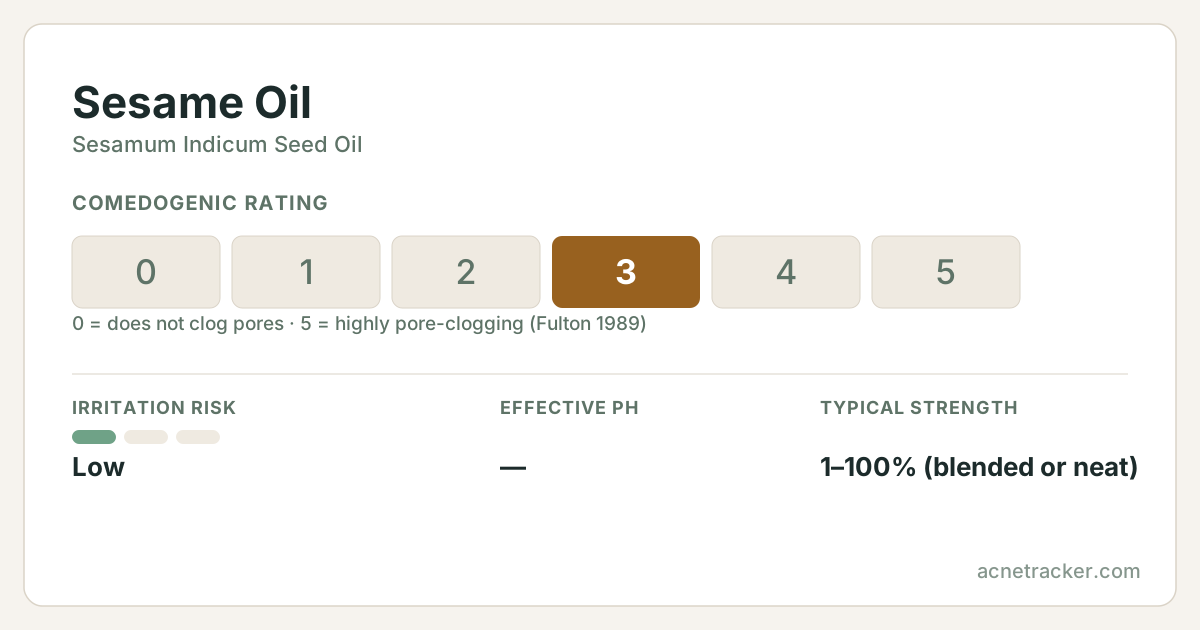
Sesame oil is a warm golden oil pressed from sesame seeds, with a long history in Ayurvedic skincare and massage, where it is a classic base for body oils. It carries a balanced set of fatty acids and distinctive antioxidant compounds, and it has a characteristic nutty aroma. For skincare, choose the pale cold-pressed oil rather than the dark toasted type used in cooking. It suits dry, normal and mature skin, offering rich emollient comfort, though its moderate comedogenic rating means oily and acne-prone skin should use it with some care.
Quick facts
- Comedogenic rating
- measured (Fulton 1989)
- Irritation risk
- Low
- Effective pH
- —
- Typical strength
- 1–100% (blended or neat)
- Pregnancy
- Considered safe
- Suits skin types
- drynormalmature
Where this number comes from
Read directly from Table I of Fulton's 1989 paper — the primary source, not one of the copied tables that circulate online.
Fulton read his own scale as 0-1 not significant, 2-3 borderline, 4-5 positive. The assay is the rabbit ear at 10% dilution, which the paper itself calls extremely sensitive and not fully predictive of human skin. Ratings describe the raw ingredient; concentration and formulation change real-world behaviour.
Caution profile
The four published fields on this page, on one 0–5 scale. Further from the centre means more care is needed — never that the ingredient is worse.
Derived, not measured: pore-clogging is the published comedogenic rating; irritation maps low/moderate/high to 1/3/5; pregnancy maps safe/caution/avoid to 0/3/5; skin-type limits is how many of the seven skin types this entry does NOT list. Every input is printed in words in the quick-facts card above.
Show the numbers
| Metric | 0–5 | Published field |
|---|---|---|
| Pore-clogging | 3 | 3/5 |
| Irritation | 1 | Low |
| Skin-type limits | 2.9 | 3/7 |
| Pregnancy | 0 | Considered safe |
Working pH and typical strength
Where this ingredient is formulated to sit, and at what concentration.
Both bars come from the fields above: the pH window and the typical strength range published for this ingredient. The tinted column is healthy skin's surface pH (about 4.7–5.75).
Show the numbers
| Metric | 0–5 |
|---|---|
| Typical strength | 1–100% (blended or neat) |
What is it?
Sesame oil has a fairly even balance of oleic and linoleic acids, giving it a medium feel, along with reasonable natural stability thanks to unusual antioxidant compounds called sesamol and sesamolin. These lignans, plus vitamin E, help it resist oxidation better than many polyunsaturated oils. In Fulton-style comedogenicity testing, sesame oil is generally placed in the low-to-moderate range, and we assign it a comedogenic rating of around 3. It is inexpensive, widely available and a traditional favourite for full-body massage, where its warming, grounding character is valued.
Benefits
Traditional massage and body oil
Sesame oil is a classic Ayurvedic base for massage, valued for its warming, grounding feel and its ability to spread smoothly across the skin.
Naturally antioxidant-stabilised
Its unusual lignans, sesamol and sesamolin, plus vitamin E, give it better oxidative stability than many seed oils and a genuine antioxidant character.
Balanced, comforting feel
Its even oleic-linoleic profile provides a medium, comforting emollience that eases the tightness and roughness of dry and mature skin.
Affordable and versatile
Widely available and inexpensive, cold-pressed sesame oil works as a facial oil, body oil and massage base, making it a practical everyday choice.
How to use
For skincare, use the pale cold-pressed oil, not the dark toasted culinary type. Apply a few drops to cleansed, slightly damp skin at night, either neat on dry areas or blended into a moisturiser or another oil like jojoba-oil, and enjoy it as a warming body and massage oil. Combination skin should focus it on drier zones, and oily or acne-prone skin should keep the amount modest given its moderate comedogenic rating. Its lignans give it decent stability, but still store it cool and dark and patch test reactive skin first.
Side effects
Sesame oil is gentle for most people. Its moderate richness means very oily or acne-prone skin may find it contributes to congestion if overused on the face. Sesame is a recognised food allergen, so people with sesame allergies should be cautious with topical use too. As with any oil, occasional individual sensitivity is possible, so patch test reactive skin.
Who should avoid it
People with a sesame allergy should be cautious and may need to avoid topical use. At a rating of around 3, sesame is a better body and massage oil than a facial one for oily, breakout-prone skin, which is closer to how it has traditionally been used anyway. Otherwise it is broadly usable. Sesame is a traditional full-body massage oil precisely because it is so undramatic, and using it on skin while pregnant is regarded as fine; ask your doctor about any particular product.
Pairs well with
Avoid combining with
Frequently asked questions
Should I use toasted or cold-pressed sesame oil on skin?
Use the pale, cold-pressed oil for skincare. The dark, toasted sesame oil used in cooking has a strong aroma and is processed for flavour, so it is less suitable for the skin than the light cold-pressed type.
Does sesame oil clog pores?
Its comedogenic rating is around 3, a moderate risk. Dry and mature skin usually tolerate it well, but oily and acne-prone skin should use it in moderation on the face or choose a lighter oil like grapeseed-oil.
Is sesame oil safe for people with sesame allergy?
Sesame is a recognised allergen, so people with a sesame allergy should be cautious with topical use and may need to avoid it. If you have a sesame allergy, patch test carefully or check with a doctor first.
Why is sesame oil used in Ayurvedic massage?
It has a long tradition as a warming, grounding base oil that spreads smoothly and absorbs at a comfortable pace, and its natural antioxidant lignans give it good stability for a massage oil.
Sources & further reading
- Anti-Inflammatory and Skin Barrier Repair Effects of Topical Application of Some Plant Oils (Int. J. Molecular Sciences, 2017)
- Fulton JE. Comedogenicity and irritancy of commonly used ingredients in skin care products. J Soc Cosmet Chem 40:321–333 (1989) — Table I, pp. 324–326 (not indexed in PubMed; rates Sesamum Indicum (Sesame) Seed Oil at 3)
Medical disclaimer
Find your personal acne triggers
Our free Acne Tracker lets you log breakouts, sleep, stress and diet, and shows you which factors correlate with your flare-ups.