Carrot Seed Oil: Comedogenic Rating & Ingredient Analysis
Carrot seed oil is a confusing name, because two very different products share it. The first is a concentrated essential oil steam-distilled from the seeds of wild carrot, a potent aromatic that must be heavily diluted. The second is a macerated or infused carrot oil, made by steeping carrot root in a carrier oil, which is milder and orange-tinted from carotenoids. This page treats the seed-derived material as a specialty ingredient used in small, diluted amounts in facial oils and balms for dry and mature skin, valued for its antioxidant character rather than as a bulk moisturiser.
Quick facts
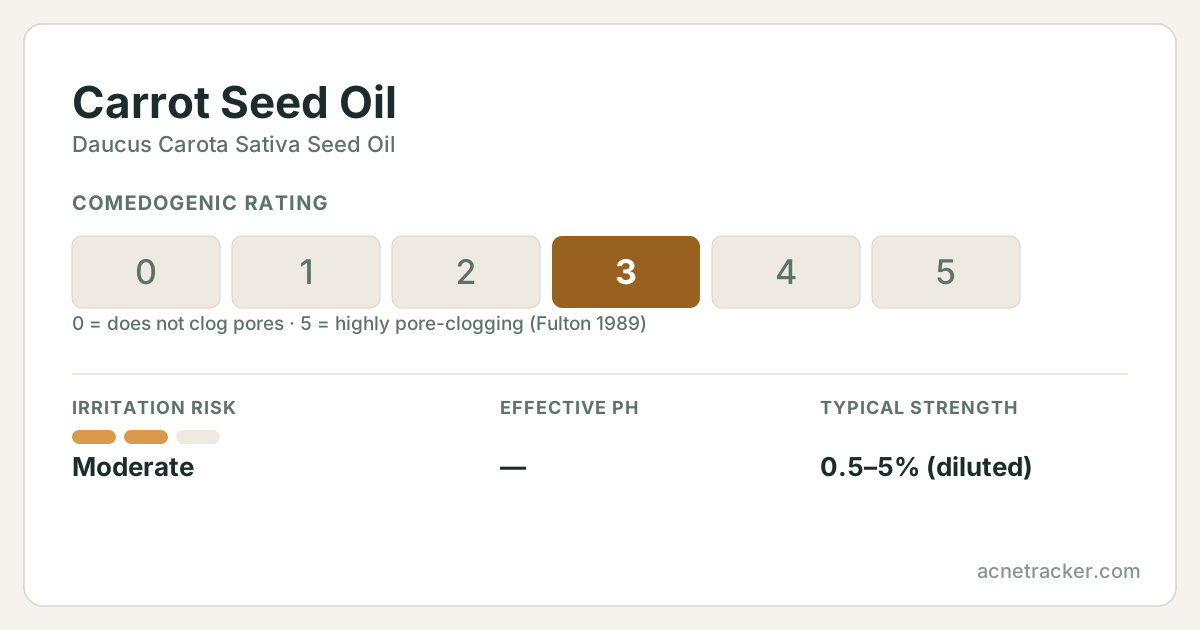
- Comedogenic rating
- our estimate — not measured
- Irritation risk
- Moderate
- Effective pH
- —
- Typical strength
- 0.5–5% (diluted)
- Pregnancy
- Ask your doctor
- Suits skin types
- drynormalmature
Where this number comes from
No one has published a comedogenic rating for this ingredient. Fulton's 1989 table tested about 250 raw materials and this was not among them, and we found no later study measuring it. The figure shown is our own reasoning from the ingredient's chemistry and how it is used — treat it as an estimate, not a measurement.
Fulton read his own scale as 0-1 not significant, 2-3 borderline, 4-5 positive. The assay is the rabbit ear at 10% dilution, which the paper itself calls extremely sensitive and not fully predictive of human skin. Ratings describe the raw ingredient; concentration and formulation change real-world behaviour.
Caution profile
The four published fields on this page, on one 0–5 scale. Further from the centre means more care is needed — never that the ingredient is worse.
Derived, not measured: pore-clogging is the published comedogenic rating; irritation maps low/moderate/high to 1/3/5; pregnancy maps safe/caution/avoid to 0/3/5; skin-type limits is how many of the seven skin types this entry does NOT list. Every input is printed in words in the quick-facts card above.
Show the numbers
| Metric | 0–5 | Published field |
|---|---|---|
| Pore-clogging | 3 | 3/5 |
| Irritation | 3 | Moderate |
| Skin-type limits | 2.9 | 3/7 |
| Pregnancy | 3 | Ask your doctor |
Working pH and typical strength
Where this ingredient is formulated to sit, and at what concentration.
Both bars come from the fields above: the pH window and the typical strength range published for this ingredient. The tinted column is healthy skin's surface pH (about 4.7–5.75).
Show the numbers
| Metric | 0–5 |
|---|---|
| Typical strength | 0.5–5% (diluted) |
What is it?
The essential oil form is rich in aromatic compounds such as carotol and is highly concentrated, so it belongs in a formula at a fraction of a percent, never neat on skin. The fixed seed oil and macerated versions carry fatty acids plus carotenoids and vitamin E, giving them antioxidant character and, in the macerated case, a warm colour. Because the material is often oleic-leaning or used in oleic carriers, and because the essential-oil version is potent, we treat it cautiously and estimate a comedogenic rating of around 3 for the fixed-oil forms, moderate. Always check which type a product actually contains.
Benefits
Antioxidant plant compounds
Carrot seed material carries carotenoids and vitamin E that give it antioxidant character, helping protect and condition the skin surface in small, diluted amounts.
Conditions dry, mature skin
Blended into a carrier, its lipids and antioxidants ease the tightness and dullness of dry, mature skin, which is why it appears in richer facial oils.
Warm natural tint (macerated form)
The infused carrot oil lends a subtle warm colour from its carotenoids, sometimes used to give balms and oils a natural golden look.
A little goes a long way
Because it is potent and used at low percentages, a small amount contributes its aromatic and antioxidant character to a blend without dominating it.
How to use
Always use carrot seed oil diluted. If you have the essential oil, it must be blended into a carrier such as jojoba-oil at well under one percent and patch tested; never apply it neat. The fixed or macerated seed oil is milder but is still best used in a blend at a modest percentage. Apply at night to dry areas, keep it away from the eyes, and patch test for several days first. Confirm which type you have, since the essential oil and the carrier oil call for very different amounts.
Side effects
The essential oil form is potent and can irritate or sensitise if used too strong, which is the main safety concern; heavy dilution and patch testing are essential. The macerated oil is gentler but can still occasionally cause sensitivity. As a carotenoid-containing oil it may leave a faint tint. Store it cool and dark and replace it if it smells off.
Who should avoid it
People with sensitive or reactive skin should be cautious, especially with the essential oil form. During pregnancy and breastfeeding, concentrated essential oils are best avoided as a precaution, so treat carrot seed oil as caution and ask a doctor. Keep it away from the eye area, and do not use the essential oil neat on skin under any circumstances.
Pairs well with
Avoid combining with
Frequently asked questions
What is the difference between carrot seed essential oil and carrot oil?
The essential oil is a concentrated, steam-distilled aromatic that must be heavily diluted, while macerated carrot oil is carrot root infused in a carrier oil and is much milder. Always check which one a product contains, as they are used very differently.
Can I put carrot seed oil directly on my skin?
The essential oil, no, never neat; it must be diluted well below one percent in a carrier. The milder fixed or macerated oil is best used in a blend at a modest percentage and patch tested first.
Does carrot seed oil provide sun protection?
No. Despite occasional online claims, carrot seed oil does not offer reliable SPF and must not replace a proper broad-spectrum sunscreen. Its value is as an antioxidant conditioning ingredient, not a UV filter.
Is carrot seed oil safe during pregnancy?
Treat it as caution, especially the essential oil form. Concentrated essential oils are generally avoided in pregnancy as a precaution, so check with your doctor before using any carrot seed oil product during this period.
Sources & further reading
Medical disclaimer
Find your personal acne triggers
Our free Acne Tracker lets you log breakouts, sleep, stress and diet, and shows you which factors correlate with your flare-ups.