Moringa Oil: Comedogenic Rating & Ingredient Analysis
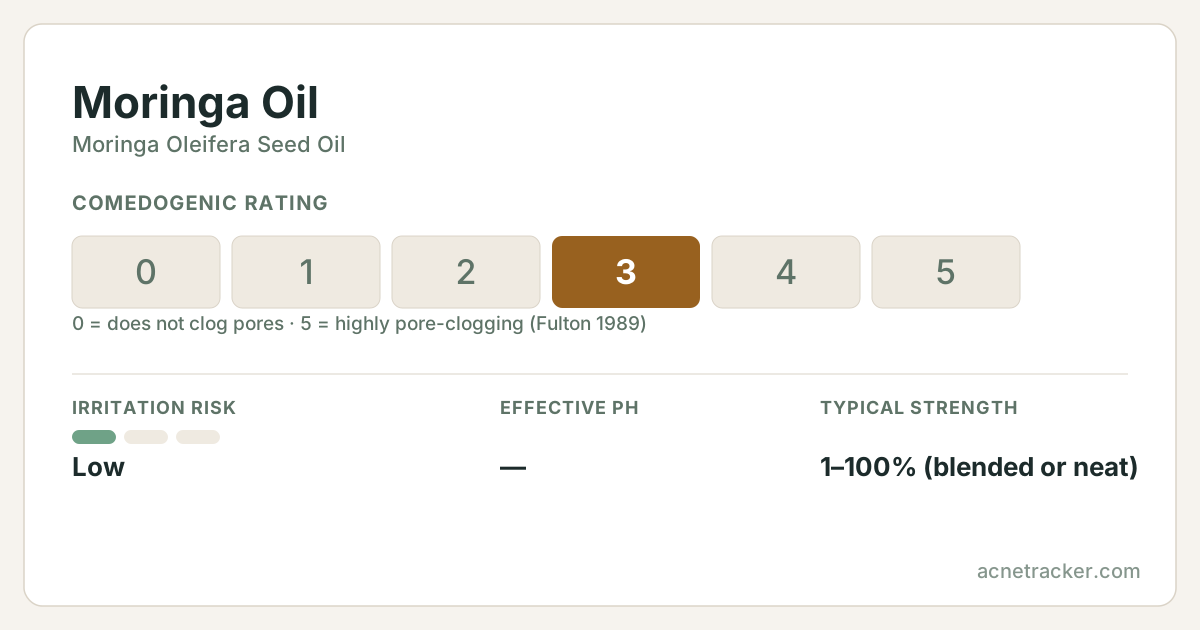
Moringa oil, historically called ben or behen oil, is pressed from the seeds of the fast-growing moringa tree. It has been used since antiquity, prized because it is unusually stable and slow to go rancid compared with most plant oils. In modern skincare it appears in facial oils, balms and hair products as a rich, nourishing oil best suited to dry, normal and mature skin. Its stability and mild scent make it easy to work with, but its richness means oily and congestion-prone skin should approach it with more care.
Quick facts
- Comedogenic rating
- our estimate — not measured
- Irritation risk
- Low
- Effective pH
- —
- Typical strength
- 1–100% (blended or neat)
- Pregnancy
- Considered safe
- Suits skin types
- drynormalmature
Where this number comes from
No one has published a comedogenic rating for this ingredient. Fulton's 1989 table tested about 250 raw materials and this was not among them, and we found no later study measuring it. The figure shown is our own reasoning from the ingredient's chemistry and how it is used — treat it as an estimate, not a measurement.
Fulton read his own scale as 0-1 not significant, 2-3 borderline, 4-5 positive. The assay is the rabbit ear at 10% dilution, which the paper itself calls extremely sensitive and not fully predictive of human skin. Ratings describe the raw ingredient; concentration and formulation change real-world behaviour.
Caution profile
The four published fields on this page, on one 0–5 scale. Further from the centre means more care is needed — never that the ingredient is worse.
Derived, not measured: pore-clogging is the published comedogenic rating; irritation maps low/moderate/high to 1/3/5; pregnancy maps safe/caution/avoid to 0/3/5; skin-type limits is how many of the seven skin types this entry does NOT list. Every input is printed in words in the quick-facts card above.
Show the numbers
| Metric | 0–5 | Published field |
|---|---|---|
| Pore-clogging | 3 | 3/5 |
| Irritation | 1 | Low |
| Skin-type limits | 2.9 | 3/7 |
| Pregnancy | 0 | Considered safe |
Working pH and typical strength
Where this ingredient is formulated to sit, and at what concentration.
Both bars come from the fields above: the pH window and the typical strength range published for this ingredient. The tinted column is healthy skin's surface pH (about 4.7–5.75).
Show the numbers
| Metric | 0–5 |
|---|---|
| Typical strength | 1–100% (blended or neat) |
What is it?
Moringa oil is dominated by oleic acid, typically making up around two-thirds or more of its fatty acids, which gives it a rich, cushioning feel and its excellent resistance to oxidation. That high oleic content is a double-edged sword: it makes the oil stable and comforting on dry skin, but oleic-heavy oils are generally more likely to feel heavy and to contribute to congestion on oily skin. It also contains behenic acid, an unusual long-chain fatty acid that adds to its stability. Its comedogenic rating is not in Fulton's tables; based on the high oleic profile we estimate it at around 3, moderate.
Benefits
Exceptionally stable and long-lasting
Moringa resists oxidation far better than delicate seed oils, so it keeps well and does not turn rancid quickly, making it a reliable base for balms and blends.
Rich comfort for dry skin
Its high oleic content forms a soft, cushioning layer that reduces water loss, easing tightness and flakiness on dry, mature or weather-stressed skin.
Antioxidant support
It carries tocopherols and other antioxidant compounds that help protect the skin surface from everyday oxidative stress while conditioning it.
Mild scent, easy to use
Unlike pungent oils such as neem or black cumin, moringa has a soft, unobtrusive smell, so it blends easily into oils and creams for everyday use.
How to use
Apply a few drops to cleansed, slightly damp skin at night, either neat on dry areas or blended into a moisturiser or a lighter oil like rosehip-oil. Its stability means it stores well, but keep it cool and dark all the same. On dry or mature skin it works as a nourishing final step; on combination skin, restrict it to the drier zones. Because of its richness, oily and acne-prone users should either skip it or use only a small amount on dry patches, and patch test first if your skin is reactive.
Side effects
Moringa oil is generally gentle and low-irritation. The main caveat is its richness: on oily or congestion-prone skin, an oleic-heavy oil like this can feel heavy and may contribute to clogged pores. True allergic reactions are uncommon, but as with any oil a patch test is sensible for reactive skin.
Who should avoid it
Oily and acne-prone skin should be cautious, as the high oleic content raises the pore-clogging risk; a lighter, linoleic-rich oil like hemp-seed-oil is usually a better fit for those skin types. Otherwise there are few restrictions. Topical moringa oil is generally regarded as fine to use in pregnancy, but confirm with your doctor if you are unsure about a particular product.
Pairs well with
Avoid combining with
Frequently asked questions
Is moringa oil good for oily skin?
Not especially. Its high oleic content makes it rich and gives an estimated comedogenic rating of about 3, so oily and acne-prone skin may find it heavy. A linoleic-rich oil like hemp-seed-oil is a better match for those skin types.
Why is moringa oil so stable?
Its high proportion of oleic and behenic acids, and low share of fragile polyunsaturated fats, make it resistant to oxidation. That is why it keeps well and why it was historically valued as a base oil for perfumes and balms.
What is ben oil?
Ben oil, or behen oil, is simply another name for moringa seed oil. The name comes from behenic acid, one of its characteristic fatty acids, which contributes to the oil's long shelf life and stability.
How do I use moringa oil for dry skin?
Press a few drops into cleansed, slightly damp skin at night as your final step, or mix it into your night cream. On combination skin, keep it to the drier areas rather than applying it across the whole face.
Sources & further reading
Medical disclaimer
Find your personal acne triggers
Our free Acne Tracker lets you log breakouts, sleep, stress and diet, and shows you which factors correlate with your flare-ups.