Soybean Oil: Comedogenic Rating & Ingredient Analysis
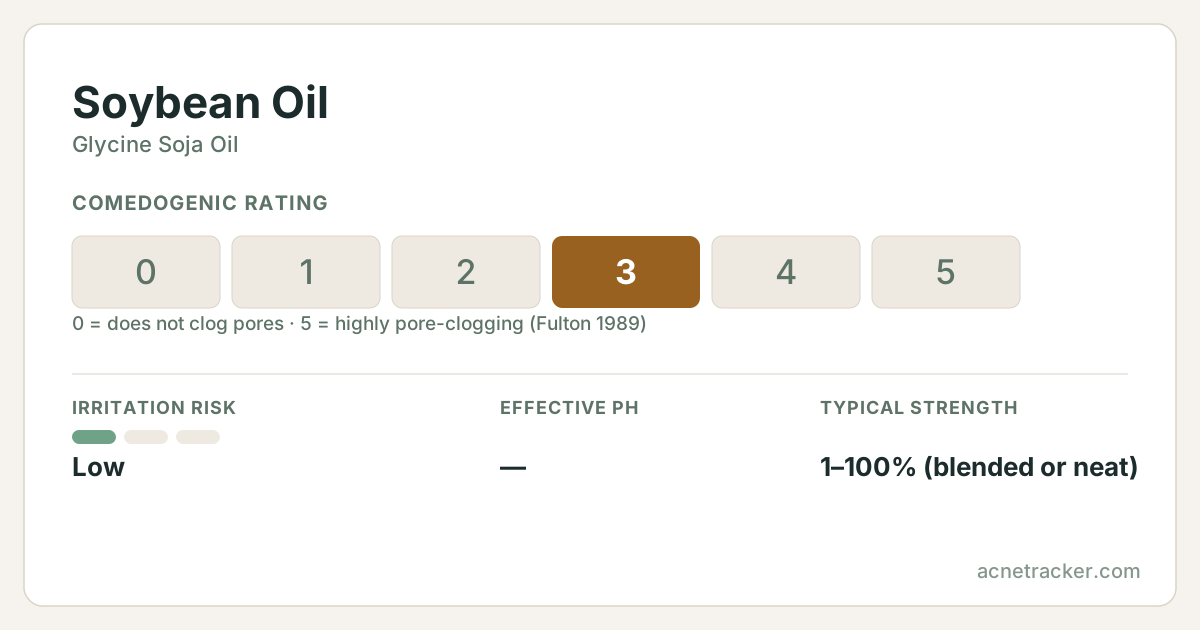
Soybean oil is one of the most common vegetable oils in the world, and it appears frequently in skincare as an affordable, effective emollient. Pressed from soybeans, it is high in linoleic acid and carries useful antioxidants including vitamin E and plant sterols. It is a workhorse ingredient found in cleansers, moisturisers and body products rather than a glamorous specialty oil. It suits dry, normal and combination skin, though older comedogenicity testing placed it in the moderate range, so oily and acne-prone skin should use it with some awareness.
Quick facts
- Comedogenic rating
- measured (Fulton 1989)
- Irritation risk
- Low
- Effective pH
- —
- Typical strength
- 1–100% (blended or neat)
- Pregnancy
- Considered safe
- Suits skin types
- drynormalcombinationmature
Where this number comes from
Read directly from Table I of Fulton's 1989 paper — the primary source, not one of the copied tables that circulate online.
Fulton read his own scale as 0-1 not significant, 2-3 borderline, 4-5 positive. The assay is the rabbit ear at 10% dilution, which the paper itself calls extremely sensitive and not fully predictive of human skin. Ratings describe the raw ingredient; concentration and formulation change real-world behaviour.
Caution profile
The four published fields on this page, on one 0–5 scale. Further from the centre means more care is needed — never that the ingredient is worse.
Derived, not measured: pore-clogging is the published comedogenic rating; irritation maps low/moderate/high to 1/3/5; pregnancy maps safe/caution/avoid to 0/3/5; skin-type limits is how many of the seven skin types this entry does NOT list. Every input is printed in words in the quick-facts card above.
Show the numbers
| Metric | 0–5 | Published field |
|---|---|---|
| Pore-clogging | 3 | 3/5 |
| Irritation | 1 | Low |
| Skin-type limits | 2.1 | 4/7 |
| Pregnancy | 0 | Considered safe |
Working pH and typical strength
Where this ingredient is formulated to sit, and at what concentration.
Both bars come from the fields above: the pH window and the typical strength range published for this ingredient. The tinted column is healthy skin's surface pH (about 4.7–5.75).
Show the numbers
| Metric | 0–5 |
|---|---|
| Typical strength | 1–100% (blended or neat) |
What is it?
Soybean oil is high in linoleic acid with meaningful amounts of oleic and palmitic acids, plus antioxidant vitamin E and plant sterols. On the fatty-acid theory it would look relatively pore-friendly, but Fulton-style testing rated soybean oil in the moderate range, around 3, which is a useful reminder that real-world comedogenicity does not always match the linoleic-to-oleic ratio. It is inexpensive, widely available and reasonably stable, which is why it is such a common base in mainstream formulations. It also contains soy proteins, relevant for those with soy allergies.
Benefits
Affordable, effective emollient
Soybean oil is inexpensive and widely used, providing reliable softening and smoothing in everything from cleansers to body lotions without a premium price.
Rich in linoleic acid
Its high linoleic content supplies an essential fatty acid that supports a comfortable barrier, useful for dry and normal skin that needs replenishing.
Antioxidant support
It carries vitamin E and plant sterols that help protect the skin surface from everyday oxidative stress while conditioning it.
Versatile base oil
Its neutral character and reasonable stability make it a dependable base for blended oils, balms and lotions across many product types.
How to use
You will most often encounter soybean oil as one ingredient in a moisturiser, cleanser or body product rather than a stand-alone oil, but it can be used neat or blended if you have pure oil. Apply a few drops to cleansed, slightly damp skin, focusing on dry areas, and keep the amount modest on combination skin. Because of its moderate comedogenic rating, oily and acne-prone skin should be cautious using it heavily on the face. A cool, dark cupboard and a small test area are still worth the trouble even for an oil this ordinary.
Side effects
Soybean oil is gentle and low-irritation for most people. Its moderate comedogenic rating means very oily or acne-prone skin may find it contributes to congestion if overused on the face. It contains soy proteins, so people with soy allergies should be cautious. Beyond the soy question, reactions to the oil are unusual; a small test area is still cheap insurance on reactive skin.
Who should avoid it
Oily and acne-prone skin should go easy with it on the face despite the linoleic content, because the rating of 3 is what the testing actually found. People with soy allergies should be cautious and may need to avoid it. Otherwise it is broadly usable. Soybean oil sits in so many ordinary moisturisers that you are probably already wearing it, and it is regarded as fine while pregnant; a specific product is still worth checking with your doctor.
Pairs well with
Avoid combining with
Frequently asked questions
Does soybean oil clog pores?
Older comedogenicity testing rated it around 3, a moderate risk, even though its linoleic content might suggest otherwise. Oily and acne-prone skin are better off treating it as a body oil, or picking something lighter for the face.
Is soybean oil safe for soy allergies?
It contains soy proteins, so people with soy allergies should be cautious. Highly refined oil contains less protein, but if you have a soy allergy, patch test carefully or check with a doctor before use.
Why is soybean oil so common in skincare?
It is inexpensive, widely available, reasonably stable and an effective emollient, which makes it a practical base ingredient in many mainstream cleansers, moisturisers and body products.
Can I use pure soybean oil on my face?
You can, especially on dry skin, but keep the amount modest and be cautious if you are acne-prone, since its comedogenic rating is moderate. Apply it to slightly damp skin and monitor how your skin responds.
Sources & further reading
- Anti-Inflammatory and Skin Barrier Repair Effects of Topical Application of Some Plant Oils (Int. J. Molecular Sciences, 2017)
- Fulton JE. Comedogenicity and irritancy of commonly used ingredients in skin care products. J Soc Cosmet Chem 40:321–333 (1989) — Table I, pp. 324–326 (not indexed in PubMed; rates Glycine Soja (Soybean) Oil at 3)
Medical disclaimer
Find your personal acne triggers
Our free Acne Tracker lets you log breakouts, sleep, stress and diet, and shows you which factors correlate with your flare-ups.