Hydrogenated Polyisobutene: Comedogenic Rating & Ingredient Analysis
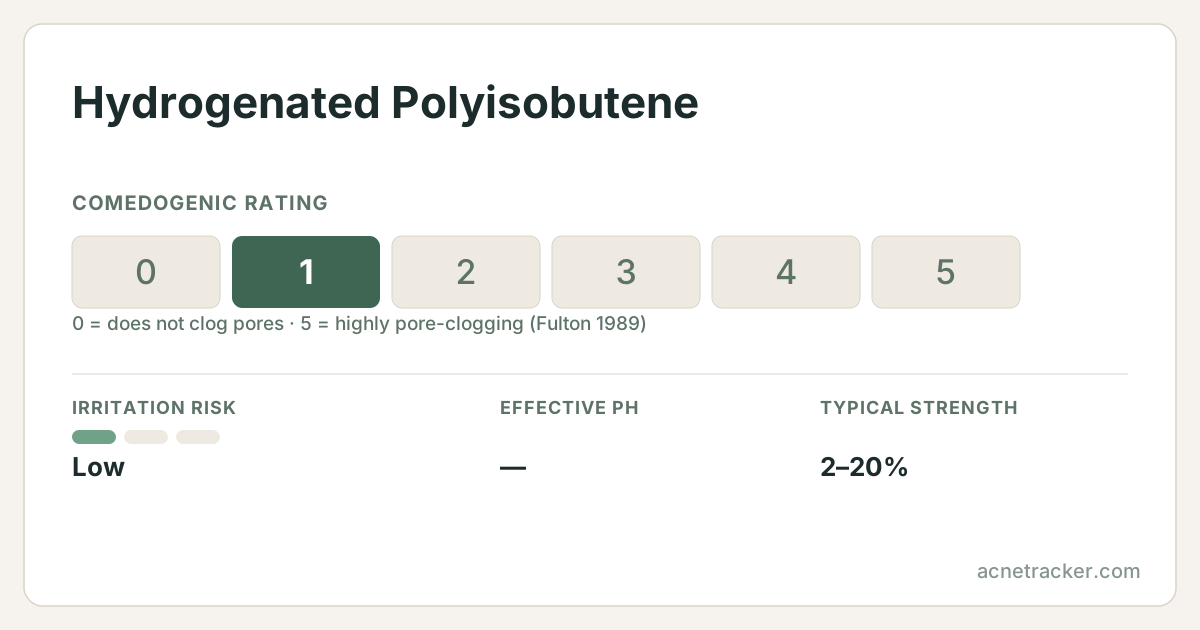
Hydrogenated polyisobutene is a synthetic emollient oil that has quietly become one of the most useful liquid ingredients in cosmetics. It is prized for its clean, stable, non-greasy slip and for being extremely pure and shelf-stable, since it does not oxidize or go rancid the way many plant oils can. Formulators use it as a lightweight alternative to mineral oil and as a carrier that gives lip products their glossy cushion, sunscreens their smooth glide and moisturizers a soft, conditioned finish without heaviness.
Quick facts
- Comedogenic rating
- measured (Fulton 1989)
- Irritation risk
- Low
- Effective pH
- —
- Typical strength
- 2–20%
- Pregnancy
- Considered safe
- Suits skin types
- drynormalcombinationsensitivemature
Where this number comes from
Read directly from Table I of Fulton's 1989 paper — the primary source, not one of the copied tables that circulate online.
Fulton read his own scale as 0-1 not significant, 2-3 borderline, 4-5 positive. The assay is the rabbit ear at 10% dilution, which the paper itself calls extremely sensitive and not fully predictive of human skin. Ratings describe the raw ingredient; concentration and formulation change real-world behaviour.
Caution profile
The four published fields on this page, on one 0–5 scale. Further from the centre means more care is needed — never that the ingredient is worse.
Derived, not measured: pore-clogging is the published comedogenic rating; irritation maps low/moderate/high to 1/3/5; pregnancy maps safe/caution/avoid to 0/3/5; skin-type limits is how many of the seven skin types this entry does NOT list. Every input is printed in words in the quick-facts card above.
Show the numbers
| Metric | 0–5 | Published field |
|---|---|---|
| Pore-clogging | 1 | 1/5 |
| Irritation | 1 | Low |
| Skin-type limits | 1.4 | 5/7 |
| Pregnancy | 0 | Considered safe |
Working pH and typical strength
Where this ingredient is formulated to sit, and at what concentration.
Both bars come from the fields above: the pH window and the typical strength range published for this ingredient. The tinted column is healthy skin's surface pH (about 4.7–5.75).
Show the numbers
| Metric | 0–5 |
|---|---|
| Typical strength | 2–20% |
What is it?
Hydrogenated polyisobutene is made by polymerizing isobutene into an oily liquid and then hydrogenating it for stability. The result is a very pure, inert emollient with no smell, no color and excellent resistance to oxidation. Depending on its molecular weight it can range from light and silky to thicker and cushiony, which is why it appears in everything from fluid sunscreens to glossy balms. On the skin it forms a light, flexible film that softens the surface and slows water loss, acting as a gentle emollient and mild occlusive. It has no active biological effect; its value is entirely in feel, spreadability and stability.
Benefits
Clean, non-greasy emollience
It softens and smooths the skin with a light, silky slip that lacks the heavy or greasy feel of some plant and mineral oils.
Highly stable
Because it does not oxidize or go rancid, it keeps formulas fresh longer and is ideal for products where oil stability matters.
Glossy cushion in lip products
Its smooth, film-forming nature gives lip balms and glosses their comfortable cushion and long-lasting shine.
Improves spread and wear
In sunscreens and makeup it helps products glide on evenly and wear smoothly without feeling tacky.
How to use
Hydrogenated polyisobutene is already blended into the balm, sunscreen, lotion or makeup, so use the product as normal. It suits dry and normal skin especially well, while very oily skin may prefer lighter, water-based textures. There are no special layering rules; it is an emollient carrier that improves feel and helps hold moisture in the skin.
Side effects
Hydrogenated polyisobutene is considered low-irritation with a comedogenic rating of about 1, so it is unlikely to clog pores for most people. Because it is so pure and inert, allergic reactions are very rare. Very oily or congestion-prone skin may prefer to limit heavier emollient oils in general, but this ingredient is one of the cleaner options in that category.
Who should avoid it
There is essentially no group that must avoid it. The question here is texture preference rather than risk: an emollient-rich balm or cream can feel heavy on very oily or breakout-prone skin, and that holds whatever emollient carries it — hydrogenated polyisobutene simply happens to be one of the purer and more stable options in the category. It is a safe choice to keep using during pregnancy and breastfeeding.
Pairs well with
Frequently asked questions
Is hydrogenated polyisobutene safe?
Yes. It is a very pure, inert synthetic emollient rated 0 by Fulton and with low irritation potential, considered safe and widely used in cosmetics.
What does hydrogenated polyisobutene do?
It is an emollient that softens skin, adds a clean non-greasy slip, forms a light protective film, and gives lip products their glossy cushion.
Does hydrogenated polyisobutene clog pores?
Its comedogenic rating is about 1, which puts it among the lower-risk emollients. Very congestion-prone users may still prefer lighter options, though this is one of the cleaner choices available in the category.
Is it a mineral oil?
No, but it is often used as an alternative to mineral oil. It is a synthetic emollient that offers a similar cushioning feel with excellent purity and stability.
Why is it in lip balm?
Its smooth, film-forming, oxidation-resistant nature gives balms and glosses a long-lasting cushioned feel and glossy shine without going rancid.
Sources & further reading
Medical disclaimer
Find your personal acne triggers
Our free Acne Tracker lets you log breakouts, sleep, stress and diet, and shows you which factors correlate with your flare-ups.