Butylene Glycol: Comedogenic Rating & Ingredient Analysis
Butylene glycol is a lightweight, multitasking ingredient that appears near the top of countless ingredient lists, doing the same quiet jobs as propylene glycol but with an even gentler reputation. It works as a humectant to draw water into the skin, as a solvent to dissolve and carry other ingredients, and as a texture enhancer that gives products a light, fast-absorbing feel. Because it is well tolerated and rarely irritating, it is a favourite in serums and moisturizers aimed at sensitive skin, and it is often chosen when formulators want the benefits of a glycol without the higher irritation potential of propylene glycol.
Quick facts
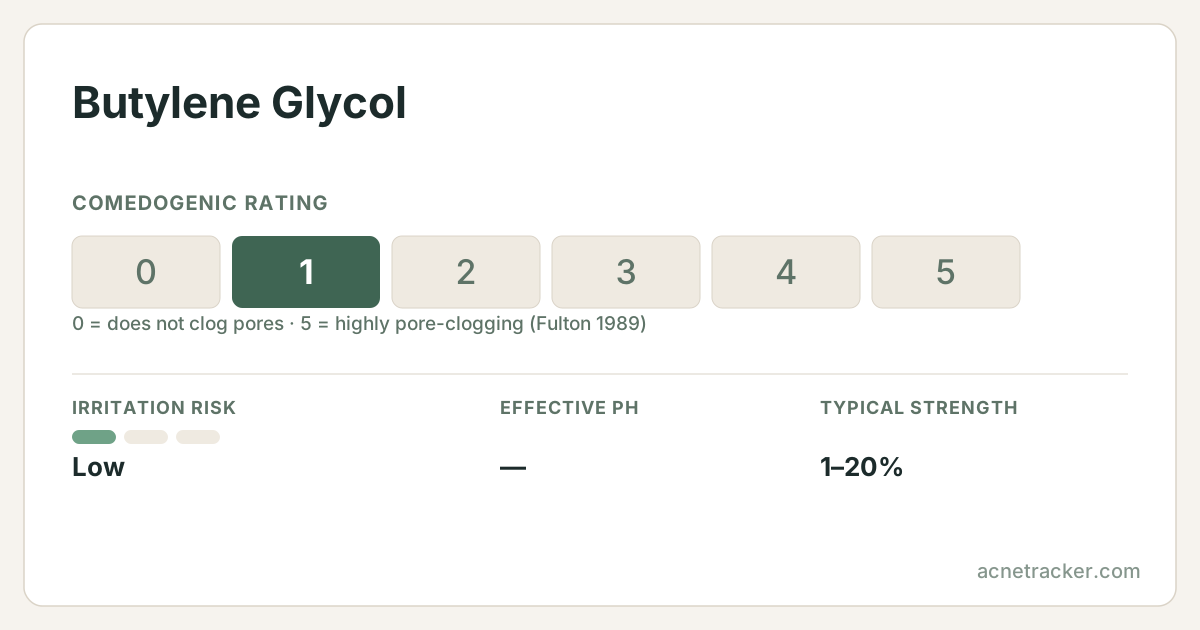
- Comedogenic rating
- measured (Fulton 1989)
- Irritation risk
- Low
- Effective pH
- —
- Typical strength
- 1–20%
- Pregnancy
- Considered safe
- Suits skin types
- oilydrycombinationsensitivenormalacne-prone
Where this number comes from
Read directly from Table I of Fulton's 1989 paper — the primary source, not one of the copied tables that circulate online.
Fulton read his own scale as 0-1 not significant, 2-3 borderline, 4-5 positive. The assay is the rabbit ear at 10% dilution, which the paper itself calls extremely sensitive and not fully predictive of human skin. Ratings describe the raw ingredient; concentration and formulation change real-world behaviour.
Caution profile
The four published fields on this page, on one 0–5 scale. Further from the centre means more care is needed — never that the ingredient is worse.
Derived, not measured: pore-clogging is the published comedogenic rating; irritation maps low/moderate/high to 1/3/5; pregnancy maps safe/caution/avoid to 0/3/5; skin-type limits is how many of the seven skin types this entry does NOT list. Every input is printed in words in the quick-facts card above.
Show the numbers
| Metric | 0–5 | Published field |
|---|---|---|
| Pore-clogging | 1 | 1/5 |
| Irritation | 1 | Low |
| Skin-type limits | 0.7 | 6/7 |
| Pregnancy | 0 | Considered safe |
Working pH and typical strength
Where this ingredient is formulated to sit, and at what concentration.
Both bars come from the fields above: the pH window and the typical strength range published for this ingredient. The tinted column is healthy skin's surface pH (about 4.7–5.75).
Show the numbers
| Metric | 0–5 |
|---|---|
| Typical strength | 1–20% |
What is it?
Butylene glycol is a small diol, usually 1,3-butanediol, that is water-soluble and helps blend water and oil phases. As a humectant it binds moisture like glycerin but feels lighter and less sticky, which is why it is popular in fast-absorbing, watery textures. As a solvent it dissolves botanical extracts and actives, and it is a common carrier in extracts you see listed on labels. It also improves the overall feel of a formula, thinning heavier textures and boosting slip. Chemically stable and gentle, it is often paired with glycerin and hyaluronic-acid to build comfortable, well-hydrated products.
Benefits
Light, non-sticky hydration
Butylene glycol draws water into the skin like glycerin but with a lighter, less tacky feel, ideal for watery serums and gel textures.
Dissolves and carries actives
As a solvent it dissolves botanical extracts and actives, and is a common carrier that keeps ingredients evenly distributed in a formula.
Gentler than propylene glycol
It offers similar humectant and solvent benefits with a lower irritation potential, making it a preferred glycol for sensitive skin.
Improves texture and slip
It thins heavier formulas and enhances slip, working with humectants like glycerin and hyaluronic-acid for a comfortable, lightweight finish.
How to use
Butylene glycol is a formulation ingredient inside serums, essences, moisturizers and toners; simply use those products as directed. It needs no special layering rules and is compatible with essentially all other ingredients and actives. Its light, non-sticky feel makes it especially pleasant in the hydrating steps of a routine. Because it is gentle, it is a good choice if propylene glycol has irritated your skin in the past. It layers freely under sunscreen and makeup without any conflict.
Side effects
Butylene glycol is very well tolerated, with a low irritation profile, low allergy rate and a comedogenic rating of zero, so it rarely causes any problems even on sensitive or acne-prone skin. It is considered a gentler alternative to propylene glycol for those who react to the latter. There are no meaningful systemic concerns at cosmetic use levels, and it is used broadly across the industry with a strong safety record.
Who should avoid it
Almost no one needs to avoid butylene glycol; it is considered acceptable in pregnancy and suits sensitive, dry and acne-prone skin alike. People with a specific, confirmed allergy to it, which is rare, should check labels and choose products relying on glycerin instead. For nearly everyone it is a gentle, useful hydrating and texture ingredient.
Pairs well with
Frequently asked questions
Is butylene glycol safe for skin?
Yes. It is a gentle, well-tolerated humectant and solvent with a very low irritation and allergy rate, used widely and considered safe at cosmetic levels.
Does butylene glycol clog pores?
No. It is water-soluble and non-comedogenic with a rating of zero, so it does not clog pores and is suitable for acne-prone skin.
How is butylene glycol different from propylene glycol?
Both are humectant solvents, but butylene glycol feels lighter and less sticky and has a lower irritation potential, so it is often preferred for sensitive skin.
Why is butylene glycol in serums?
It hydrates as a light humectant, dissolves and carries actives and extracts, and improves texture, all of which make watery serums feel pleasant and work well.
Sources & further reading
Medical disclaimer
Find your personal acne triggers
Our free Acne Tracker lets you log breakouts, sleep, stress and diet, and shows you which factors correlate with your flare-ups.