Black Cumin Seed Oil: Comedogenic Rating & Ingredient Analysis
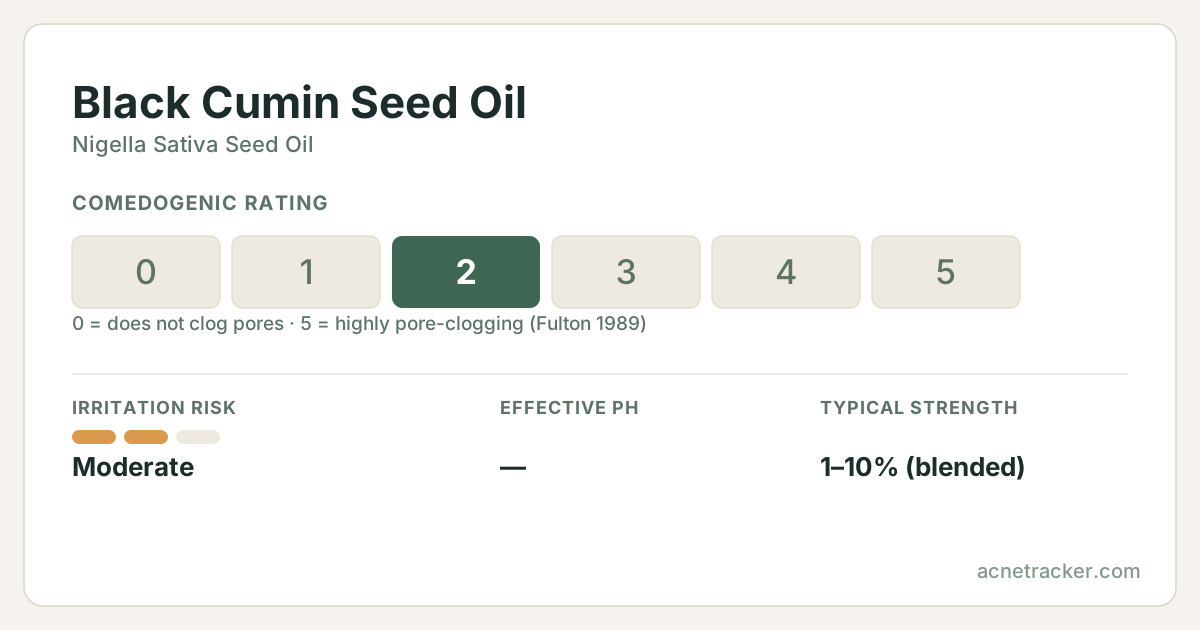
Black cumin seed oil, pressed from the seeds of Nigella sativa, is a dark, spicy-smelling oil with a long history in traditional wellness across the Middle East, North Africa and South Asia. In skincare it is used in small amounts in facial oils and balms aimed at oily and blemish-prone skin, valued for its distinctive plant compounds rather than as a plain moisturising oil. It has a sharp, peppery aroma and is potent, so it is typically blended into lighter carriers rather than used on its own across the whole face.
Quick facts
- Comedogenic rating
- our estimate — not measured
- Irritation risk
- Moderate
- Effective pH
- —
- Typical strength
- 1–10% (blended)
- Pregnancy
- Ask your doctor
- Suits skin types
- oilycombinationacne-pronenormal
Where this number comes from
No one has published a comedogenic rating for this ingredient. Fulton's 1989 table tested about 250 raw materials and this was not among them, and we found no later study measuring it. The figure shown is our own reasoning from the ingredient's chemistry and how it is used — treat it as an estimate, not a measurement.
Fulton read his own scale as 0-1 not significant, 2-3 borderline, 4-5 positive. The assay is the rabbit ear at 10% dilution, which the paper itself calls extremely sensitive and not fully predictive of human skin. Ratings describe the raw ingredient; concentration and formulation change real-world behaviour.
Caution profile
The four published fields on this page, on one 0–5 scale. Further from the centre means more care is needed — never that the ingredient is worse.
Derived, not measured: pore-clogging is the published comedogenic rating; irritation maps low/moderate/high to 1/3/5; pregnancy maps safe/caution/avoid to 0/3/5; skin-type limits is how many of the seven skin types this entry does NOT list. Every input is printed in words in the quick-facts card above.
Show the numbers
| Metric | 0–5 | Published field |
|---|---|---|
| Pore-clogging | 2 | 2/5 |
| Irritation | 3 | Moderate |
| Skin-type limits | 2.1 | 4/7 |
| Pregnancy | 3 | Ask your doctor |
Working pH and typical strength
Where this ingredient is formulated to sit, and at what concentration.
Both bars come from the fields above: the pH window and the typical strength range published for this ingredient. The tinted column is healthy skin's surface pH (about 4.7–5.75).
Show the numbers
| Metric | 0–5 |
|---|---|
| Typical strength | 1–10% (blended) |
What is it?
The oil carries a balance of linoleic and oleic fatty acids plus a signature aromatic compound called thymoquinone, along with other volatile constituents that give it its pungent smell and antioxidant character. Those minor components are what set black cumin apart from a bland carrier oil, and they are also why some people find it more likely to irritate than a neutral seed oil, so patch testing is sensible. On its fatty-acid profile, moderately linoleic with a meaningful oleic share, and given typical low-percentage use, we estimate its comedogenic rating at around 2. Cold-pressed, unrefined versions are the most aromatic and the most active.
Benefits
Rich in antioxidant plant compounds
Thymoquinone and the oil's other aromatic constituents give it a genuine antioxidant character, helping defend the skin surface against everyday oxidative stress.
Traditional choice for blemish-prone skin
Black cumin has long been used on oily, breakout-prone skin, and its distinctive compounds are the reason it features in targeted balms and blends today.
Conditions in a blend
Its fatty acids soften and smooth the skin surface when diluted into a lighter carrier, delivering emollient comfort without a heavy, greasy layer.
Concentrated and long-lasting
Because only a small amount is needed in a blend, a modest bottle lasts a long time while still imparting its characteristic aromatic note.
How to use
Dilute black cumin seed oil into a milder carrier such as jojoba-oil or hemp-seed-oil, using a small proportion, and apply a thin layer at night to the areas you want to target. Patch test the blend on the inner arm for several days first, as its aromatic compounds can provoke reactions in sensitive skin. Keep it away from the eyes and lips, and because of the strong smell most people reserve it for evening use. Store it cool and dark to protect its active constituents, and stop using it if it smells rancid.
Side effects
The main considerations are its potential to irritate or sensitise reactive skin and its strong, spicy smell. Concentrated use can cause stinging or redness, which is why dilution and patch testing matter. As with any aromatic botanical oil, individual sensitivity varies. Poorly stored oil oxidises and should be replaced once the scent turns sharp or rancid.
Who should avoid it
People with very sensitive or reactive skin should be cautious and consider skipping it. During pregnancy and breastfeeding it is best treated as caution and cleared with a doctor, since traditional internal uses have raised safety questions and topical data are limited. Keep it away from the eye area, and do not use it on broken or inflamed skin.
Pairs well with
Avoid combining with
Frequently asked questions
What is thymoquinone in black cumin oil?
Thymoquinone is the signature aromatic compound in Nigella sativa seed oil and the main reason it has antioxidant character. It is also part of why the oil smells sharp and why sensitive skin may react, so patch testing is wise.
Can I use black cumin oil undiluted?
It is better diluted. Its aromatic compounds make it more likely than a neutral oil to irritate, so blend a small proportion into a milder carrier like jojoba-oil, patch test for several days, and apply thinly.
Is black cumin oil good for acne-prone skin?
It has a long traditional use on blemish-prone skin, and its comedogenic rating is an estimated 2. Use it diluted and sparingly, patch test first, and treat it as a conditioning oil rather than a medical acne treatment.
Is black cumin oil safe in pregnancy?
Treat it as caution. Traditional internal uses have raised safety concerns and topical data are limited, so avoid it or check with your doctor before use during pregnancy and breastfeeding.
Sources & further reading
Medical disclaimer
Find your personal acne triggers
Our free Acne Tracker lets you log breakouts, sleep, stress and diet, and shows you which factors correlate with your flare-ups.