Raspberry Seed Oil: Comedogenic Rating & Ingredient Analysis
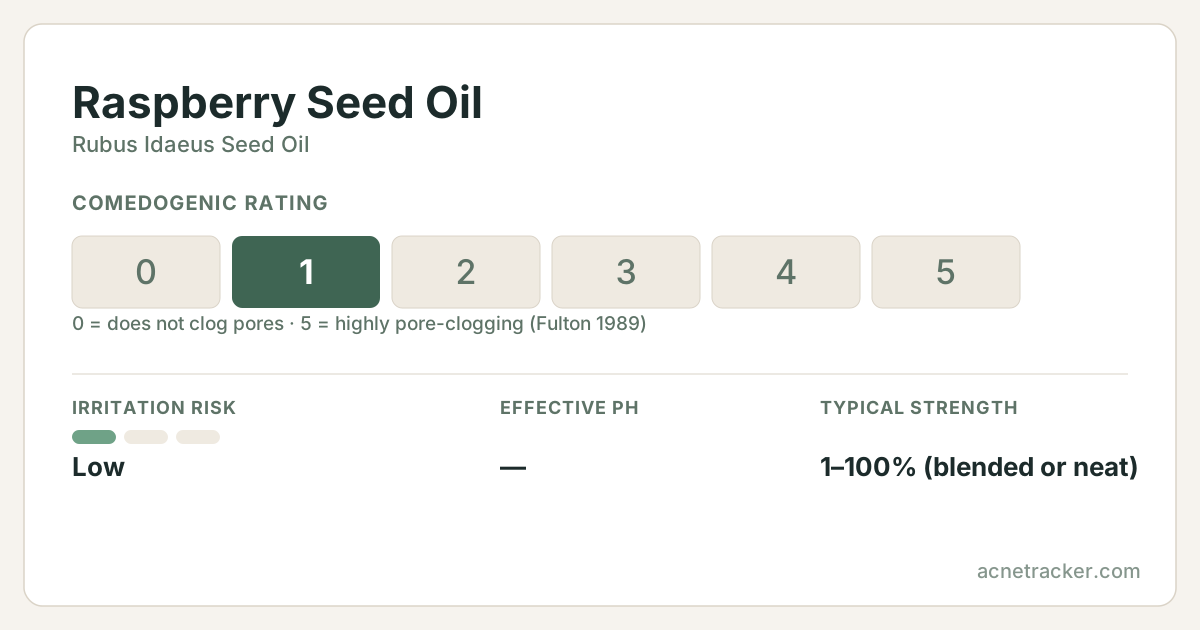
Raspberry seed oil is a light golden oil pressed from the seeds left over from raspberry processing. It has earned a following as a skin-friendly facial oil because it is high in the essential fatty acids omega-3 and omega-6 and rich in vitamin E and other antioxidants. It absorbs at a moderate pace and suits a wide range of skin types, including sensitive and mildly congestion-prone skin. You may also see it marketed with claims about natural sun protection; that idea is overstated and should not replace a proper sunscreen.
Quick facts
- Comedogenic rating
- our estimate — not measured
- Irritation risk
- Low
- Effective pH
- —
- Typical strength
- 1–100% (blended or neat)
- Pregnancy
- Considered safe
- Suits skin types
- drynormalcombinationsensitiveacne-prone
Where this number comes from
No one has published a comedogenic rating for this ingredient. Fulton's 1989 table tested about 250 raw materials and this was not among them, and we found no later study measuring it. The figure shown is our own reasoning from the ingredient's chemistry and how it is used — treat it as an estimate, not a measurement.
Fulton read his own scale as 0-1 not significant, 2-3 borderline, 4-5 positive. The assay is the rabbit ear at 10% dilution, which the paper itself calls extremely sensitive and not fully predictive of human skin. Ratings describe the raw ingredient; concentration and formulation change real-world behaviour.
Caution profile
The four published fields on this page, on one 0–5 scale. Further from the centre means more care is needed — never that the ingredient is worse.
Derived, not measured: pore-clogging is the published comedogenic rating; irritation maps low/moderate/high to 1/3/5; pregnancy maps safe/caution/avoid to 0/3/5; skin-type limits is how many of the seven skin types this entry does NOT list. Every input is printed in words in the quick-facts card above.
Show the numbers
| Metric | 0–5 | Published field |
|---|---|---|
| Pore-clogging | 1 | 1/5 |
| Irritation | 1 | Low |
| Skin-type limits | 1.4 | 5/7 |
| Pregnancy | 0 | Considered safe |
Working pH and typical strength
Where this ingredient is formulated to sit, and at what concentration.
Both bars come from the fields above: the pH window and the typical strength range published for this ingredient. The tinted column is healthy skin's surface pH (about 4.7–5.75).
Show the numbers
| Metric | 0–5 |
|---|---|
| Typical strength | 1–100% (blended or neat) |
What is it?
Raspberry seed oil is high in linoleic acid (omega-6) and alpha-linolenic acid (omega-3), with a smaller share of oleic acid, giving it a light, non-greasy character. It also carries a notable amount of vitamin E and carotenoid antioxidants. Because it is rich in fragile polyunsaturated fats, it benefits from careful storage despite its vitamin E content. On its linoleic-and-omega-3-dominant profile we estimate its comedogenic rating at around 1, low, which is part of why it is considered friendly to combination and mildly acne-prone skin. It should not be relied on for UV protection.
Benefits
High in omega-3 and omega-6
Its rich content of alpha-linolenic and linoleic acids supplies essential fatty acids that support a calm, comfortable barrier, useful for dry and reactive skin.
Antioxidant-rich
Raspberry seed oil carries vitamin E and carotenoids that help defend the skin surface against everyday oxidative stress while conditioning it.
Light and low pore-clogging
Its linoleic-dominant profile and estimated comedogenic rating of 1 make it one of the friendlier facial oils for combination and mildly congestion-prone skin.
Soothes stressed skin
Its fatty-acid and antioxidant mix helps a tight, reddened or flaky surface feel more settled, which is why it appears in calming facial oils.
How to use
Apply a few drops to cleansed, slightly damp skin, morning or night, either neat or blended into a moisturiser or another oil like hemp-seed-oil. Because it is rich in delicate omega-3 fats, buy it fresh, store it cool and dark, and replace it if it smells sharp. If you see claims that it works as a sunscreen, ignore them for sun protection purposes and continue using a proper broad-spectrum SPF. Patch test first if your skin is very reactive.
Side effects
Raspberry seed oil is generally well tolerated and low-irritation. Its main drawback is oxidation risk from its high polyunsaturated content, so freshness matters. The bigger safety issue is the myth that it provides meaningful sun protection, which can lead people to underprotect their skin; do not rely on it for SPF. Rare individual sensitivity is possible.
Who should avoid it
Few people need to avoid it. Anyone tempted to use it as a sunscreen should not; it does not replace SPF. Those with a specific sensitivity should patch test first. Topical use is generally considered fine in pregnancy, but confirm with your doctor if you are unsure about a particular product.
Pairs well with
Avoid combining with
Frequently asked questions
Does raspberry seed oil work as a sunscreen?
No. Claims that it offers meaningful SPF are overstated and not reliable. Any faint UV-absorbing effect is far too small and inconsistent to protect your skin, so always use a proper broad-spectrum sunscreen instead.
Is raspberry seed oil good for acne-prone skin?
It is relatively friendly: its high linoleic and omega-3 content and estimated comedogenic rating of 1 make it one of the lighter facial oils. Apply it thinly and watch how congestion-prone areas respond.
How should I store raspberry seed oil?
Keep it cool, dark and tightly closed, ideally in small dark-glass bottles. Its high omega-3 content makes it prone to oxidation despite its vitamin E, so replace it if it develops a sharp or rancid smell.
What makes raspberry seed oil different from rosehip oil?
Both are light, antioxidant-rich oils, but rosehip-oil is especially known for its vitamin A precursors, while raspberry seed oil is prized for its very high omega-3 and vitamin E. They blend well and are often combined.
Sources & further reading
Medical disclaimer
Find your personal acne triggers
Our free Acne Tracker lets you log breakouts, sleep, stress and diet, and shows you which factors correlate with your flare-ups.