Neem Oil: Comedogenic Rating & Ingredient Analysis
Neem oil is a thick, deep-yellow-to-brown oil pressed from the seeds of the neem tree, a plant with a long history in traditional Indian skincare. It has an unmistakable, pungent, sulphurous-garlic smell that puts many people off, but it remains popular in balms and blends aimed at oily, blemish-prone skin. It is potent stuff and is almost always used diluted, both because of the smell and because concentrated botanical oils like neem carry a real risk of skin sensitisation. Treat it as a specialist ingredient to be handled with care rather than an everyday facial oil.
Quick facts
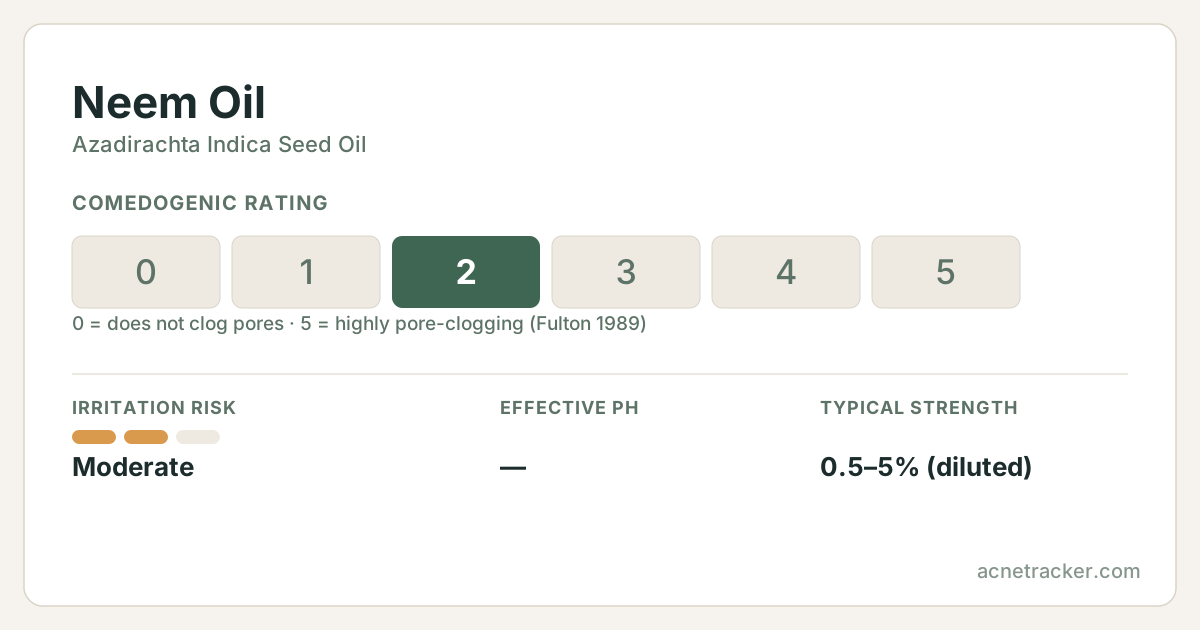
- Comedogenic rating
- our estimate — not measured
- Irritation risk
- Moderate
- Effective pH
- —
- Typical strength
- 0.5–5% (diluted)
- Pregnancy
- Ask your doctor
- Suits skin types
- oilycombinationacne-pronenormal
Where this number comes from
No one has published a comedogenic rating for this ingredient. Fulton's 1989 table tested about 250 raw materials and this was not among them, and we found no later study measuring it. The figure shown is our own reasoning from the ingredient's chemistry and how it is used — treat it as an estimate, not a measurement.
Fulton read his own scale as 0-1 not significant, 2-3 borderline, 4-5 positive. The assay is the rabbit ear at 10% dilution, which the paper itself calls extremely sensitive and not fully predictive of human skin. Ratings describe the raw ingredient; concentration and formulation change real-world behaviour.
Caution profile
The four published fields on this page, on one 0–5 scale. Further from the centre means more care is needed — never that the ingredient is worse.
Derived, not measured: pore-clogging is the published comedogenic rating; irritation maps low/moderate/high to 1/3/5; pregnancy maps safe/caution/avoid to 0/3/5; skin-type limits is how many of the seven skin types this entry does NOT list. Every input is printed in words in the quick-facts card above.
Show the numbers
| Metric | 0–5 | Published field |
|---|---|---|
| Pore-clogging | 2 | 2/5 |
| Irritation | 3 | Moderate |
| Skin-type limits | 2.1 | 4/7 |
| Pregnancy | 3 | Ask your doctor |
Working pH and typical strength
Where this ingredient is formulated to sit, and at what concentration.
Both bars come from the fields above: the pH window and the typical strength range published for this ingredient. The tinted column is healthy skin's surface pH (about 4.7–5.75).
Show the numbers
| Metric | 0–5 |
|---|---|
| Typical strength | 0.5–5% (diluted) |
What is it?
Neem oil is a fatty oil rich in oleic and linoleic acids, alongside a set of distinctive plant compounds — including azadirachtin and various triterpenoids — that give it its strong smell and its traditional reputation. It is these minor compounds, not the base fatty acids, that make neem both interesting and more likely than a bland oil to provoke a reaction, so patch testing and dilution are essential. Its fatty-acid profile is moderately oleic; combined with typical low-percentage use, we estimate its comedogenic rating at around 2. Quality and smell vary a lot between cold-pressed and refined versions.
Benefits
Traditional blemish-care oil
Neem has a long history of use on oily, blemish-prone skin, and its distinctive plant compounds are the reason it still appears in targeted spot balms and blends today.
Conditions without heaviness
Diluted into a lighter carrier, its fatty acids soften and condition the skin surface, offering emollient comfort in a blend rather than as a stand-alone oil.
Concentrated, so a little goes far
Because it is used at low percentages, a small bottle lasts a long time, and even a few drops in a blend deliver its characteristic character.
Works in a considered routine
Paired with a lighter oil like jojoba-oil and used sparingly, neem can be part of a deliberate, patch-tested routine for resilient, oily skin.
How to use
Always dilute neem oil before applying it to the face — a common approach is one part neem to nine or more parts of a mild carrier such as jojoba-oil. Patch test the diluted blend on the inner arm for several days before using it more widely, because neem is a recognised sensitiser. Apply a thin layer at night on the areas you want to target, and keep it away from the eyes and mouth. Because of the strong smell, most people reserve it for evening use. Never apply undiluted neem across the whole face.
Side effects
Neem's most important drawback is its potential to cause contact dermatitis and sensitisation, which is why dilution and patch testing are non-negotiable. The pungent smell is off-putting to many. Concentrated neem can sting or redden reactive skin. Because it is a potent botanical, it should be kept well away from the eyes and never swallowed.
Who should avoid it
People with sensitive or easily reactive skin should be very cautious and may prefer to skip it. During pregnancy and breastfeeding, neem is best avoided as a precaution — traditional internal uses have raised safety concerns and topical data are limited, so treat it as caution and ask a doctor. Keep it away from infants and small children, and do not use it near the eyes.
Pairs well with
Avoid combining with
Frequently asked questions
Can I put neem oil directly on my face?
No, not undiluted. Neem is a recognised sensitiser and should be diluted heavily into a mild carrier like jojoba-oil, then patch tested for several days. Using it neat across the face raises the risk of irritation and contact dermatitis.
Why does neem oil smell so bad?
The strong, garlic-like, sulphurous odour comes from neem's natural plant compounds. Refined versions smell milder but may contain less of the components it is used for. Most people apply it at night because of the scent.
Is neem oil safe during pregnancy?
It is best avoided as a precaution. Traditional internal uses of neem have raised safety concerns, topical safety data are limited, and it is a potent botanical, so treat it as caution and check with your doctor before use.
Does neem oil clog pores?
Its moderately oleic profile gives an estimated comedogenic rating of about 2, so used diluted and sparingly it is a manageable risk. The bigger concern with neem is sensitisation rather than pore-clogging.
Sources & further reading
Medical disclaimer
Find your personal acne triggers
Our free Acne Tracker lets you log breakouts, sleep, stress and diet, and shows you which factors correlate with your flare-ups.