How to Choose a Face Mask for Men
Male facial skin does differ measurably: it is roughly twenty to twenty-five percent thicker thanks to androgen-driven collagen density, it produces more sebum, it has larger pores, and much of it gets scraped with a blade several times a week. Only the last of those changes what you should actually do, and it is the one the men's aisle never mentions. The rest of the differences are addressed by picking a formula for oily skin — which is a shelf that already exists and is usually cheaper. The grey packaging, the word 'charcoal' and the marine-sounding name are not a formulation strategy, and the mask inside is frequently identical to the one two shelves over.
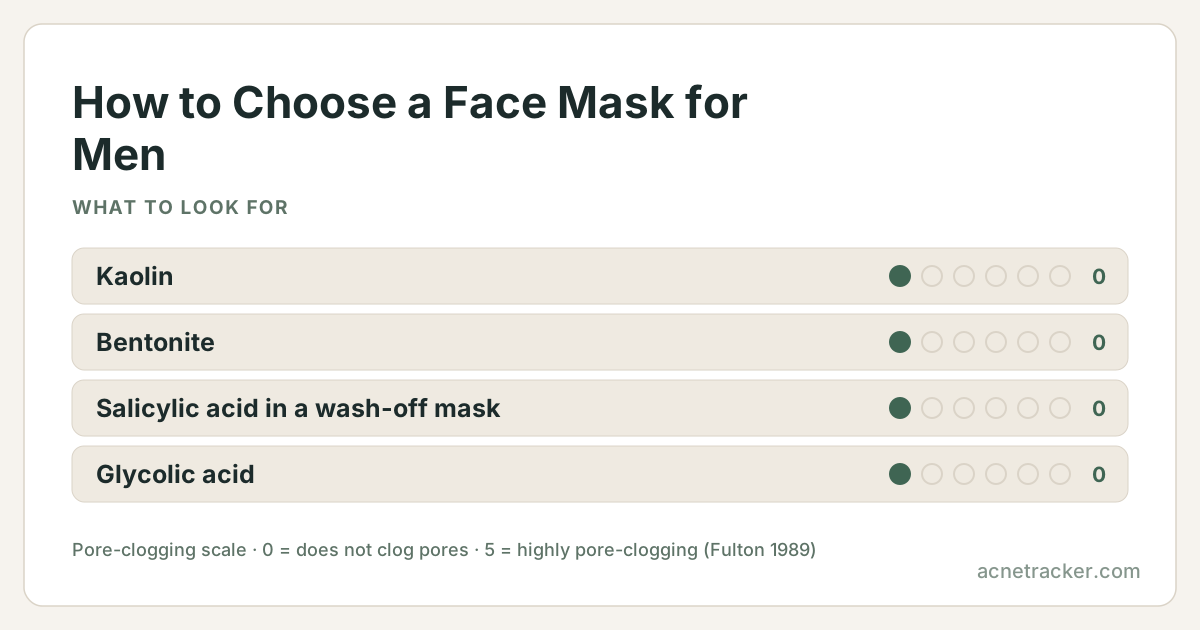
Ingredients to look for
| Ingredient | Why it matters |
|---|---|
| Kaolin | Handles a shiny T-zone. Fulton rates it 0. Note that this is the same ingredient in the identically-priced mask not marketed to men — the clay does not know who bought it. |
| Bentonite | More absorbent, for skin that genuinely runs oily. Rinse before it cracks; higher sebum output is not the same as tolerance for being dried out. |
| Salicylic acid in a wash-off mask | Useful for congestion and mildly helpful for ingrown hairs, since it keeps follicular openings clearer so hairs are less likely to get trapped. |
| Glycolic acid | The best-evidenced option for pseudofolliculitis barbae — regular gentle exfoliation frees trapped hairs. Never on the same day as shaving, and start at the lowest strength. |
| Niacinamide | Anti-inflammatory with sebum data from daily leave-on use, and useful for the post-shave redness that a lot of men simply live with unnecessarily. |
| Allantoin | Soothing and unreactive, which suits a face that gets mechanically abraded regularly. Fulton rates it 0. |
Ingredients to avoid
| Ingredient | Why it matters |
|---|---|
| Masking on the same day you shave | The single most useful rule on this page. Shaving removes surface cells along with hair, so a mask applied to a freshly shaved face meets a barrier that is not there. Acids in particular will sting and irritate. |
| Alcohol-heavy 'cooling' masks and post-shave formulas | The bracing sting reads as clean and is a barrier being stripped after a blade has already thinned it. Menthol adds a sensation and no benefit. |
| Assuming thicker skin means tougher skin | Thickness is collagen density, not resilience. Men's skin has the same barrier chemistry and the same irritation thresholds, and it is already being abraded weekly by shaving. |
| Charcoal masks bought for the charcoal | Charcoal is a colourant and a story added to a clay base. There is no evidence it outperforms the clay carrying it, and it is heavily marketed to men specifically. |
| Peel-off masks on a beard or stubble | The film grips terminal hair far more firmly than vellus hair, and removing it is genuinely painful and can cause folliculitis. This is a bad idea with a specific mechanism. |
How to choose
Ignore the marketing category and buy for your skin, because 'for men' is a demographic and not a formulation. If your skin is oily, buy a mask for oily skin. If you get congestion, buy a salicylic acid mask. Compare the ingredient list of the men's product against the unmarked equivalent and you will usually find the same clay, the same humectants and a different fragrance — the differences are packaging, scent and price, and the price is not always in your favour. The one genuine difference is shaving, and it deserves the thought the aisle does not give it. A blade is a daily physical exfoliation of your lower face, which means that region is already exfoliated more than any part of a non-shaver's skin. Adding an acid mask on top is how men end up with a red, stinging jaw and conclude their skin is sensitive. Separate the two by at least a day, and if you get ingrown hairs, gentle chemical exfoliation on non-shaving days is genuinely the best-supported approach — that is a real recommendation, and it is the opposite of scrubbing harder, which is what most men do. Finally, if you have persistent bumps along the jaw and neck that hurt and recur, that may be pseudofolliculitis barbae or folliculitis rather than acne, they are managed differently, and a doctor sorts that out faster than a shelf will.
How to apply
Not on shaving day — the evening after, or better, a full day later. Cleanse first, since a mask over stubble and residue is mostly sitting on hair. Work a thin layer into the skin rather than over the beard: on facial hair a mask reaches almost nothing and is a nuisance to remove. Rinse with lukewarm water before clay cracks, and moisturise, including the jaw. Once a week is enough. If you get ingrown hairs, use an exfoliating mask on a non-shaving day and never immediately before a shave.
Frequently asked questions
Do men need a different face mask?
Not really. Male skin is thicker and oilier on average, and that means buying a mask for oily skin — a category that already exists. The 'for men' version is usually the same formula with different packaging, a different scent and sometimes a higher price.
Can I use a face mask with a beard?
On the exposed skin, yes, but a mask over dense facial hair contacts very little skin and is unpleasant to rinse out. Avoid peel-off masks entirely — the film grips terminal hair hard enough to hurt and to inflame the follicles.
Should I mask before or after shaving?
After, and ideally not the same day. Shaving removes surface cells along with the hair, so a mask on a freshly shaved face is applied to skin that has just been exfoliated. Acids on that combination sting and irritate reliably.
Do masks help with ingrown hairs?
A gentle exfoliating mask can help, since ingrown hairs happen when hairs get trapped under surface cells and a chemical exfoliant frees them. Use it on non-shaving days. Scrubbing harder is the instinctive response and it inflames the follicle further.
Is a charcoal mask better for men's oily skin?
No. Charcoal is added to a clay base and the clay does the absorbing. There is no evidence charcoal outperforms the clay carrying it — it is a colour and a marketing story, and it is aimed at men more than at anyone else.
Sources & further reading
There is no single study of this exact question. The guidance here is reasoned from the ingredient profiles below, each of which carries its own references:
- Kaolin3 refs
- Bentonite3 refs
- Salicylic Acid2 refs
- Glycolic Acid3 refs
- Niacinamide2 refs
- Allantoin3 refs
Show every reference behind this page (11)
- European Commission CosIng database — Kaolincited by Kaolin, Bentonite, Glycolic Acid, Niacinamide, Allantoin
- PubChem — Kaolincited by Kaolin
- Fulton JE. Comedogenicity and irritancy of commonly used ingredients in skin care products. J Soc Cosmet Chem 40:321–333 (1989) — Table I, pp. 324–326 (source of the comedogenic rating)cited by Kaolin, Bentonite
- PubChem — Bentonitecited by Bentonite
- Salicylic acid as a peeling agent: a comprehensive review (PubMed)cited by Salicylic Acid
- FDA OTC monograph — acne drug products (salicylic acid 0.5–2%)cited by Salicylic Acid
- PubChem — Glycolic acid compound summarycited by Glycolic Acid
- DermNet — Alpha hydroxy acidscited by Glycolic Acid
- Niacinamide: mechanisms of action and its topical use in dermatology (PubMed)cited by Niacinamide
- PubChem — Allantoin compound summarycited by Allantoin
- Final report of the safety assessment of allantoin and its related complexes (PubMed)cited by Allantoin
Medical disclaimer
Ingredients mentioned on this page
Find your personal acne triggers
Our free Acne Tracker lets you log breakouts, sleep, stress and diet, and shows you which factors correlate with your flare-ups.