Can You Mix Benzoyl Peroxide and Mandelic Acid?
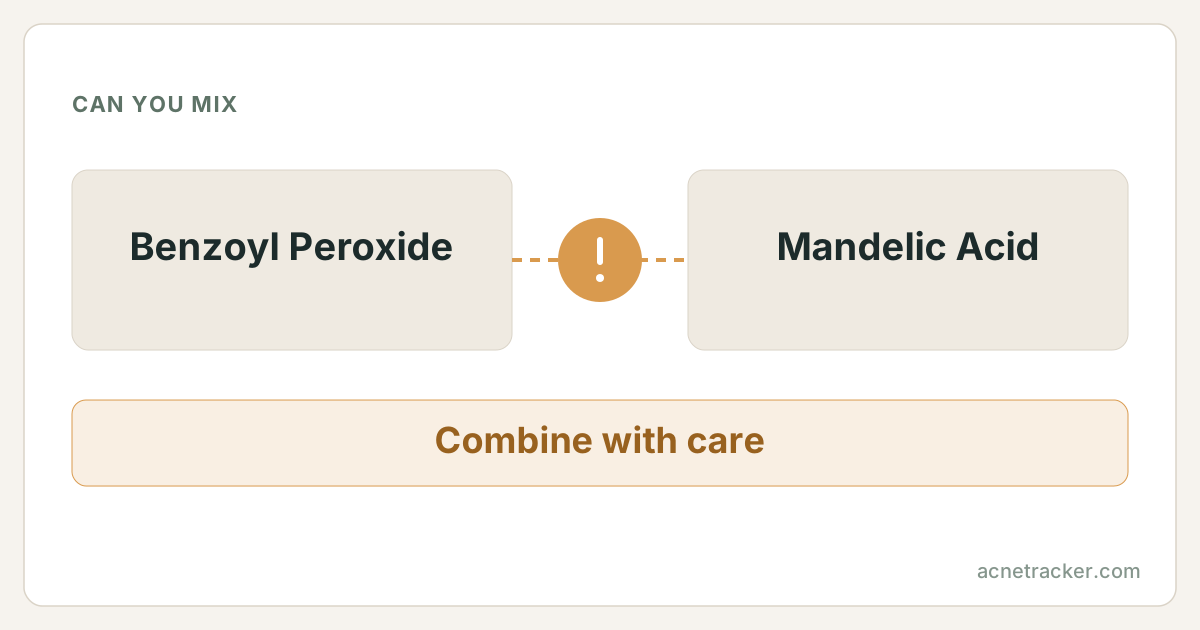
Usually yes, with sensible spacing. Mandelic acid is the mildest of the common alpha hydroxy acids because its large molecule penetrates slowly, so it stacks onto benzoyl peroxide with less drama than glycolic acid does. There is no chemical incompatibility. Still treat it as two actives: separate them by time of day, or run mandelic acid on the evenings benzoyl peroxide has off.
How this pairing resolves
The two ingredients, their published numbers, and where they land together.
The numbers beside each ingredient are its published comedogenic rating and effective pH window, taken from its own profile page.
Show the numbers
| Ingredients | Metric | 0–5 |
|---|---|---|
| Benzoyl Peroxide | Comedogenic rating | 0/5 |
| Benzoyl Peroxide | Effective pH | no published pH |
| Mandelic Acid | Comedogenic rating | 0/5 |
| Mandelic Acid | Effective pH | 3.0–4.0 |
Why
Molecular size is the whole story with mandelic acid. It carries a benzene ring, making it roughly twice the mass of glycolic acid, and that bulk slows its passage through the stratum corneum to a crawl. Slower delivery means the exfoliation is spread over hours rather than delivered as a jolt, which is why dermatologists reach for it in darker skin tones where an aggressive acid can trigger post-inflammatory hyperpigmentation. It is also modestly antibacterial and somewhat lipophilic, so unlike glycolic acid it can get a little way into the oily follicle — the same territory benzoyl peroxide occupies. That overlap makes them partly redundant rather than incompatible. Chemically, nothing happens between them: mandelic acid's aromatic ring is stable, and benzoyl peroxide's radical oxygen has no useful target on it. The caution is therefore about total load. Benzoyl peroxide already supplies dryness and, in a small proportion of people, allergic contact dermatitis; adding any acid daily on top removes surface defences and lets more of everything in. Because mandelic acid is slow, the trouble also arrives slowly — people overshoot for two weeks before noticing.
How to combine them
The cleanest split is mandelic acid in the evening on two or three nights, benzoyl peroxide on the alternate nights, moisturiser every night regardless. If you want both daily, put mandelic acid in the morning under sunscreen and keep benzoyl peroxide for the evening — mandelic acid has less photosensitising baggage than glycolic acid but sunscreen is still required. Start at 5–8% mandelic acid; the 10%+ formulas are for skin that has already run the lower rung for a month. Keep benzoyl peroxide at 2.5% and to actual spots. If you are treating post-acne marks in medium to deep skin, this pairing is a reasonable choice precisely because mandelic acid is unlikely to provoke the pigment response a harsher acid would — but give it three months and protect the skin from UV daily, or you undo the work.
Example routine
| When | Steps |
|---|---|
| Evening (Mon/Thu) | Cleanser → Mandelic acid 5–8% → Moisturiser |
| Evening (Tue/Fri) | Cleanser → Benzoyl peroxide 2.5% on spots → Moisturiser |
| Evening (rest) | Cleanser → Moisturiser only |
| Daily-use variant | AM: Mandelic acid → Moisturiser → SPF 30+ · PM: Benzoyl peroxide → Moisturiser |
Warning signs
Frequently asked questions
Is mandelic acid safe to use with benzoyl peroxide on sensitive skin?
It is the AHA most likely to work, thanks to its large molecule and slow penetration. Sensitive skin should still separate them by night rather than layering, and start at 5% rather than 10%.
Does benzoyl peroxide break mandelic acid down?
No. Mandelic acid's aromatic ring is chemically stable and offers nothing for peroxide radicals to oxidise. The reason for spacing is cumulative barrier stress, not degradation of either ingredient.
Which is better for post-acne dark marks?
Mandelic acid is the one working on pigment — benzoyl peroxide treats the inflamed spot that causes the mark in the first place. They address different stages, and sunscreen decides whether either succeeds.
Can I use a mandelic acid toner every day alongside benzoyl peroxide?
Daily is realistic only once your skin has tolerated a few weeks of both. Start two or three times weekly. Low-percentage daily toners are gentler than serums, but benzoyl peroxide's dryness still sets the ceiling.
Sources & further reading
There is no single study of this exact question. The guidance here is reasoned from the ingredient profiles below, each of which carries its own references:
- Benzoyl Peroxide3 refs
- Mandelic Acid2 refs
Show every reference behind this page (5)
- PubChem — Benzoyl peroxide compound summarycited by Benzoyl Peroxide
- DermNet — Benzoyl peroxidecited by Benzoyl Peroxide
- FDA — Drugs (OTC acne products)cited by Benzoyl Peroxide
- Mandelic acid — PubChem compound summarycited by Mandelic Acid
- DermNet — Alpha hydroxy acidscited by Mandelic Acid
Medical disclaimer
Ingredients mentioned on this page
Find your personal acne triggers
Our free Acne Tracker lets you log breakouts, sleep, stress and diet, and shows you which factors correlate with your flare-ups.