Can You Mix Glycolic Acid and Mandelic Acid?
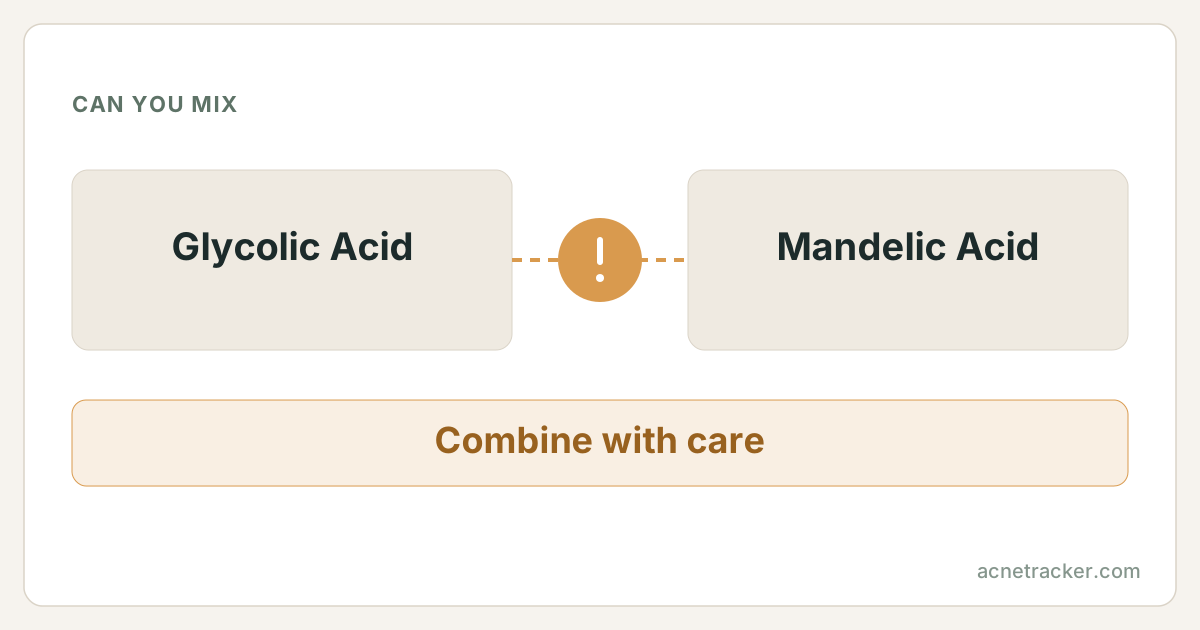
Use caution: glycolic and mandelic acid are both AHAs, so using two strong products together over-exfoliates the same layer of skin. They sit at opposite ends of the AHA scale, glycolic being the most aggressive and mandelic the gentlest, so most people pick one to match their tolerance rather than combining both. If you want both, alternate them on separate nights, never in the same layer.
How this pairing resolves
The two ingredients, their published numbers, and where they land together.
The numbers beside each ingredient are its published comedogenic rating and effective pH window, taken from its own profile page.
Show the numbers
| Ingredients | Metric | 0–5 |
|---|---|---|
| Glycolic Acid | Comedogenic rating | 0/5 |
| Glycolic Acid | Effective pH | 3.0–4.0 |
| Mandelic Acid | Comedogenic rating | 0/5 |
| Mandelic Acid | Effective pH | 3.0–4.0 |
Why
This pairing is redundant chemistry rather than clashing chemistry. Glycolic and mandelic acid are both AHAs that dissolve the glue between dead surface cells, but they differ enormously in size. Glycolic acid is tiny at about 76 daltons and rushes deep into the skin, making it the strongest, most irritating AHA. Mandelic acid is large at around 152 daltons, roughly twice glycolic's size, so it moves in slowly and evenly, which is why it is the go-to acid for sensitive or darker skin prone to post-inflammatory pigment. Mandelic also carries mild antibacterial activity that helps acne. Because they act on the same target, layering both strong products does not unlock a new mechanism; it just multiplies exfoliation and drives the barrier toward redness, peeling and stinging. Both also lower surface pH and increase photosensitivity. The smart move is to treat mandelic as the gentle option and glycolic as the intensive one, and to choose based on how reactive your skin is rather than running them together.
How to combine them
Decide which acid leads. If your skin is sensitive, reactive, or prone to dark marks, use mandelic acid as your regular exfoliant and skip glycolic entirely. If your skin is resilient and you want more polish occasionally, keep mandelic as the base and use glycolic once a week as a stronger treatment, on a different night. Never layer the two in one session. Apply to dry skin, wait, then seal with moisturiser, and begin at twice weekly. Because both AHAs raise UV sensitivity, a broad-spectrum SPF 30+ each morning is essential, especially since mandelic is often used specifically to fade pigmentation that sun exposure would worsen. Introduce only one acid at a time and give your skin four weeks to settle before changing anything.
Example routine
| When | Steps |
|---|---|
| Evening (Tue) | Cleanser → Mandelic acid → Moisturiser |
| Evening (Sat) | Cleanser → Glycolic acid → Moisturiser |
| Other evenings | Cleanser → Hydrating serum → Moisturiser |
| Every morning | Cleanser → Antioxidant → SPF 30+ |
Warning signs
Frequently asked questions
Why would I combine two AHAs at all?
Usually you should not. Mandelic and glycolic do the same job, so most people pick one. The only sensible reason to keep both is to alternate a gentle everyday acid with an occasional stronger treatment.
Is mandelic acid gentle enough for sensitive skin?
Yes. Its large molecule penetrates slowly and evenly, so it is one of the best-tolerated AHAs and a common choice for reactive skin and darker skin tones prone to pigmentation.
Can I use a mandelic serum daily and glycolic weekly?
That can work for resilient skin. Keep them on separate nights, watch for tightness, and treat glycolic as an occasional intensive step rather than a routine layer.
Does mixing these help acne faster?
No. Doubling AHAs raises irritation, and irritated skin breaks out more, not less. Steady use of one acid plus daily sunscreen clears congestion more reliably than stacking.
Sources & further reading
There is no single study of this exact question. The guidance here is reasoned from the ingredient profiles below, each of which carries its own references:
- Glycolic Acid3 refs
- Mandelic Acid2 refs
Show every reference behind this page (4)
- PubChem — Glycolic acid compound summarycited by Glycolic Acid
- DermNet — Alpha hydroxy acidscited by Glycolic Acid, Mandelic Acid
- European Commission CosIng database — Glycolic Acidcited by Glycolic Acid
- Mandelic acid — PubChem compound summarycited by Mandelic Acid
Medical disclaimer
Ingredients mentioned on this page
Find your personal acne triggers
Our free Acne Tracker lets you log breakouts, sleep, stress and diet, and shows you which factors correlate with your flare-ups.