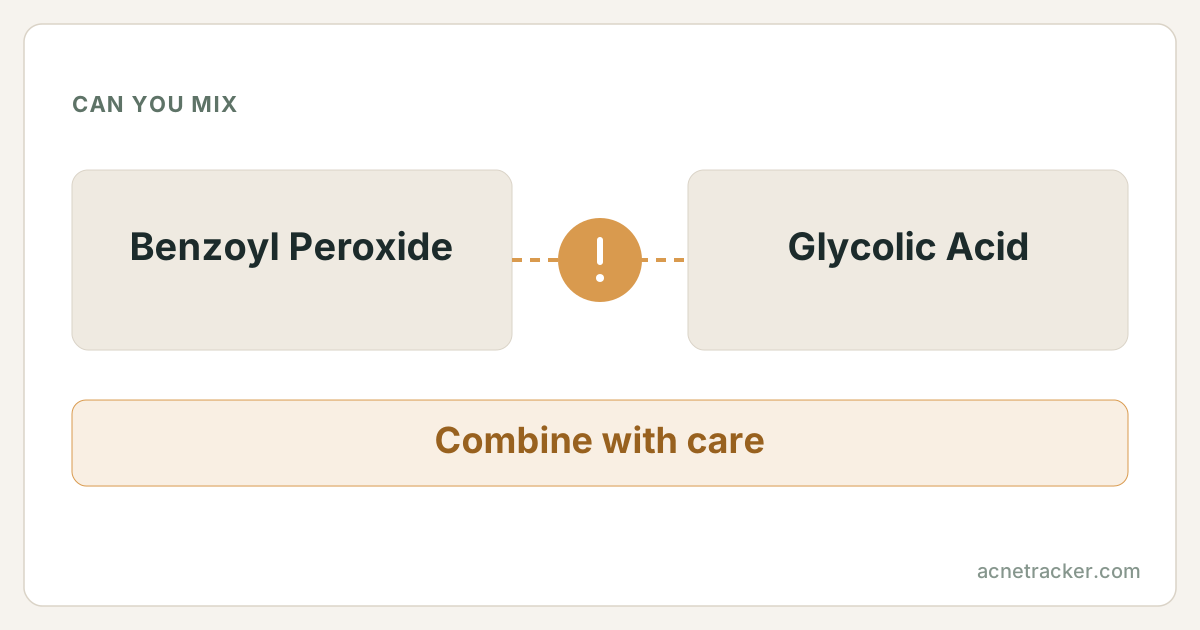
Can You Mix Benzoyl Peroxide and Glycolic Acid?
Use caution. Glycolic acid and benzoyl peroxide are both effective for acne but are two of the most drying and irritating actives, so layering them at the same time often triggers redness, peeling and a damaged barrier. The safer approach is to separate them, using one in the morning and the other in the evening, or on alternating days, rather than applying them together.
How this pairing resolves
The two ingredients, their published numbers, and where they land together.
The numbers beside each ingredient are its published comedogenic rating and effective pH window, taken from its own profile page.
Show the numbers
| Ingredients | Metric | 0–5 |
|---|---|---|
| Benzoyl Peroxide | Comedogenic rating | 0/5 |
| Benzoyl Peroxide | Effective pH | no published pH |
| Glycolic Acid | Comedogenic rating | 0/5 |
| Glycolic Acid | Effective pH | 3.0–4.0 |
Why
Both ingredients are useful in acne but stress the skin in overlapping ways. Benzoyl peroxide is an oxidiser that releases oxygen into the pore to kill acne bacteria and clear congestion; it is drying and can bleach fabric. Glycolic acid is an AHA that exfoliates the surface and helps keep pores clear. Used together they attack acne from two angles, which sounds ideal, but the combined dryness and irritation frequently outweigh the benefit, especially early on. There is also a formulation concern: benzoyl peroxide is a reactive molecule, and applying it in the same layer as a low-pH acid can accelerate its breakdown, potentially wasting some of the dose before it works. This is not a dangerous reaction, but it is a reason to keep them apart in time. Because glycolic raises UV sensitivity and benzoyl peroxide can make skin feel tight and flaky, the two together demand a careful, gradual routine and plenty of barrier support rather than an aggressive all-at-once approach.
How to combine them
Separate them by time of day. A common plan is benzoyl peroxide in the morning as a short-contact wash or thin spot treatment, then moisturiser and SPF 30+, and glycolic acid in the evening two to three nights a week followed by moisturiser. Alternatively, alternate whole days: benzoyl peroxide one day, glycolic the next. Do not layer them wet in the same routine. Introduce only one at a time and stabilise for a few weeks before adding the other. Keep everything else in the routine simple and hydrating, and moisturise generously. Benzoyl peroxide is available over the counter for acne, but if your acne is severe or persistent a dermatologist can guide strength and combinations; do not chase results by piling both on at full frequency.
Example routine
| When | Steps |
|---|---|
| Morning | Benzoyl peroxide wash/spot → Moisturiser → SPF 30+ |
| Evening (Tue/Thu/Sat) | Cleanser → Glycolic acid → Moisturiser |
| Evening (other days) | Cleanser → Moisturiser (recovery) |
| Introduction | Start one active, add the second after 3 to 4 weeks |
Warning signs
Frequently asked questions
Does glycolic acid deactivate benzoyl peroxide?
Applying them in the same wet layer can speed benzoyl peroxide's breakdown, which may waste some of the dose. It is not dangerous, but separating them by time of day keeps both working properly.
Can I use a benzoyl peroxide wash and a glycolic serum?
Yes, and a short-contact wash is a smart way to reduce irritation. Use the wash in the morning and the glycolic serum on a separate evening rather than stacking them together.
Why is my skin so dry using both?
Because both are strongly drying: benzoyl peroxide by oxidising and glycolic by exfoliating. Reduce frequency, add a richer moisturiser, and consider using only one at a time until the barrier recovers.
Do I need sunscreen with this routine?
Yes. Glycolic acid raises sun sensitivity and benzoyl peroxide leaves skin more vulnerable, so daily broad-spectrum SPF 30+ is essential to prevent burning and new dark marks.
Sources & further reading
There is no single study of this exact question. The guidance here is reasoned from the ingredient profiles below, each of which carries its own references:
- Benzoyl Peroxide3 refs
- Glycolic Acid3 refs
Show every reference behind this page (6)
- PubChem — Benzoyl peroxide compound summarycited by Benzoyl Peroxide
- DermNet — Benzoyl peroxidecited by Benzoyl Peroxide
- FDA — Drugs (OTC acne products)cited by Benzoyl Peroxide
- PubChem — Glycolic acid compound summarycited by Glycolic Acid
- DermNet — Alpha hydroxy acidscited by Glycolic Acid
- European Commission CosIng database — Glycolic Acidcited by Glycolic Acid
Medical disclaimer
Ingredients mentioned on this page
Find your personal acne triggers
Our free Acne Tracker lets you log breakouts, sleep, stress and diet, and shows you which factors correlate with your flare-ups.