Can You Mix Benzoyl Peroxide and Lactic Acid?
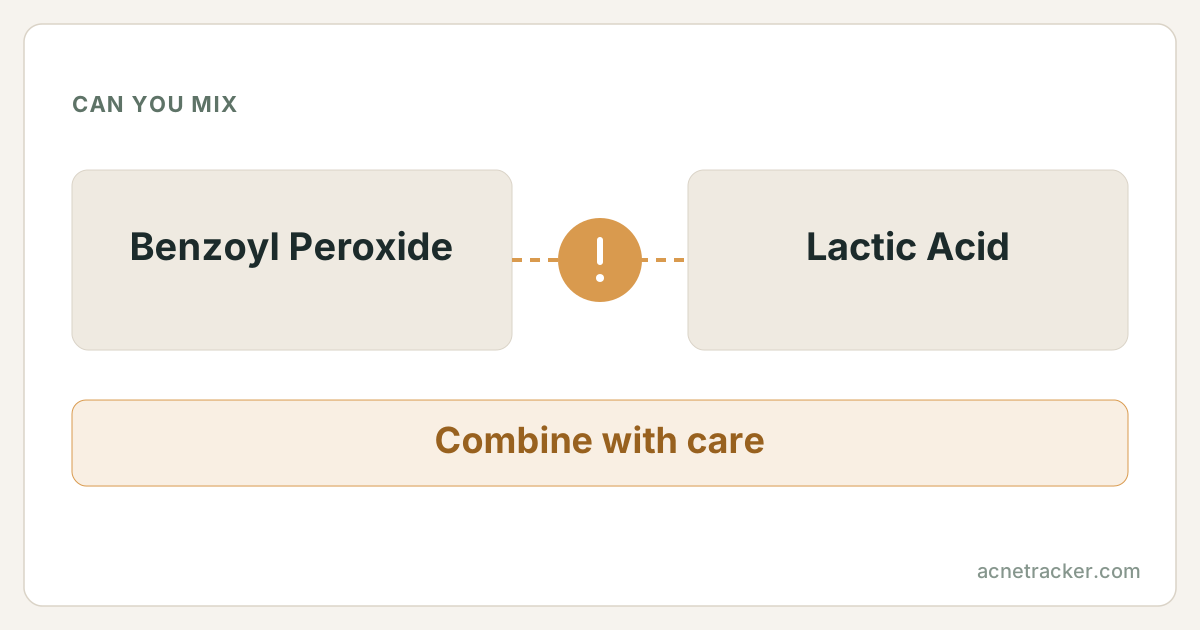
With care, and on different nights. There is no reaction that destroys either ingredient — the problem is that both strip the skin, from opposite directions. Lactic acid loosens dead cells at the surface, benzoyl peroxide oxidises inside the follicle, and stacked in one routine they dry and redden skin faster than either does alone. Alternate nights, or use lactic acid weekly and benzoyl peroxide on spots.
How this pairing resolves
The two ingredients, their published numbers, and where they land together.
The numbers beside each ingredient are its published comedogenic rating and effective pH window, taken from its own profile page.
Show the numbers
| Ingredients | Metric | 0–5 |
|---|---|---|
| Benzoyl Peroxide | Comedogenic rating | 0/5 |
| Benzoyl Peroxide | Effective pH | no published pH |
| Lactic Acid | Comedogenic rating | 0/5 |
| Lactic Acid | Effective pH | 3.0–4.0 |
Why
Lactic acid is a small alpha hydroxy acid that breaks the ionic bonds holding corneocytes together, so the top layer sheds more readily; it is also the most humectant of the AHAs, since lactate is part of the skin's own natural moisturising factor. Benzoyl peroxide works nowhere near there — it diffuses into the sebum-filled follicle and decomposes into oxygen radicals. Neither degrades the other, and the low pH lactic acid needs (roughly 3.5–4) does not disable benzoyl peroxide, which is not pH-dependent in the way an acid is. So why the caution? Because the two side-effect profiles are additive on the same square centimetre of skin. Lactic acid removes part of the barrier's outer defence; benzoyl peroxide is a known irritant and, in a minority of users, a contact allergen. Apply them together and you remove the shield and apply the irritant in the same minute. Skin that is already peeling absorbs more of everything, which is how people end up with a chemical-burn sensation from products they tolerated separately. The fix is timing, not avoidance.
How to combine them
Split by night. Benzoyl peroxide on Monday, Wednesday and Friday evenings, lactic acid on Tuesday or Saturday, nothing but moisturiser on the rest. Start lactic acid at 5% and benzoyl peroxide at 2.5% — the concentration ladder matters more here than the schedule. If you want both in a single week without risk, use lactic acid as a rinse-off or short-contact step and keep benzoyl peroxide as a targeted spot treatment rather than a full-face layer, since two full-face actives is what tips most people over. Morning routines should be dull on purpose: gentle cleanser, moisturiser, SPF 30+, because lactic acid raises UV sensitivity for days afterwards and benzoyl peroxide leaves skin thin-feeling. Never introduce both in the same fortnight — you will not know which one caused the reaction.
Example routine
| When | Steps |
|---|---|
| Mon / Wed / Fri evening | Cleanser → Benzoyl peroxide 2.5% on spots → Moisturiser |
| Tue evening | Cleanser → Lactic acid 5% → wait → Moisturiser |
| Thu / Sat / Sun evening | Cleanser → Moisturiser only (recovery) |
| Every morning | Gentle cleanser → Moisturiser → SPF 30+ (non-negotiable after acid) |
Warning signs
Frequently asked questions
Does lactic acid deactivate benzoyl peroxide?
No. Benzoyl peroxide is not neutralised by an acidic pH, and lactic acid does not oxidise or reduce it. The reason to separate them is cumulative irritation, not any reaction between the molecules.
Can I use lactic acid the morning after benzoyl peroxide?
Better than the same evening, but still busy. If your skin is well adjusted it can work; most people get a calmer result putting the acid on its own night and keeping mornings to sunscreen and moisturiser.
Is lactic acid gentler than glycolic acid next to benzoyl peroxide?
Generally yes — lactic acid is a larger molecule that penetrates less aggressively and carries humectant properties glycolic acid lacks. It is the more sensible AHA to pair with an already-drying treatment.
Do I need both if I already exfoliate?
Often not. Lactic acid works on surface texture and dullness; benzoyl peroxide works on inflamed spots. If you have no inflamed spots, benzoyl peroxide is adding dryness without a target.
Sources & further reading
There is no single study of this exact question. The guidance here is reasoned from the ingredient profiles below, each of which carries its own references:
- Benzoyl Peroxide3 refs
- Lactic Acid3 refs
Show every reference behind this page (6)
- PubChem — Benzoyl peroxide compound summarycited by Benzoyl Peroxide
- DermNet — Benzoyl peroxidecited by Benzoyl Peroxide
- FDA — Drugs (OTC acne products)cited by Benzoyl Peroxide
- PubChem — Lactic acid compound summarycited by Lactic Acid
- DermNet — Alpha hydroxy acidscited by Lactic Acid
- European Commission CosIng database — Lactic Acidcited by Lactic Acid
Medical disclaimer
Ingredients mentioned on this page
Find your personal acne triggers
Our free Acne Tracker lets you log breakouts, sleep, stress and diet, and shows you which factors correlate with your flare-ups.