Can You Mix Glycolic Acid and Lactic Acid?
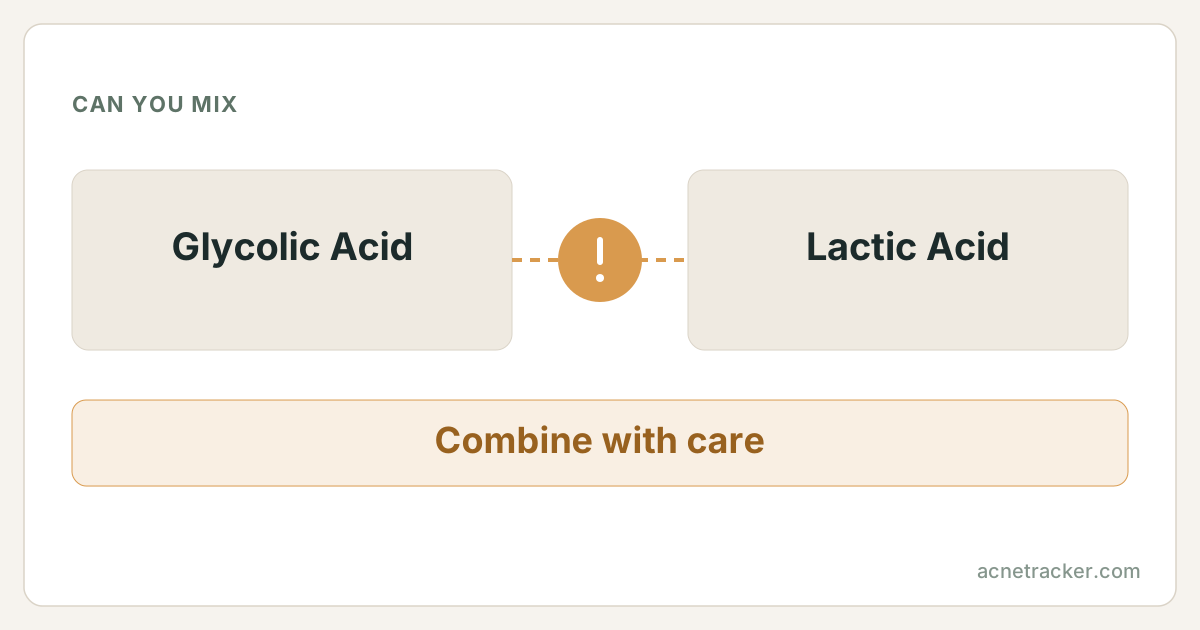
Use caution: glycolic acid and lactic acid are both alpha-hydroxy acids that exfoliate through the same mechanism, so layering two separate products stacks their strength and risks over-exfoliation. A single formula that blends both at a sensible total concentration is fine, but do not pile a glycolic toner on top of a lactic serum. Pick one leading acid, or alternate them on different nights.
How this pairing resolves
The two ingredients, their published numbers, and where they land together.
The numbers beside each ingredient are its published comedogenic rating and effective pH window, taken from its own profile page.
Show the numbers
| Ingredients | Metric | 0–5 |
|---|---|---|
| Glycolic Acid | Comedogenic rating | 0/5 |
| Glycolic Acid | Effective pH | 3.0–4.0 |
| Lactic Acid | Comedogenic rating | 0/5 |
| Lactic Acid | Effective pH | 3.0–4.0 |
Why
Glycolic and lactic acid do the same job by the same route. Both are AHAs that loosen the bonds between dead surface cells (corneocytes) so they shed, revealing smoother skin. The practical difference is molecule size. Glycolic acid is the smallest AHA at about 76 daltons, so it penetrates fast and deep and hits hardest. Lactic acid is larger at around 90 daltons, penetrates more slowly, and doubles as a humectant that draws water into the skin, which makes it gentler and more hydrating. Because they share one exfoliation pathway, using both as separate strong products does not add a new benefit; it simply doubles the dose of the same action. That is how people reach over-exfoliation: tight, shiny, stinging skin, then flaking and breakouts as the barrier gives out. Both also lower the skin surface pH and raise UV sensitivity. A well-formulated product that combines them is calibrated as one exfoliating step, so the risk lies in unplanned stacking, not in the pairing itself.
How to combine them
Treat glycolic and lactic acid as one exfoliation slot, not two. If you like a product that already blends them, use it as your single acid step and build the rest of the routine around recovery. If you own separate products, do not layer them the same night. A gentle plan is lactic acid on the nights you want hydration with mild resurfacing, and glycolic on the nights you want a stronger polish, never back to back. Always apply to dry skin, follow with a barrier moisturiser, and start twice a week before increasing. Because both raise sun sensitivity, broad-spectrum SPF 30+ every morning is non-negotiable. If your skin is sensitive, choose lactic acid alone; it delivers most of the glow with less sting.
Example routine
| When | Steps |
|---|---|
| Evening (Mon) | Cleanser → Lactic acid → Moisturiser |
| Evening (Thu) | Cleanser → Glycolic acid → Moisturiser |
| Other evenings | Cleanser → Moisturiser (recovery) |
| Every morning | Cleanser → Moisturiser → SPF 30+ |
Warning signs
Frequently asked questions
Is a product that combines glycolic and lactic acid safe?
Yes. When both sit in one formula, the total acid load is balanced as a single exfoliating step. The problem is layering two separate strong acid products, which doubles the same action.
Which is gentler, glycolic or lactic acid?
Lactic acid. Its larger molecule penetrates more slowly and it also acts as a humectant, so it hydrates while it exfoliates. Glycolic acid is the strongest, fastest AHA.
Can I alternate glycolic and lactic acid on different nights?
Yes, and that is the safest way to use both. Space them out, apply to dry skin, and keep at least one recovery night between acid nights so the barrier can settle.
Do I still need sunscreen with these acids?
Absolutely. Both AHAs thin the outer dead-cell layer and raise UV sensitivity, so daily broad-spectrum SPF 30+ is essential to prevent burning and new dark marks.
Sources & further reading
There is no single study of this exact question. The guidance here is reasoned from the ingredient profiles below, each of which carries its own references:
- Glycolic Acid3 refs
- Lactic Acid3 refs
Show every reference behind this page (4)
- PubChem — Glycolic acid compound summarycited by Glycolic Acid
- DermNet — Alpha hydroxy acidscited by Glycolic Acid, Lactic Acid
- European Commission CosIng database — Glycolic Acidcited by Glycolic Acid, Lactic Acid
- PubChem — Lactic acid compound summarycited by Lactic Acid
Medical disclaimer
Ingredients mentioned on this page
Find your personal acne triggers
Our free Acne Tracker lets you log breakouts, sleep, stress and diet, and shows you which factors correlate with your flare-ups.