How to Choose a Cleanser for Men
Men's skin tends to be thicker and oilier, with more active sebaceous glands, and daily shaving adds a layer of mechanical irritation most routines ignore. But skin does not really have a gender, and a cleanser labelled 'for men' is chosen the same way as any other: by its ingredients, not its packaging. The genuine considerations are managing oil without stripping and calming the shaving-related irritation on the beard area. This guide describes the ingredient profile that suits typically oilier, shave-stressed skin, the harsh formats to avoid, and how to see past the marketing that dresses ordinary cleansers in grey and black.
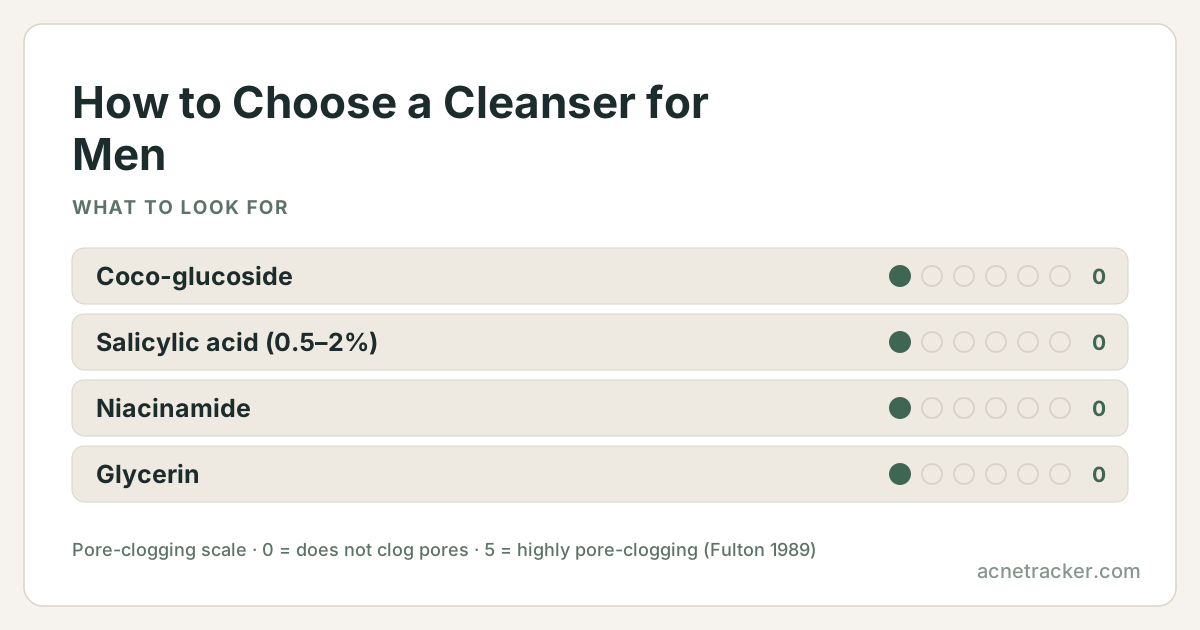
Ingredients to look for
| Ingredient | Why it matters |
|---|---|
| Coco-glucoside | A gentle surfactant that clears the extra oil of thicker, oilier skin without stripping the barrier. |
| Salicylic acid (0.5–2%) | Helps keep oil-prone, congestion-prone skin clearer, useful if breakouts or ingrown hairs are an issue. |
| Niacinamide | A barrier-friendly ingredient that helps oilier skin stay balanced and calmer after shaving. |
| Glycerin | Keeps the wash from over-drying and offsets the irritation that shaving adds. |
| Allantoin | A soothing agent that helps calm the razor-irritated skin of the beard area. |
Ingredients to avoid
| Ingredient | Why it matters |
|---|---|
| Harsh, high-pH bar soaps used on the face | Strip the barrier and worsen the dryness and irritation that shaving already causes. |
| Menthol and strong fragrance 'cooling' washes | The tingling is marketing, and both can sting and irritate freshly shaved skin. |
| Abrasive face scrubs | Combined with shaving, mechanical friction inflames skin and can worsen ingrown hairs. |
| Denatured alcohol high on the list | Dries and stings, particularly on the shaved beard area, and triggers rebound oil. |
How to choose
Choose on ingredients, not on whether the bottle looks masculine. For typically oilier skin a gentle gel or foaming gel with a mild surfactant and glycerin works well, and a version with 0.5–2% salicylic acid helps if you get breakouts or ingrown hairs. If you shave daily, prioritise soothing, non-stripping formulas and skip menthol, strong fragrance and alcohol-heavy 'cooling' washes that sting freshly shaved skin. Do not use a high-pH bar soap on the face — body soap is formulated differently and strips facial skin. Ignore 'for men' branding, '3-in-1' and 'energising' claims; the ingredient list decides. The after-rinse feel is the real test: clean and comfortable, not tight or stinging, especially across the beard area where shaving has already stressed the skin.
How to apply
Wash twice a day, morning and evening, with lukewarm water and fingertips. If you shave in the morning, cleanse first to soften and clean the skin, then shave, and follow with a light moisturiser to calm the area — a fragrance-free one stings less on freshly shaved skin. Avoid scrubbing, which worsens ingrown hairs. In the evening, cleanse to remove the day's sweat, sunscreen and grime. Even oilier skin benefits from a light moisturiser afterwards, and daytime sunscreen matters just as much as it does for anyone else.
Frequently asked questions
Is a cleanser 'for men' actually different?
Rarely in any meaningful way. Skin does not have a gender, so a 'for men' label is mostly marketing and packaging. Men's skin is often oilier and shave-stressed, but you choose a suitable cleanser by its ingredients, not by whether it is branded for men.
Can I just use bar soap on my face?
It is better not to. Most bar soaps are high-pH and formulated for the body, so they strip facial skin and worsen the dryness and irritation that shaving causes. A gentle facial cleanser at skin-friendly pH is a much kinder choice.
What cleanser helps with shaving irritation?
A gentle, non-stripping wash without menthol, strong fragrance or alcohol is best, ideally with soothing ingredients like allantoin or glycerin. Cleanse before shaving to soften the skin, avoid scrubs, and follow with a fragrance-free moisturiser.
Do men need a separate cleanser for ingrown hairs and breakouts?
Not separate, but a gentle cleanser with salicylic acid can help keep pores and follicles clearer, which reduces ingrown hairs and breakouts. Avoid scrubbing, which inflames the area, and see a doctor if ingrown hairs are severe or persistent.
Sources & further reading
There is no single study of this exact question. The guidance here is reasoned from the ingredient profiles below, each of which carries its own references:
- Coco-Glucoside2 refs
- Salicylic Acid2 refs
- Niacinamide2 refs
- Glycerin3 refs
- Allantoin3 refs
Show every reference behind this page (9)
- European Commission CosIng — Coco-Glucosidecited by Coco-Glucoside, Niacinamide, Glycerin, Allantoin
- Cosmetic Ingredient Review — safety of alkyl glucosidescited by Coco-Glucoside
- Salicylic acid as a peeling agent: a comprehensive review (PubMed)cited by Salicylic Acid
- FDA OTC monograph — acne drug products (salicylic acid 0.5–2%)cited by Salicylic Acid
- Niacinamide: mechanisms of action and its topical use in dermatology (PubMed)cited by Niacinamide
- PubChem — Glycerol compound summarycited by Glycerin
- DermNet — Moisturiserscited by Glycerin
- PubChem — Allantoin compound summarycited by Allantoin
- Final report of the safety assessment of allantoin and its related complexes (PubMed)cited by Allantoin
Medical disclaimer
Ingredients mentioned on this page
Find your personal acne triggers
Our free Acne Tracker lets you log breakouts, sleep, stress and diet, and shows you which factors correlate with your flare-ups.