Willow Bark Extract: Comedogenic Rating & Ingredient Analysis
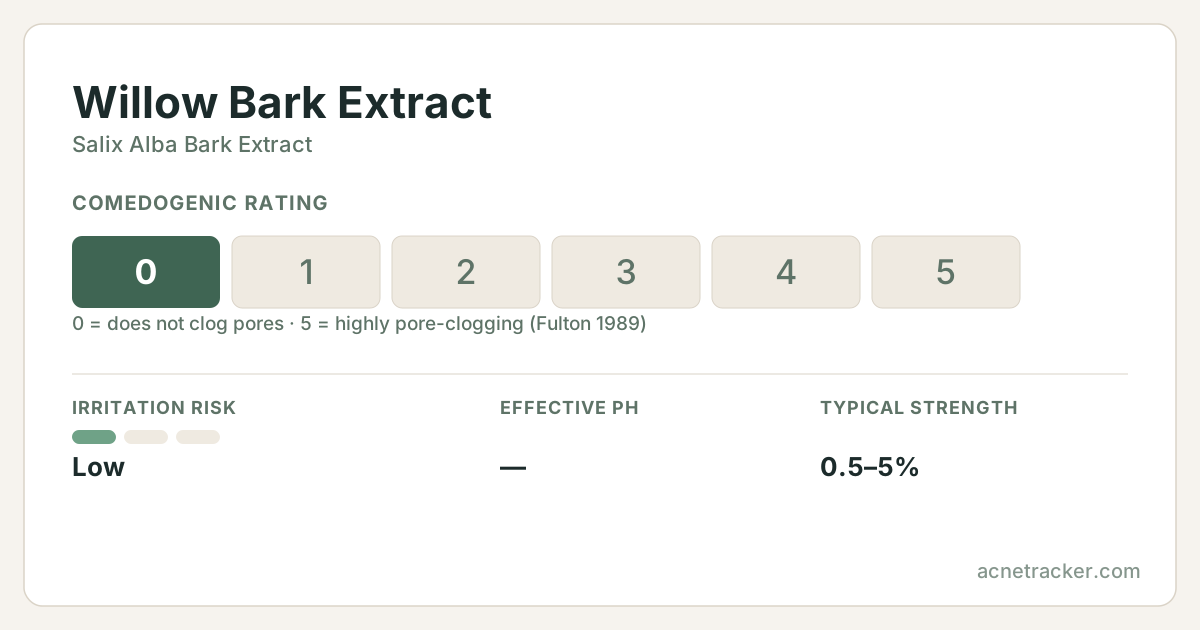
Willow bark extract comes from the bark of the white willow, Salix alba, and is often marketed as a natural, gentler alternative to salicylic acid. Its appeal rests on salicin, a compound the body can convert toward salicylic acid, along with a range of antioxidants and soothing plant polyphenols. In practice its salicin content is modest, so it is best understood as a calming, mildly exfoliating botanical rather than a direct replacement for a proper BHA. It appears in toners, serums and cleansers aimed at oily, blemish-prone and sensitive skin.
Quick facts
- Comedogenic rating
- our estimate — not measured
- Irritation risk
- Low
- Effective pH
- —
- Typical strength
- 0.5–5%
- Pregnancy
- Ask your doctor
- Suits skin types
- oilycombinationacne-pronesensitive
Where this number comes from
No one has published a comedogenic rating for this ingredient. Fulton's 1989 table tested about 250 raw materials and this was not among them, and we found no later study measuring it. The figure shown is our own reasoning from the ingredient's chemistry and how it is used — treat it as an estimate, not a measurement.
Fulton read his own scale as 0-1 not significant, 2-3 borderline, 4-5 positive. The assay is the rabbit ear at 10% dilution, which the paper itself calls extremely sensitive and not fully predictive of human skin. Ratings describe the raw ingredient; concentration and formulation change real-world behaviour.
Caution profile
The four published fields on this page, on one 0–5 scale. Further from the centre means more care is needed — never that the ingredient is worse.
Derived, not measured: pore-clogging is the published comedogenic rating; irritation maps low/moderate/high to 1/3/5; pregnancy maps safe/caution/avoid to 0/3/5; skin-type limits is how many of the seven skin types this entry does NOT list. Every input is printed in words in the quick-facts card above.
Show the numbers
| Metric | 0–5 | Published field |
|---|---|---|
| Pore-clogging | 0 | 0/5 |
| Irritation | 1 | Low |
| Skin-type limits | 2.1 | 4/7 |
| Pregnancy | 3 | Ask your doctor |
Working pH and typical strength
Where this ingredient is formulated to sit, and at what concentration.
Both bars come from the fields above: the pH window and the typical strength range published for this ingredient. The tinted column is healthy skin's surface pH (about 4.7–5.75).
Show the numbers
| Metric | 0–5 |
|---|---|
| Typical strength | 0.5–5% |
What is it?
Willow bark extract is a botanical rich in salicin and related salicylates, plus tannins, flavonoids and other polyphenols with antioxidant and anti-inflammatory properties. Salicin is chemically related to salicylic acid, which is why willow bark is described as a natural BHA, but the amount of active salicylate delivered from a cosmetic extract is far lower than that of a formulated salicylic acid product. Its real strengths in skincare are soothing and antioxidant: the polyphenols help calm irritation and neutralise free radicals, while any mild exfoliating and pore-benefiting effect from the salicin is a gentle bonus rather than the main event.
Benefits
Soothes irritated skin
The polyphenols and salicylates in willow bark have anti-inflammatory character, helping calm redness and irritation, which is useful for reactive and blemish-prone skin.
Mild pore support
Its salicin content gives willow bark a gentle, BHA-adjacent benefit for congested skin, though it is far milder than an actual salicylic acid product.
Antioxidant protection
Willow bark is rich in flavonoids and other antioxidants that help defend the skin against the free radicals that contribute to dullness and premature ageing.
A gentle botanical option
For people who want a plant-derived ingredient that feels calming rather than aggressive, willow bark offers mild benefits with a low irritation profile.
How to use
Willow bark extract is easy to use because it is gentle: it appears in leave-on toners and serums that can generally be used daily, applied to cleansed skin before moisturiser. It layers comfortably with niacinamide and hydrators. Do not expect it to match a dedicated salicylic acid treatment for clearing blackheads — treat it as a soothing, supportive ingredient. As always, patch test a new product, especially if you have a salicylate sensitivity.
Side effects
Willow bark extract is generally well tolerated with a low irritation profile. Because it contains natural salicylates, people with an aspirin or salicylate allergy should be cautious or avoid it. As a botanical extract it can, rarely, cause sensitivity in some individuals. Stop use if you develop redness, itching or a rash that does not settle.
Who should avoid it
People with a salicylate or aspirin allergy should approach willow bark extract with caution or avoid it. During pregnancy, salicylate-containing ingredients are often treated carefully, so confirm with your doctor. Anyone prone to reactions to botanical extracts should patch test before regular use.
Pairs well with
Avoid combining with
Frequently asked questions
Is willow bark extract a natural salicylic acid?
It contains salicin, which is related to salicylic acid, so it is often called a natural BHA. However, the amount of active salicylate is much lower than in a formulated salicylic acid product.
Does willow bark extract clear acne like salicylic acid?
Not to the same degree. It offers mild pore support and soothing benefits, but it is far gentler than a dedicated salicylic acid treatment and should not be expected to match it.
Is willow bark extract good for sensitive skin?
Often, yes. Its main strengths are soothing and antioxidant, with a low irritation profile, though anyone with a salicylate allergy should still be careful.
Can I use willow bark extract every day?
Generally yes, since it is gentle and usually found in leave-on toners and serums suitable for daily use. Patch test first and monitor how your skin responds.
Is willow bark extract safe in pregnancy?
Because it contains natural salicylates, it is often treated with caution during pregnancy. It is best to confirm with your doctor before regular use while pregnant.
Sources & further reading
Medical disclaimer
Find your personal acne triggers
Our free Acne Tracker lets you log breakouts, sleep, stress and diet, and shows you which factors correlate with your flare-ups.