Squalene: Comedogenic Rating & Ingredient Analysis
Squalene is a lipid your own skin makes: it is a natural part of sebum and one of the substances that keeps the surface soft and protected. As a skincare ingredient it is a lightweight emollient with antioxidant properties. The crucial thing to understand about squalene is its relationship to squalane, the far more common ingredient. Squalene is the original, unsaturated molecule, and those double bonds make it prone to oxidation — it can go off and, when oxidised on the skin, has been linked to clogged pores and irritation. Squalane is squalene that has been hydrogenated to remove those weak points, making it far more stable. This is why most products use squalane, while squalene appears less often and needs careful formulation.
Quick facts
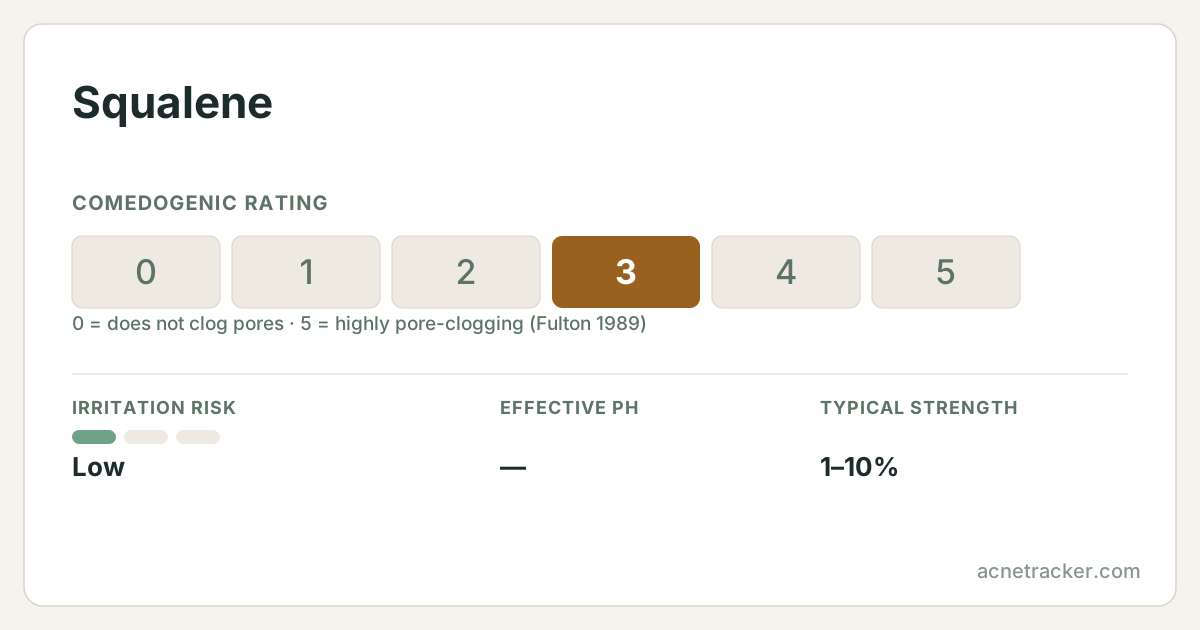
- Comedogenic rating
- our estimate — not measured
- Irritation risk
- Low
- Effective pH
- —
- Typical strength
- 1–10%
- Pregnancy
- Considered safe
- Suits skin types
- drynormalcombinationmaturesensitive
Where this number comes from
No one has published a comedogenic rating for this ingredient. Fulton's 1989 table tested about 250 raw materials and this was not among them, and we found no later study measuring it. The figure shown is our own reasoning from the ingredient's chemistry and how it is used — treat it as an estimate, not a measurement.
Fulton read his own scale as 0-1 not significant, 2-3 borderline, 4-5 positive. The assay is the rabbit ear at 10% dilution, which the paper itself calls extremely sensitive and not fully predictive of human skin. Ratings describe the raw ingredient; concentration and formulation change real-world behaviour.
Caution profile
The four published fields on this page, on one 0–5 scale. Further from the centre means more care is needed — never that the ingredient is worse.
Derived, not measured: pore-clogging is the published comedogenic rating; irritation maps low/moderate/high to 1/3/5; pregnancy maps safe/caution/avoid to 0/3/5; skin-type limits is how many of the seven skin types this entry does NOT list. Every input is printed in words in the quick-facts card above.
Show the numbers
| Metric | 0–5 | Published field |
|---|---|---|
| Pore-clogging | 3 | 3/5 |
| Irritation | 1 | Low |
| Skin-type limits | 1.4 | 5/7 |
| Pregnancy | 0 | Considered safe |
Working pH and typical strength
Where this ingredient is formulated to sit, and at what concentration.
Both bars come from the fields above: the pH window and the typical strength range published for this ingredient. The tinted column is healthy skin's surface pH (about 4.7–5.75).
Show the numbers
| Metric | 0–5 |
|---|---|
| Typical strength | 1–10% |
What is it?
Squalene is a triterpene, a hydrocarbon lipid produced in human sebum and also found in plants and, historically, shark liver oil. In the skin it is a natural emollient that softens the surface and offers antioxidant protection, helping neutralise some of the free radicals generated by UV and pollution. Its weakness is chemical: squalene contains six carbon-carbon double bonds, which are reactive and readily oxidise when exposed to air and light. Oxidised squalene (squalene peroxides) has been studied as a factor in comedone formation and skin irritation, particularly relevant to acne-prone skin. To solve this, manufacturers hydrogenate squalene into squalane, saturating those bonds so it cannot oxidise, which is why squalane, not squalene, dominates modern skincare. Squalene itself never appeared in Fulton's table; the reproduced lists put it at 3, while the widely-quoted 1 belongs to squalane.
Benefits
Skin-identical emollient
As a natural component of sebum, squalene softens and conditions the skin surface with a lightweight, compatible lipid the skin recognises.
Antioxidant protection
Squalene helps neutralise some free radicals from UV and pollution, offering a measure of protection against oxidative stress on the skin.
Lightweight softening
It smooths and softens without the heavy, greasy feel of many richer oils, making it comfortable for normal and combination skin.
Supports supple skin
By reinforcing the skin's natural surface lipids, it helps keep the surface flexible and comfortable, complementing barrier ingredients.
How to use
If you use a product with squalene, apply it as a nourishing step after water-based serums, ideally from well-sealed, opaque or airless packaging that limits air and light exposure, since squalene oxidises easily. For most people, a product formulated with stable squalane is the more reliable choice and behaves similarly on the skin. Squalene pairs naturally with barrier lipids like ceramides and cholesterol and with its stable cousin squalane. Store it away from heat and sunlight, and discard it if it develops an off, rancid smell, which signals oxidation.
Side effects
Fresh squalene is well tolerated, but its tendency to oxidise is the main concern. Oxidised squalene has been associated with clogged pores and irritation, which is particularly relevant if you are acne-prone. Choosing stable squalane avoids this issue entirely. The reproduced comedogenicity lists rate squalene 3 — Fulton never tested it — and it does not increase sun sensitivity. If a squalene product smells rancid, stop using it.
Who should avoid it
Acne-prone skin should be cautious with squalene specifically because of the oxidation issue, and may prefer stable squalane instead. Everyone else can use well-packaged, fresh squalene, but should protect it from air and light and replace it once opened for a while. Those wanting maximum stability should simply choose squalane.
Pairs well with
Frequently asked questions
My label says squalene with an E — is that the same as squalane?
No, and the single letter is the whole story. Squalene with an E is the natural, unsaturated sebum lipid, which oxidises easily. Squalane with an A is that same molecule hydrogenated to remove its reactive double bonds, making it far more stable and shelf-friendly.
Is squalene good or bad for acne?
Fresh squalene is a compatible skin lipid, but oxidised squalene has been linked to clogged pores and irritation. Acne-prone skin is usually better served by stable squalane.
Does squalene clog pores?
Squalene is not in Fulton's 1989 table at all; the reproduced lists report it at 3, and that is the number we show. The 1 you often see quoted belongs to squalane, the hydrogenated form Fulton did test — a one-letter difference worth two rating points. Oxidised squalene in particular has been associated with comedone formation, which is why squalane is generally preferred.
Why is squalane more common than squalene?
Because squalane is hydrogenated and cannot oxidise, it has a long shelf life and behaves reliably on the skin, whereas squalene degrades with air and light, making it harder to formulate and store.
Sources & further reading
Medical disclaimer
Find your personal acne triggers
Our free Acne Tracker lets you log breakouts, sleep, stress and diet, and shows you which factors correlate with your flare-ups.