Caprylyl Glycol: Comedogenic Rating & Ingredient Analysis
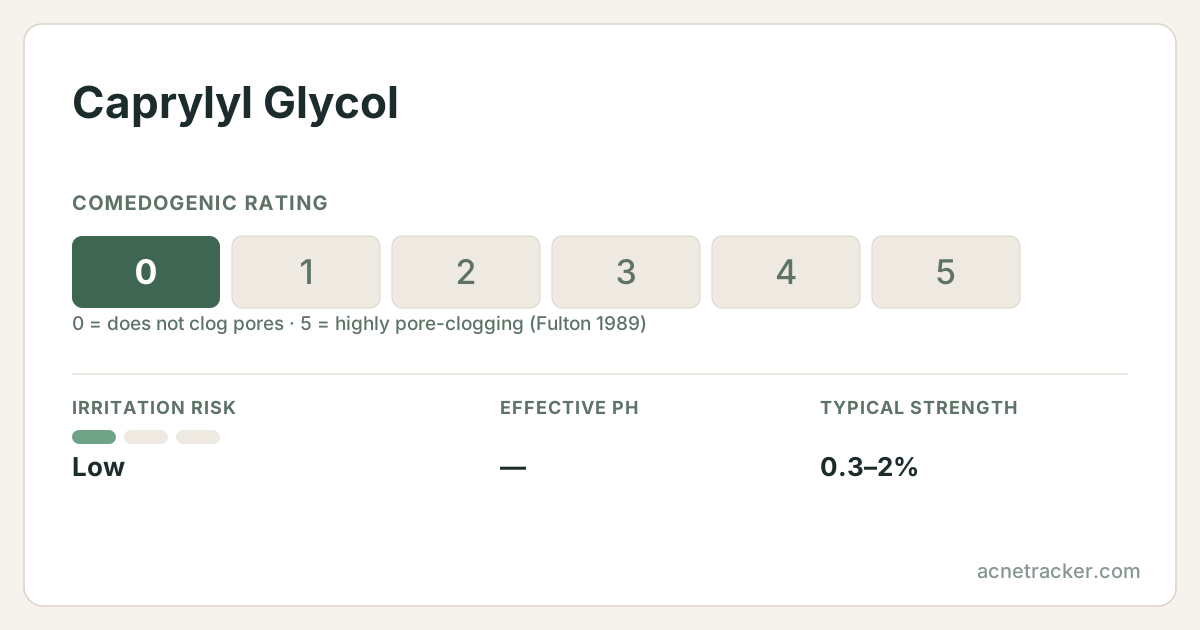
Caprylyl glycol is one of the most common multitaskers in modern skincare, prized because it quietly does several jobs while being unusually gentle. It softens and conditions the skin, holds a little moisture near the surface, and — most usefully to formulators — strengthens a product's preservative system so less traditional preservative is needed. That combination makes it a favourite in fragrance-free and sensitive-skin formulas, where a clean, well-tolerated ingredient list matters. You will see it paired again and again with ethylhexylglycerin, a partnership that together keeps products fresh without harsh preservatives. On its own it will not transform your skin, but it makes gentle, stable formulas possible.
Quick facts
- Comedogenic rating
- our estimate — not measured
- Irritation risk
- Low
- Effective pH
- —
- Typical strength
- 0.3–2%
- Pregnancy
- Considered safe
- Suits skin types
- oilydrycombinationsensitivenormalacne-prone
Where this number comes from
No one has published a comedogenic rating for this ingredient. Fulton's 1989 table tested about 250 raw materials and this was not among them, and we found no later study measuring it. The figure shown is our own reasoning from the ingredient's chemistry and how it is used — treat it as an estimate, not a measurement.
Fulton read his own scale as 0-1 not significant, 2-3 borderline, 4-5 positive. The assay is the rabbit ear at 10% dilution, which the paper itself calls extremely sensitive and not fully predictive of human skin. Ratings describe the raw ingredient; concentration and formulation change real-world behaviour.
Caution profile
The four published fields on this page, on one 0–5 scale. Further from the centre means more care is needed — never that the ingredient is worse.
Derived, not measured: pore-clogging is the published comedogenic rating; irritation maps low/moderate/high to 1/3/5; pregnancy maps safe/caution/avoid to 0/3/5; skin-type limits is how many of the seven skin types this entry does NOT list. Every input is printed in words in the quick-facts card above.
Show the numbers
| Metric | 0–5 | Published field |
|---|---|---|
| Pore-clogging | 0 | 0/5 |
| Irritation | 1 | Low |
| Skin-type limits | 0.7 | 6/7 |
| Pregnancy | 0 | Considered safe |
Working pH and typical strength
Where this ingredient is formulated to sit, and at what concentration.
Both bars come from the fields above: the pH window and the typical strength range published for this ingredient. The tinted column is healthy skin's surface pH (about 4.7–5.75).
Show the numbers
| Metric | 0–5 |
|---|---|
| Typical strength | 0.3–2% |
What is it?
Caprylyl glycol is an eight-carbon diol (1,2-octanediol) that sits somewhere between a humectant and a mild emollient. The water-loving part of the molecule binds moisture in the outer skin, while its longer carbon tail gives a slightly softening, conditioning feel and lends it antimicrobial activity. That antimicrobial side is why it is classed as a preservative booster: it disrupts the growth of bacteria and fungi enough to reduce, though not fully replace, conventional preservatives. It is odourless, non-acidic, has a comedogenic rating of 0 and a very low irritation profile, which is why it appears across cleansers, serums, moisturisers and eye products for every skin type, including sensitive and acne-prone.
Benefits
Gentle, lasting hydration
It binds moisture in the surface layers and adds a soft, conditioned finish, making skin feel smooth without any greasy weight.
Reduces harsh preservatives
Its antimicrobial action lets formulators use less traditional preservative, which is why it is a staple of gentle, sensitive-skin products.
Improves product feel
The mild emollient character smooths the texture of a formula, giving creams and serums a pleasant, non-sticky slip.
Suits reactive skin
With a comedogenic rating of 0 and minimal irritation risk, it is one of the safer conditioning ingredients for sensitive and acne-prone skin.
How to use
No dosing is required — simply use products containing caprylyl glycol as directed, morning or night. It layers freely under sunscreen and makeup and alongside any active. Because it is so well tolerated, it is a reassuring ingredient to see in a formula if your skin reacts easily. It works especially well in minimalist routines built around gentle humectants and barrier supporters like glycerin, panthenol and niacinamide, and it commonly appears next to ethylhexylglycerin as part of a preservative-boosting duo.
Side effects
Caprylyl glycol has an excellent safety record. Irritation and allergy are rare and, when a product with it stings, the cause is almost always something else in the formula. It does not exfoliate, does not increase photosensitivity and has a comedogenic rating of 0. Only people with a genuine sensitivity to glycols may notice mild discomfort.
Who should avoid it
There is essentially no group that must avoid caprylyl glycol. If you have a known reaction to related glycols, patch test a new product first. Otherwise it is appropriate for all skin types, including the most sensitive.
Pairs well with
Frequently asked questions
Is caprylyl glycol good for sensitive skin?
Yes. It is gentle, non-acidic, has a comedogenic rating of 0 and helps formulators avoid harsher preservatives, which is why it is common in sensitive-skin and fragrance-free products.
Does caprylyl glycol act as a preservative?
It is a preservative booster rather than a standalone preservative. Its mild antimicrobial activity supports the main system so less conventional preservative is needed.
Does caprylyl glycol clog pores?
No. With a comedogenic rating of 0 it does not clog pores and is widely used in products formulated for acne-prone skin.
Is caprylyl glycol safe in pregnancy?
Topical caprylyl glycol is considered low risk and there is no specific reason to avoid it during pregnancy or breastfeeding. Ask your doctor if you want to review your full routine.
Sources & further reading
Medical disclaimer
Find your personal acne triggers
Our free Acne Tracker lets you log breakouts, sleep, stress and diet, and shows you which factors correlate with your flare-ups.