Retinyl Propionate: Comedogenic Rating & Ingredient Analysis
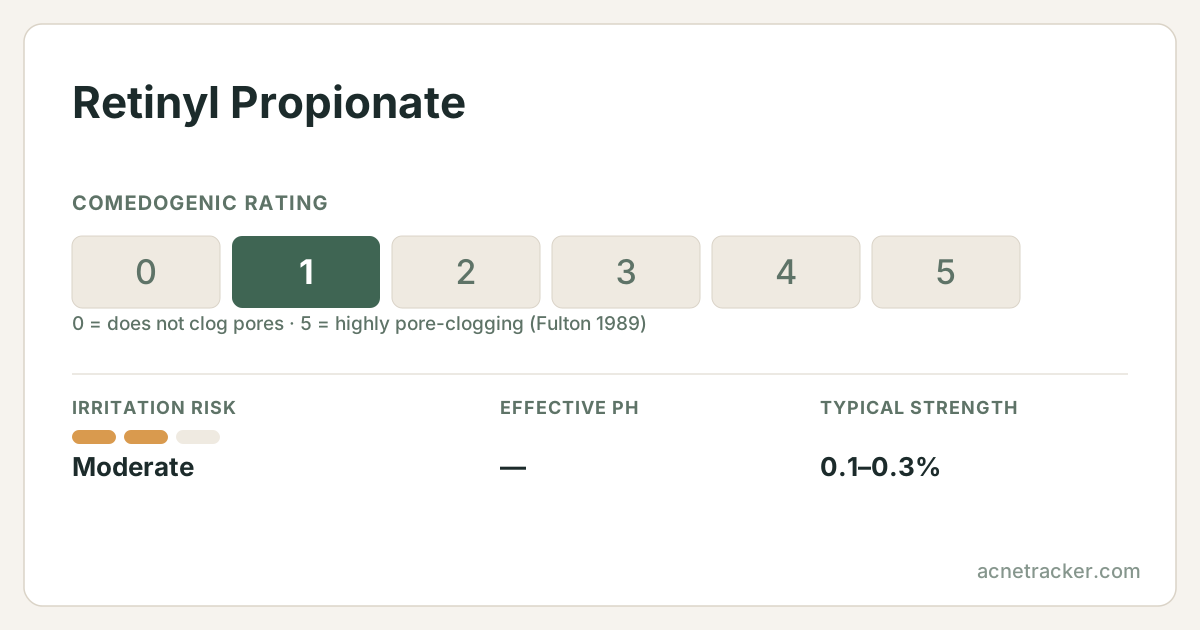
Retinyl propionate is a mild ester of retinol, sitting on the gentler end of the retinoid spectrum. Like retinyl palmitate, it is a vitamin A ester that the skin must convert through several steps before it becomes active retinoic acid, which makes it less potent but also less irritating than pure retinol. It appears in anti-aging moisturisers and serums aimed at people who want a starter retinoid or who cannot tolerate stronger forms. Some research suggests retinyl propionate may convert to retinoic acid a little more efficiently than retinyl palmitate, giving it a reputation as a modestly effective yet very tolerable vitamin A derivative.
Quick facts
- Comedogenic rating
- our estimate — not measured
- Irritation risk
- Moderate
- Effective pH
- —
- Typical strength
- 0.1–0.3%
- Pregnancy
- Avoid
- Suits skin types
- normalcombinationmaturedrysensitive
Where this number comes from
No one has published a comedogenic rating for this ingredient. Fulton's 1989 table tested about 250 raw materials and this was not among them, and we found no later study measuring it. The figure shown is our own reasoning from the ingredient's chemistry and how it is used — treat it as an estimate, not a measurement.
Fulton read his own scale as 0-1 not significant, 2-3 borderline, 4-5 positive. The assay is the rabbit ear at 10% dilution, which the paper itself calls extremely sensitive and not fully predictive of human skin. Ratings describe the raw ingredient; concentration and formulation change real-world behaviour.
Caution profile
The four published fields on this page, on one 0–5 scale. Further from the centre means more care is needed — never that the ingredient is worse.
Derived, not measured: pore-clogging is the published comedogenic rating; irritation maps low/moderate/high to 1/3/5; pregnancy maps safe/caution/avoid to 0/3/5; skin-type limits is how many of the seven skin types this entry does NOT list. Every input is printed in words in the quick-facts card above.
Show the numbers
| Metric | 0–5 | Published field |
|---|---|---|
| Pore-clogging | 1 | 1/5 |
| Irritation | 3 | Moderate |
| Skin-type limits | 1.4 | 5/7 |
| Pregnancy | 5 | Avoid |
Working pH and typical strength
Where this ingredient is formulated to sit, and at what concentration.
Both bars come from the fields above: the pH window and the typical strength range published for this ingredient. The tinted column is healthy skin's surface pH (about 4.7–5.75).
Show the numbers
| Metric | 0–5 |
|---|---|
| Typical strength | 0.1–0.3% |
What is it?
Retinyl propionate is retinol joined to propionic acid, forming a stable ester. Once in the skin, enzymes must cleave the ester and then carry out the usual retinol-to-retinaldehyde-to-retinoic-acid conversion, so the amount of active retinoid the skin ends up with is lower than from an equal percentage of retinol. This is why it is gentle: less active retinoid means less irritation, but also more modest results. It is well suited to sensitive or drier skin easing into vitamin A, and it is often combined with antioxidants and moisturising ingredients in mainstream anti-aging products. Its evidence base is smaller than retinol's, so expectations should be measured.
Benefits
Gentle introduction to retinoids
Because it converts to active retinoid slowly, retinyl propionate causes less dryness and irritation than retinol, making it a good starting point for sensitive or cautious skin.
Supports smoother texture
With consistent use, its mild retinoid activity encourages fresher skin renewal, which can gradually soften rough texture and support a smoother, more even surface.
Helps soften fine lines
As a vitamin A derivative, it supports the skin's renewal and collagen processes, contributing over time to a reduction in the look of fine lines, especially with daily use.
Antioxidant character
Vitamin A derivatives contribute some antioxidant activity, and retinyl propionate is often paired with vitamin E and other antioxidants to support the skin against oxidative stress.
How to use
Apply retinyl propionate at night on clean, dry skin, since vitamin A derivatives break down in light. Even though it is gentle, introduce it a few nights a week and build up as tolerated, following with moisturiser. Daily broad-spectrum sunscreen is still important, as any retinoid can increase sun sensitivity. Avoid layering it with strong exfoliating acids or benzoyl peroxide in the same routine; alternate nights instead. It pairs nicely with niacinamide and vitamin E for a supportive, low-irritation routine. Be patient — gentle esters like this show gradual results over a couple of months.
Side effects
Retinyl propionate is one of the milder retinoids, so significant irritation is less common than with retinol, but dryness, mild flaking or redness can still occur, particularly early on. A small purge is possible but usually limited. As with all vitamin A derivatives, it can modestly raise photosensitivity, so daytime sun protection matters. If you notice persistent irritation, reduce how often you use it and support the skin with moisturiser.
Who should avoid it
Do not use retinyl propionate during pregnancy or breastfeeding — as a retinoid it is avoided precautionarily, with niacinamide and azelaic acid as the usual alternatives. Those with a damaged barrier or active eczema or rosacea should calm the skin first. People wanting strong, fast anti-aging results may find it too mild and prefer retinol or a prescription retinoid under medical advice.
Pairs well with
Avoid combining with
Frequently asked questions
Is retinyl propionate the same as retinol?
No. It is a milder ester of retinol that the skin must convert through extra steps, making it gentler but less potent than pure retinol. It is a good option for sensitive skin.
Is retinyl propionate effective for wrinkles?
It offers modest anti-aging support with consistent use, gradually helping smooth texture and soften fine lines, though results are gentler and slower than with stronger retinoids.
Can beginners use retinyl propionate?
Yes. Its low irritation profile makes it a suitable entry point into vitamin A. Introduce it a few nights a week, moisturise, and use daily sunscreen as your skin adjusts.
Should I pair retinyl propionate with niacinamide?
Yes. Niacinamide pairs well with retinyl propionate, supporting the barrier and reducing the chance of irritation while adding its own brightening and oil-balancing benefits.
Is retinyl propionate safe in pregnancy?
No. All retinoids, including mild esters like retinyl propionate, are avoided during pregnancy and breastfeeding. Niacinamide and azelaic acid are the standard pregnancy-safe alternatives.
Sources & further reading
Medical disclaimer
Find your personal acne triggers
Our free Acne Tracker lets you log breakouts, sleep, stress and diet, and shows you which factors correlate with your flare-ups.