Tetrahexyldecyl Ascorbate: Comedogenic Rating & Ingredient Analysis
Tetrahexyldecyl ascorbate, often shortened to THD ascorbate, is the premium oil-soluble form of vitamin C found in many high-end serums. Unlike the water-soluble salts, it is a lipid-friendly ester that mixes into anhydrous, oily formulas and is believed to penetrate the skin's outer lipid layers more readily than L-ascorbic acid. It is prized for being both highly stable and non-irritating, which lets brands use it in silky, elegant textures that feel more like a facial oil than a stinging vitamin C serum. It has become a favourite for dry and mature skin seeking brightening and antioxidant benefits without the harshness of traditional vitamin C.
Quick facts
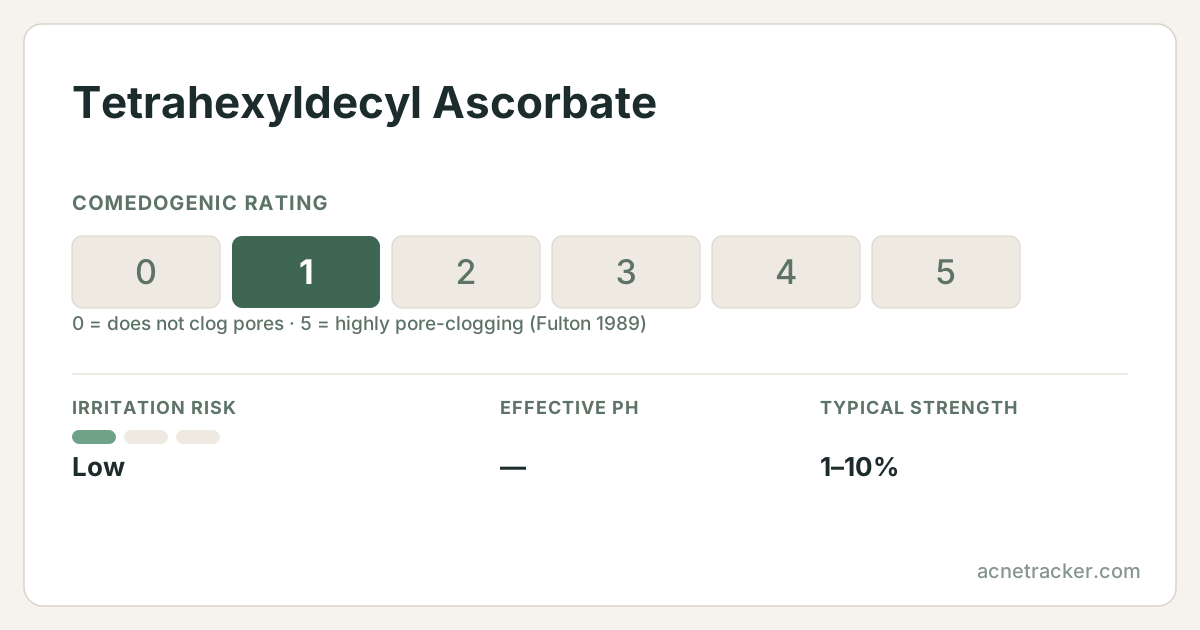
- Comedogenic rating
- our estimate — not measured
- Irritation risk
- Low
- Effective pH
- —
- Typical strength
- 1–10%
- Pregnancy
- Considered safe
- Suits skin types
- drynormalmaturecombinationsensitive
Where this number comes from
No one has published a comedogenic rating for this ingredient. Fulton's 1989 table tested about 250 raw materials and this was not among them, and we found no later study measuring it. The figure shown is our own reasoning from the ingredient's chemistry and how it is used — treat it as an estimate, not a measurement.
Fulton read his own scale as 0-1 not significant, 2-3 borderline, 4-5 positive. The assay is the rabbit ear at 10% dilution, which the paper itself calls extremely sensitive and not fully predictive of human skin. Ratings describe the raw ingredient; concentration and formulation change real-world behaviour.
Caution profile
The four published fields on this page, on one 0–5 scale. Further from the centre means more care is needed — never that the ingredient is worse.
Derived, not measured: pore-clogging is the published comedogenic rating; irritation maps low/moderate/high to 1/3/5; pregnancy maps safe/caution/avoid to 0/3/5; skin-type limits is how many of the seven skin types this entry does NOT list. Every input is printed in words in the quick-facts card above.
Show the numbers
| Metric | 0–5 | Published field |
|---|---|---|
| Pore-clogging | 1 | 1/5 |
| Irritation | 1 | Low |
| Skin-type limits | 1.4 | 5/7 |
| Pregnancy | 0 | Considered safe |
Working pH and typical strength
Where this ingredient is formulated to sit, and at what concentration.
Both bars come from the fields above: the pH window and the typical strength range published for this ingredient. The tinted column is healthy skin's surface pH (about 4.7–5.75).
Show the numbers
| Metric | 0–5 |
|---|---|
| Typical strength | 1–10% |
What is it?
THD ascorbate is L-ascorbic acid modified with four fatty (lipophilic) chains, which make it oil-soluble and very stable against oxidation. Because it dissolves in lipids, it is compatible with the skin's own oils and can be carried deeper into the upper layers, where enzymes are thought to release active vitamin C. It works without needing a low, acidic pH, so it does not sting. The catch is that laboratory penetration data does not always translate into equal real-world potency, and independent evidence on exactly how much active vitamin C it delivers is more limited than for L-ascorbic acid. Still, its stability, comfort and skin feel make it a genuinely appealing derivative, especially in well-formulated products.
Benefits
Oil-soluble penetration
Its fatty chains let THD ascorbate blend with skin lipids and travel into the upper layers, offering a route to vitamin C benefits that suits dry and mature skin especially well.
Highly stable and non-acidic
It resists oxidation and works without a low pH, so serums stay effective longer and feel comfortable, avoiding the tingling many people dislike about L-ascorbic acid.
Brightens and evens tone
By supplying vitamin C to the skin, THD ascorbate helps fade dullness and uneven pigmentation over time while adding radiance to a dry or tired complexion.
Supports collagen and defence
Vitamin C is essential for collagen synthesis and neutralises free radicals, so consistent use supports firmness and protects against oxidative stress from UV and pollution.
How to use
Apply a THD ascorbate serum or oil once daily, commonly in the morning, on clean skin before heavier creams; its silky texture layers neatly under sunscreen. Concentrations of 1–10% are typical, and because it is oil-based it suits dry and mature skin particularly well. It pairs beautifully with vitamin E and ferulic acid for a reinforced antioxidant effect, and it does not require the gradual introduction retinoids need. As with all vitamin C, daytime use complements sunscreen but never replaces it. Store away from excessive heat, though its stability means it keeps better than most vitamin C serums.
Side effects
THD ascorbate is generally very gentle, with little of the stinging associated with acidic vitamin C. Because it is oil-soluble and rated slightly comedogenic, a minority of very oily or congestion-prone users may find rich formulas feel heavy or contribute to clogged pores. Choosing a lighter concentration or texture usually solves this. Allergic reactions are uncommon, and a short patch test helps confirm compatibility with your skin.
Who should avoid it
Most people tolerate THD ascorbate well, but very oily and easily congested skin should approach heavy, oil-rich formulas with some caution and favour lighter textures. Anyone with a vitamin C derivative allergy should avoid it. It is considered pregnancy-safe. Those wanting the most heavily researched, high-potency vitamin C may still prefer a well-formulated L-ascorbic acid serum.
Pairs well with
Frequently asked questions
Is THD ascorbate better than vitamin C?
It is more stable, more comfortable and oil-soluble, which some find preferable, but the amount of active vitamin C it delivers is less clearly established than for L-ascorbic acid. Both have a place.
Does tetrahexyldecyl ascorbate clog pores?
It has a low comedogenic rating of around 1, so it is unlikely to clog pores for most people, though very oily skin may find rich, oil-based formulas heavy.
Can I use it with vitamin E and ferulic acid?
Yes, and it is an excellent combination. Vitamin E and ferulic acid stabilise vitamin C and boost its antioxidant network, a pairing common in premium serums.
Is it good for dry skin?
Very much so. Its oil-soluble, non-acidic nature makes it comfortable on dry and mature skin that finds traditional water-based vitamin C serums drying or stinging.
Is THD ascorbate safe in pregnancy?
Topical vitamin C derivatives like THD ascorbate are generally regarded as safe during pregnancy and breastfeeding. Check with your doctor for tailored advice.
Sources & further reading
Medical disclaimer
Find your personal acne triggers
Our free Acne Tracker lets you log breakouts, sleep, stress and diet, and shows you which factors correlate with your flare-ups.