Lanolin: Comedogenic Rating & Ingredient Analysis
Lanolin is a rich, waxy emollient obtained from the wool of sheep, where it naturally protects and waterproofs the animal's fleece. In skincare it is one of the most powerful moisturisers for very dry skin, cracked lips and chapped hands, valued for its unusual ability to hold water as well as seal it in. Its structure closely resembles the lipids in human skin, which is part of why it conditions so effectively. The main caveat is its allergy potential: lanolin is a recognised contact allergen for a minority of people, so while most tolerate it well, it is not entirely without risk.
Quick facts
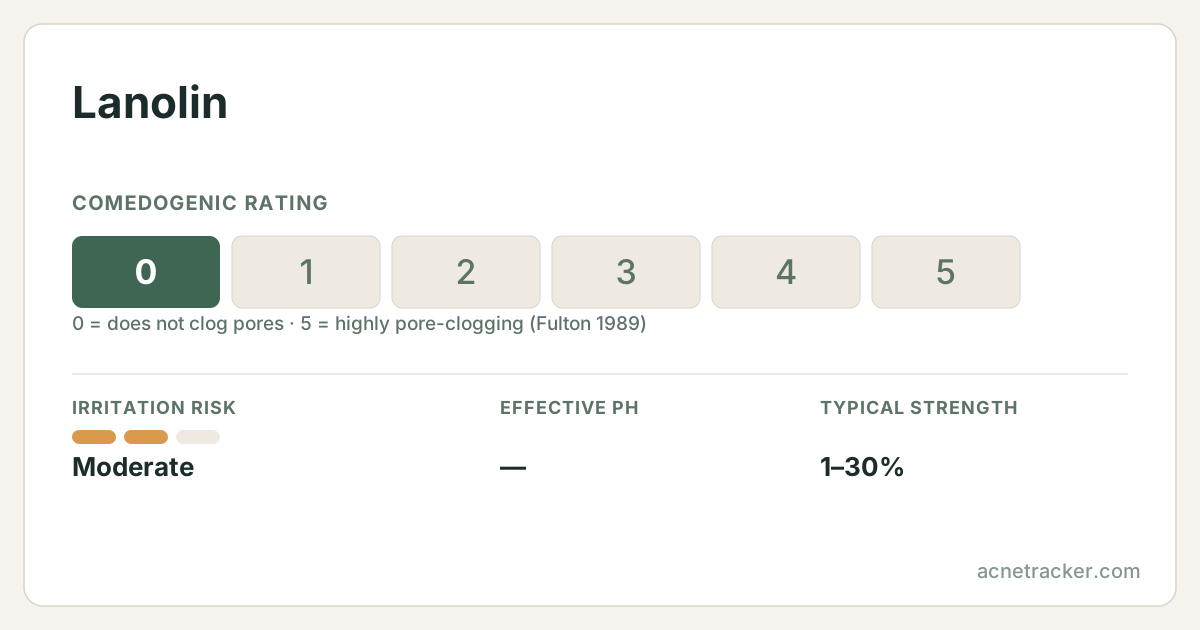
- Comedogenic rating
- measured (Fulton 1989)
- Irritation risk
- Moderate
- Effective pH
- —
- Typical strength
- 1–30%
- Pregnancy
- Considered safe
- Suits skin types
- drynormalmature
Where this number comes from
Read directly from Table I of Fulton's 1989 paper — the primary source, not one of the copied tables that circulate online.
Fulton read his own scale as 0-1 not significant, 2-3 borderline, 4-5 positive. The assay is the rabbit ear at 10% dilution, which the paper itself calls extremely sensitive and not fully predictive of human skin. Ratings describe the raw ingredient; concentration and formulation change real-world behaviour.
Caution profile
The four published fields on this page, on one 0–5 scale. Further from the centre means more care is needed — never that the ingredient is worse.
Derived, not measured: pore-clogging is the published comedogenic rating; irritation maps low/moderate/high to 1/3/5; pregnancy maps safe/caution/avoid to 0/3/5; skin-type limits is how many of the seven skin types this entry does NOT list. Every input is printed in words in the quick-facts card above.
Show the numbers
| Metric | 0–5 | Published field |
|---|---|---|
| Pore-clogging | 0 | 0/5 |
| Irritation | 3 | Moderate |
| Skin-type limits | 2.9 | 3/7 |
| Pregnancy | 0 | Considered safe |
Working pH and typical strength
Where this ingredient is formulated to sit, and at what concentration.
Both bars come from the fields above: the pH window and the typical strength range published for this ingredient. The tinted column is healthy skin's surface pH (about 4.7–5.75).
Show the numbers
| Metric | 0–5 |
|---|---|
| Typical strength | 1–30% |
What is it?
Lanolin is a complex mixture of esters, alcohols and fatty acids secreted by the sebaceous glands of wool-bearing sheep. This composition is remarkably similar to the lipids found in human skin, giving it strong emollient and occlusive properties. Unusually for an oil-like substance, lanolin can also absorb and hold a significant amount of water, letting it both seal in moisture and help bind it. Purified, modern medical-grade lanolin has had many of the impurities and residual allergens reduced, making it gentler than older grades, though sensitisation remains possible in susceptible people.
Benefits
Intense moisture for dry skin
Lanolin's rich, skin-like lipids deeply soften and repair very dry, cracked or chapped areas, making it a powerful rescue for hands, lips and rough patches.
Seals and binds water
Unusually, it both forms an occlusive layer and can hold water, so it seals in moisture while also helping bind it, a dual action most emollients lack.
Soothes cracked lips and nipples
Its gentleness and richness make purified lanolin a classic treatment for chapped lips and for nursing mothers with sore, cracked nipples.
Skin-compatible lipid structure
Because its composition resembles human skin lipids, it conditions and integrates smoothly, giving a comforting, nourished feel to dry and mature skin.
How to use
Use lanolin where skin is very dry: as a rich balm on lips, cracked hands, elbows and heels, or in intensive moisturisers for dry and mature skin, applied as the last, sealing step. A small amount warmed between the fingers spreads more easily, as it is thick and sticky. Because of its allergy potential, patch test on the inner arm for a few days before regular use, especially if you have a history of contact allergies or eczema. Choose purified, medical-grade lanolin, which is gentler than older, less-refined versions.
Side effects
The main concern with lanolin is allergic contact dermatitis, which occurs in a minority of users and can appear as redness, itching or a rash. People with damaged skin barriers or leg ulcers are more prone to sensitisation, and those with a known wool or lanolin allergy should avoid it. Modern purified grades have lowered but not eliminated this risk. Beyond allergy, its thick, sticky texture can feel heavy and is too rich for oily skin.
Who should avoid it
Avoid lanolin if you have a known lanolin or wool allergy, or a history of contact dermatitis to it. Oily and very acne-prone skin may find it too rich for the face. Otherwise it is safe for topical use, including on nursing nipples and during pregnancy, and purified grades suit most people with dry skin who are not sensitised.
Pairs well with
Frequently asked questions
Is lanolin a common allergen?
It is a recognised contact allergen for a minority of people, who may develop redness or a rash. Most tolerate it well, especially purified grades, but a patch test is wise if you have a history of contact allergies or eczema.
Is lanolin good for dry lips?
Yes. Purified lanolin is one of the most effective treatments for chapped, cracked lips because it deeply conditions and both seals and binds moisture, and it is gentle enough for use on nursing nipples too.
Does lanolin clog pores?
It has a moderate comedogenic rating, so it can contribute to congestion on acne-prone facial skin if used heavily. It is best reserved for very dry areas, lips and the body rather than oily facial skin.
Is lanolin safe while breastfeeding?
Yes. Purified lanolin is a classic, widely recommended treatment for sore, cracked nipples during breastfeeding and is considered safe for this use, though anyone with a lanolin allergy should avoid it.
Sources & further reading
Medical disclaimer
Find your personal acne triggers
Our free Acne Tracker lets you log breakouts, sleep, stress and diet, and shows you which factors correlate with your flare-ups.