Biotin: Comedogenic Rating & Ingredient Analysis
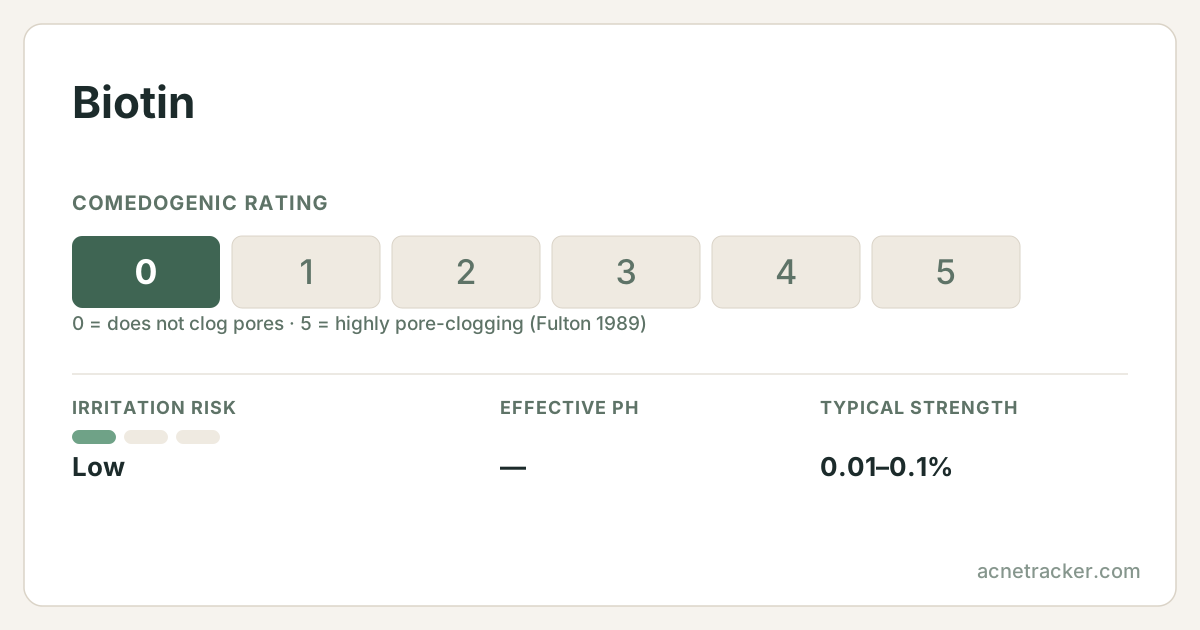
Biotin, also known as vitamin B7, is a nutrient strongly associated with hair, skin and nail health — an association driven largely by its role in the diet and by supplement marketing. In topical skincare it appears in conditioning products for skin and scalp, where it acts as a gentle skin-conditioning vitamin. It has a comedogenic rating of 0 and low irritation risk, so it is easy to tolerate. It is worth being honest, though: the evidence for meaningful benefits from biotin applied to the skin is limited, and its reputation comes mostly from its dietary importance rather than proven topical effects.
Quick facts
- Comedogenic rating
- our estimate — not measured
- Irritation risk
- Low
- Effective pH
- —
- Typical strength
- 0.01–0.1%
- Pregnancy
- Considered safe
- Suits skin types
- drycombinationnormalsensitive
Where this number comes from
No one has published a comedogenic rating for this ingredient. Fulton's 1989 table tested about 250 raw materials and this was not among them, and we found no later study measuring it. The figure shown is our own reasoning from the ingredient's chemistry and how it is used — treat it as an estimate, not a measurement.
Fulton read his own scale as 0-1 not significant, 2-3 borderline, 4-5 positive. The assay is the rabbit ear at 10% dilution, which the paper itself calls extremely sensitive and not fully predictive of human skin. Ratings describe the raw ingredient; concentration and formulation change real-world behaviour.
Caution profile
The four published fields on this page, on one 0–5 scale. Further from the centre means more care is needed — never that the ingredient is worse.
Derived, not measured: pore-clogging is the published comedogenic rating; irritation maps low/moderate/high to 1/3/5; pregnancy maps safe/caution/avoid to 0/3/5; skin-type limits is how many of the seven skin types this entry does NOT list. Every input is printed in words in the quick-facts card above.
Show the numbers
| Metric | 0–5 | Published field |
|---|---|---|
| Pore-clogging | 0 | 0/5 |
| Irritation | 1 | Low |
| Skin-type limits | 2.1 | 4/7 |
| Pregnancy | 0 | Considered safe |
Working pH and typical strength
Where this ingredient is formulated to sit, and at what concentration.
Both bars come from the fields above: the pH window and the typical strength range published for this ingredient. The tinted column is healthy skin's surface pH (about 4.7–5.75).
Show the numbers
| Metric | 0–5 |
|---|---|
| Typical strength | 0.01–0.1% |
What is it?
Biotin is a water-soluble B-vitamin that acts as a cofactor for enzymes involved in metabolism, including processes that support the production of fatty acids important to skin and hair. A dietary biotin deficiency can cause skin and hair problems, which is where its beauty reputation originates. However, most people get enough biotin from food, and taking or applying more does not necessarily improve skin or hair unless you are deficient. In cosmetics biotin is used as a conditioning ingredient, contributing to a smooth, healthy feel, but the leap from its dietary role to dramatic topical benefits is not well supported by evidence.
Benefits
Skin-conditioning vitamin
Biotin acts as a gentle conditioning ingredient, supporting a smooth, healthy-feeling surface as part of a nourishing formula.
Supports the skin and scalp feel
It is often included in scalp and skin products for a conditioned, comfortable feel, complementing other soothing and hydrating ingredients.
Well tolerated
With a rating of 0 and low irritation risk, biotin is gentle and unlikely to cause problems even on sensitive skin.
Part of a B-vitamin approach
It fits alongside other B-vitamins like niacinamide and panthenol in formulas built around gentle, nourishing skin support.
How to use
Biotin appears in serums, moisturizers and scalp or hair products as a conditioning ingredient. Apply biotin-containing skincare after cleansing, layered with your other hydrators and treatments. It works morning and night and does not conflict with other actives. Set realistic expectations: think of topical biotin as a minor supporting ingredient rather than a hero active. If your goal is genuinely healthier hair, skin and nails, a balanced diet that supplies enough biotin matters far more than any topical product.
Side effects
Biotin is very well tolerated topically, and side effects are rare. It does not typically cause irritation or sun sensitivity. One practical, non-skin point worth knowing is that high-dose biotin supplements taken by mouth can interfere with certain laboratory blood tests; this relates to oral supplements, not topical skincare, but it is a commonly misunderstood safety note worth mentioning.
Who should avoid it
There is no group that needs to avoid topical biotin on skin-safety grounds. Those hoping for dramatic hair or nail transformation from a cream should temper expectations, as the evidence does not support it. If you take high-dose biotin supplements, mention this to your doctor before blood tests, though that concern is about oral use, not skincare.
Pairs well with
Frequently asked questions
Does topical biotin improve skin and hair?
Evidence for meaningful benefits from biotin applied to the skin is limited. Its reputation comes mostly from its dietary role, so treat topical biotin as a minor conditioning ingredient.
Is biotin better taken as a supplement or applied to skin?
Biotin matters most in the diet, and most people get enough from food. Supplements help only if you are deficient, and topical benefits are limited, so neither is a guaranteed fix.
Does biotin clog pores?
No. It has a comedogenic rating of 0 and is a water-soluble vitamin used at low levels, so it is suitable for all skin types.
Can I use biotin with niacinamide?
Yes. Biotin and niacinamide are both B-vitamins and layer comfortably together, fitting a gentle, nourishing approach to skincare.
Is biotin safe during pregnancy?
Yes. Topical biotin is a gentle vitamin with no systemic concern and is generally considered safe during pregnancy and breastfeeding.
Sources & further reading
Medical disclaimer
Find your personal acne triggers
Our free Acne Tracker lets you log breakouts, sleep, stress and diet, and shows you which factors correlate with your flare-ups.