Mango Butter: Comedogenic Rating & Ingredient Analysis
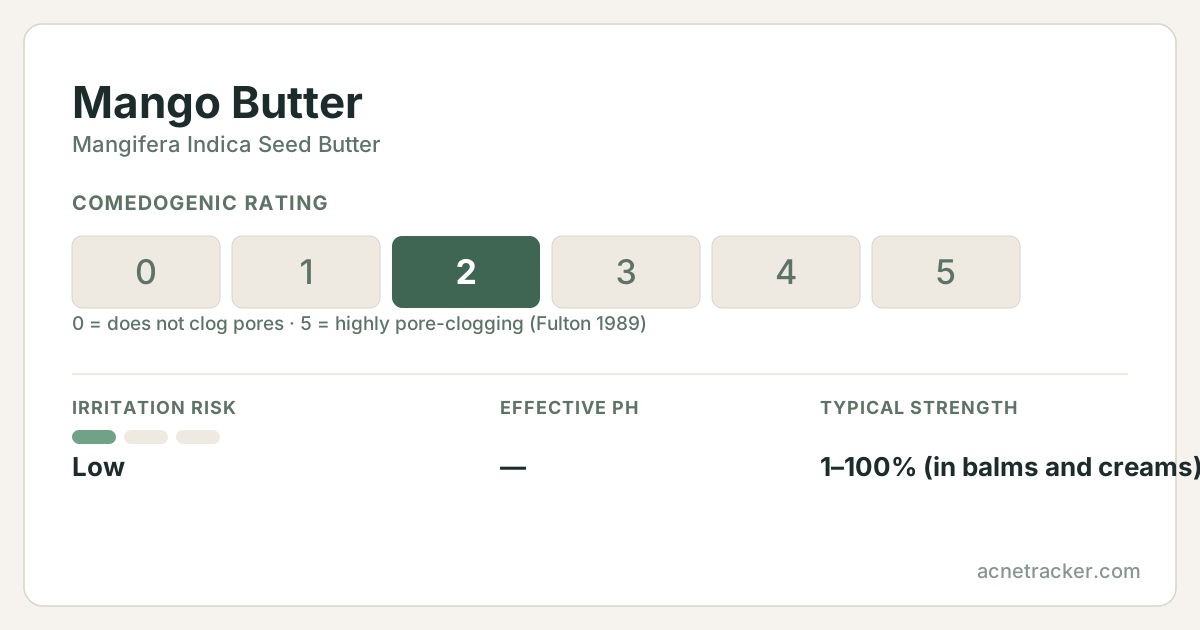
Mango butter is a firm, ivory-coloured butter extracted from the kernel inside the mango stone. Solid at room temperature like shea and cocoa butter, it melts on contact with the skin to deliver rich, cushioning moisture. It is a favourite in body butters, balms and lip products, prized for a smooth, non-gritty texture and a mild scent that is less distinctive than shea butter's. It is best suited to dry, normal and mature skin, where its occlusive richness locks in moisture, though oily and acne-prone skin should use it with some care on the face.
Quick facts
- Comedogenic rating
- our estimate — not measured
- Irritation risk
- Low
- Effective pH
- —
- Typical strength
- 1–100% (in balms and creams)
- Pregnancy
- Considered safe
- Suits skin types
- drynormalmaturesensitive
Where this number comes from
No one has published a comedogenic rating for this ingredient. Fulton's 1989 table tested about 250 raw materials and this was not among them, and we found no later study measuring it. The figure shown is our own reasoning from the ingredient's chemistry and how it is used — treat it as an estimate, not a measurement.
Fulton read his own scale as 0-1 not significant, 2-3 borderline, 4-5 positive. The assay is the rabbit ear at 10% dilution, which the paper itself calls extremely sensitive and not fully predictive of human skin. Ratings describe the raw ingredient; concentration and formulation change real-world behaviour.
Caution profile
The four published fields on this page, on one 0–5 scale. Further from the centre means more care is needed — never that the ingredient is worse.
Derived, not measured: pore-clogging is the published comedogenic rating; irritation maps low/moderate/high to 1/3/5; pregnancy maps safe/caution/avoid to 0/3/5; skin-type limits is how many of the seven skin types this entry does NOT list. Every input is printed in words in the quick-facts card above.
Show the numbers
| Metric | 0–5 | Published field |
|---|---|---|
| Pore-clogging | 2 | 2/5 |
| Irritation | 1 | Low |
| Skin-type limits | 2.1 | 4/7 |
| Pregnancy | 0 | Considered safe |
Working pH and typical strength
Where this ingredient is formulated to sit, and at what concentration.
Both bars come from the fields above: the pH window and the typical strength range published for this ingredient. The tinted column is healthy skin's surface pH (about 4.7–5.75).
Show the numbers
| Metric | 0–5 |
|---|---|
| Typical strength | 1–100% (in balms and creams) |
What is it?
Mango butter is dominated by oleic and stearic acids, the combination responsible for its solid-but-melting texture and its rich, protective feel. It carries some antioxidants including vitamin E. Being a firm butter, it works as an occlusive that reduces water loss and forms a comforting protective layer, similar in role to shea-butter but often described as slightly lighter and less waxy. Its comedogenic rating is not in Fulton's tables; based on its balanced oleic-stearic profile and typical use in rich formulas we estimate it at around 2, low-to-moderate, so it suits dry skin better than very oily skin.
Benefits
Rich, occlusive moisture
As a solid butter, mango butter forms a protective layer that reduces water loss, delivering deep, cushioning comfort to dry, tight and flaky skin.
Smooth, non-gritty texture
It melts evenly on the skin with a smooth feel and, unlike some batches of shea butter, tends not to turn gritty, which makes it pleasant in balms and body butters.
Mild scent
Its subtle, mild aroma is less pronounced than shea butter's, so it blends easily into fragranced and unscented products without dominating them.
Supports a dry, stressed barrier
Its fatty acids and antioxidants help a dry, weather-stressed barrier feel more comfortable and protected, useful in winter and for mature skin.
How to use
Warm a small amount between your fingers until it melts, then press it into cleansed skin as the final, sealing step, most often on the body, hands, lips or dry facial patches at night. It layers beautifully over a hydrating serum with hyaluronic-acid to lock in moisture, and it blends well with lighter fluids like squalane or with shea-butter in a balm. On the face, dry skin benefits most; combination skin should keep it to drier zones, and oily or acne-prone skin should use it sparingly or avoid it there. Patch test reactive skin first.
Side effects
Mango butter is gentle and low-irritation for most people. Its main consideration is richness: as an occlusive butter, it can feel heavy and may contribute to congestion on oily or acne-prone skin if used generously on the face. It is derived from mango seed, so those with a known mango allergy should be cautious. Reactions to the butter itself are unusual, and a small test area on the jaw or inner arm will tell you more than a face-wide first application.
Who should avoid it
Oily and acne-prone skin should use it sparingly on the face or keep it to the body, given its rich, occlusive nature. People with a mango allergy should be cautious and patch test carefully. Otherwise it is broadly usable. As a rich butter it tends to end up on the body rather than the face anyway, and using it while pregnant is regarded as fine; ask your doctor if a specific product concerns you.
Pairs well with
Avoid combining with
Frequently asked questions
Is mango butter better than shea butter?
Neither is simply better; they are close alternatives. Mango butter is often described as slightly lighter, smoother and milder-smelling than shea-butter, while shea is a touch richer. Choice comes down to texture and scent preference.
Does mango butter clog pores?
Its estimated comedogenic rating is around 2, but as a rich occlusive butter it can still feel heavy on the face. Dry skin tolerates it well; oily and acne-prone skin should use it sparingly on the face or keep it to the body.
Can I use mango butter on my lips and body?
Yes. Its rich, smooth, non-gritty texture makes it excellent for lip balms, body butters, hands and dry patches, where its occlusive richness locks in moisture and comforts dry, weather-stressed skin.
How do I use mango butter on my face?
Warm a small amount and press it into cleansed skin as a final sealing step, ideally at night and mainly on dry areas. Keep it off oily, congestion-prone zones, and layer it over a hydrating serum for best comfort.
Sources & further reading
Medical disclaimer
Find your personal acne triggers
Our free Acne Tracker lets you log breakouts, sleep, stress and diet, and shows you which factors correlate with your flare-ups.