Ammonium Acryloyldimethyltaurate/VP Copolymer: Comedogenic Rating & Ingredient Analysis
Behind its intimidating name, ammonium acryloyldimethyltaurate/VP copolymer, often shortened to AVC, is simply one of the most useful modern texture polymers in skincare. Formulators love it because it thickens water instantly, does not need a separate neutralizing step, and can even hold small amounts of oil in place, letting it act as a light emulsifier as well as a gelling agent. The payoff you feel is a smooth, elegant gel-cream texture that spreads easily and absorbs without stickiness, which is why AVC appears in so many hydrating serums, gel moisturizers and lightweight lotions.
Quick facts
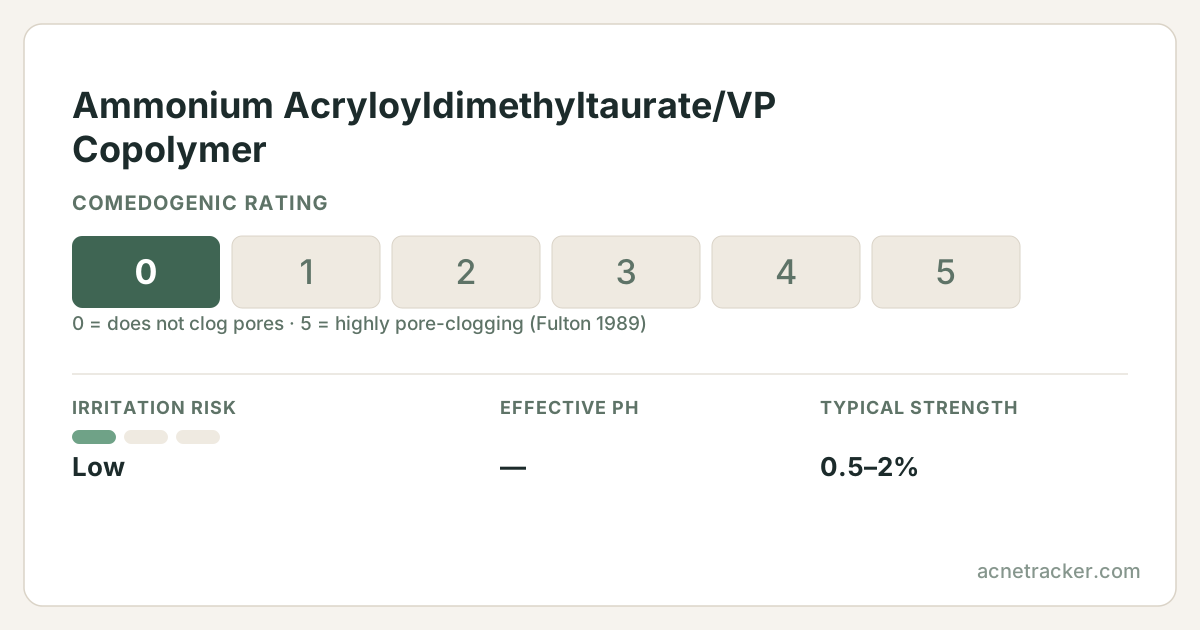
- Comedogenic rating
- our estimate — not measured
- Irritation risk
- Low
- Effective pH
- —
- Typical strength
- 0.5–2%
- Pregnancy
- Considered safe
- Suits skin types
- oilydrycombinationsensitivenormalacne-pronemature
Where this number comes from
No one has published a comedogenic rating for this ingredient. Fulton's 1989 table tested about 250 raw materials and this was not among them, and we found no later study measuring it. The figure shown is our own reasoning from the ingredient's chemistry and how it is used — treat it as an estimate, not a measurement.
Fulton read his own scale as 0-1 not significant, 2-3 borderline, 4-5 positive. The assay is the rabbit ear at 10% dilution, which the paper itself calls extremely sensitive and not fully predictive of human skin. Ratings describe the raw ingredient; concentration and formulation change real-world behaviour.
Caution profile
The four published fields on this page, on one 0–5 scale. Further from the centre means more care is needed — never that the ingredient is worse.
Derived, not measured: pore-clogging is the published comedogenic rating; irritation maps low/moderate/high to 1/3/5; pregnancy maps safe/caution/avoid to 0/3/5; skin-type limits is how many of the seven skin types this entry does NOT list. Every input is printed in words in the quick-facts card above.
Show the numbers
| Metric | 0–5 | Published field |
|---|---|---|
| Pore-clogging | 0 | 0/5 |
| Irritation | 1 | Low |
| Skin-type limits | 0 | 7/7 |
| Pregnancy | 0 | Considered safe |
Working pH and typical strength
Where this ingredient is formulated to sit, and at what concentration.
Both bars come from the fields above: the pH window and the typical strength range published for this ingredient. The tinted column is healthy skin's surface pH (about 4.7–5.75).
Show the numbers
| Metric | 0–5 |
|---|---|
| Typical strength | 0.5–2% |
What is it?
AVC is a pre-neutralized synthetic copolymer, meaning it thickens as soon as it is stirred into water without the acid-and-base dance that carbomer requires. Its structure lets it build a clear, cushiony gel and stabilize modest amounts of oil, so a chemist can create a light lotion with less traditional emulsifier. It tolerates a wide pH range and works well with electrolytes and many actives. Like the other polymers in this batch it is far too large to be absorbed and has no biological activity; it is used entirely to shape texture and keep a formula stable.
Benefits
Instant, easy thickening
AVC gels water on contact without a neutralizing step, giving a smooth, clear gel that is quick to formulate and pleasant to apply.
Doubles as a light emulsifier
It can stabilize small amounts of oil, allowing elegant gel-creams and light lotions to be made with less traditional emulsifier.
Silky, non-sticky feel
Its cushiony slip and clean absorption give serums and moisturizers a refined texture that layers well under sunscreen and makeup.
Stable and compatible
It holds up across a wide pH range and alongside electrolytes and actives, making it a dependable base for many hydrating formulas.
How to use
You do not handle AVC directly; it is already built into the serum, gel or lotion you buy. Simply apply the product as part of your normal routine. Because it forms a light gel film, layering many gel-based products can occasionally cause pilling, which is solved by spacing out layers and applying to slightly damp skin. It is equally at home in minimalist and active-heavy formulas.
Side effects
This copolymer is considered non-irritating and non-comedogenic, with a rating of 0. It stays on the surface, does not penetrate the skin and rarely causes any reaction. The only occasional issue is cosmetic pilling when several film-forming or gel products are layered together, which is a texture matter rather than a safety one.
Who should avoid it
No skin type needs to avoid it. Because AVC arrives pre-neutralized, a formula built on it does not need the separate base that carbomer would demand, and what remains is an inert surface polymer with nothing in it for sensitive, dry, oily or acne-prone skin to react against — through pregnancy and breastfeeding included. The one practical caveat is textural: stack enough gel layers and any film former, this one included, can pill.
Pairs well with
Frequently asked questions
Is ammonium acryloyldimethyltaurate/VP copolymer safe?
Yes. It is an inert surface polymer with a comedogenic rating of 0 and very low irritation potential. It is widely used and considered safe in cosmetics.
What does AVC do in skincare?
It thickens water into a smooth, clear gel, stabilizes light emulsions and gives serums and gel-creams their elegant, non-sticky feel, all without a neutralizing step.
Does AVC clog pores?
No. AVC carries a comedogenic rating of 0 and, as a pre-neutralized gelling polymer, it sets on the surface rather than working its way into a follicle, so oily and acne-prone skin can use it without concern.
Why is the name so complicated?
It simply describes the two chemical building blocks in the polymer. The long INCI name is standard chemical nomenclature; formulators just call it AVC.
How is AVC different from carbomer?
Both make clear gels, but AVC comes pre-neutralized and thickens instantly, while carbomer must be neutralized with a base such as triethanolamine to work.
Sources & further reading
Medical disclaimer
Find your personal acne triggers
Our free Acne Tracker lets you log breakouts, sleep, stress and diet, and shows you which factors correlate with your flare-ups.