Mica: Comedogenic Rating & Ingredient Analysis
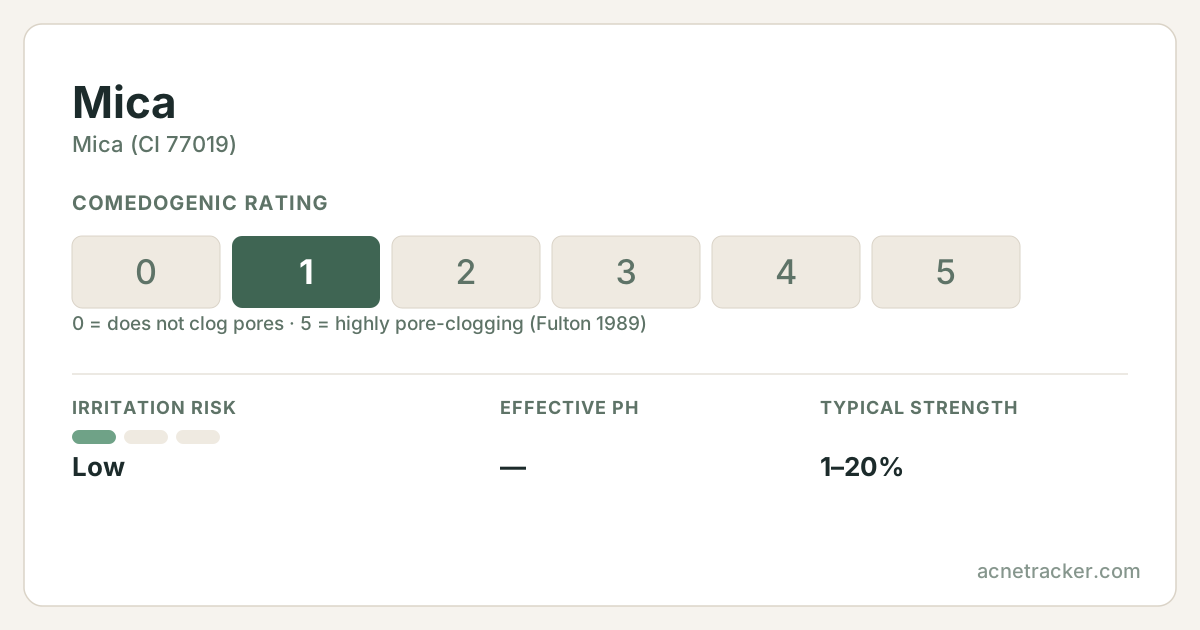
Mica is the mineral responsible for the soft shimmer and glow in a huge range of cosmetics, from highlighters and eyeshadows to tinted moisturizers and even toothpaste. It is a naturally occurring silicate that splits into thin, light-reflecting flakes, giving products a luminous or satin finish and improving how they glide onto skin. In skincare it is used mainly for aesthetics rather than active benefit: it blurs the look of the skin, adds radiance and can be coated to carry colour. Mica is generally very safe on skin, though its mining has raised ethical sourcing concerns that responsible brands now address.
Quick facts
- Comedogenic rating
- our estimate — not measured
- Irritation risk
- Low
- Effective pH
- —
- Typical strength
- 1–20%
- Pregnancy
- Considered safe
- Suits skin types
- oilydrycombinationsensitivenormalacne-pronemature
Where this number comes from
No one has published a comedogenic rating for this ingredient. Fulton's 1989 table tested about 250 raw materials and this was not among them, and we found no later study measuring it. The figure shown is our own reasoning from the ingredient's chemistry and how it is used — treat it as an estimate, not a measurement.
Fulton read his own scale as 0-1 not significant, 2-3 borderline, 4-5 positive. The assay is the rabbit ear at 10% dilution, which the paper itself calls extremely sensitive and not fully predictive of human skin. Ratings describe the raw ingredient; concentration and formulation change real-world behaviour.
Caution profile
The four published fields on this page, on one 0–5 scale. Further from the centre means more care is needed — never that the ingredient is worse.
Derived, not measured: pore-clogging is the published comedogenic rating; irritation maps low/moderate/high to 1/3/5; pregnancy maps safe/caution/avoid to 0/3/5; skin-type limits is how many of the seven skin types this entry does NOT list. Every input is printed in words in the quick-facts card above.
Show the numbers
| Metric | 0–5 | Published field |
|---|---|---|
| Pore-clogging | 1 | 1/5 |
| Irritation | 1 | Low |
| Skin-type limits | 0 | 7/7 |
| Pregnancy | 0 | Considered safe |
Working pH and typical strength
Where this ingredient is formulated to sit, and at what concentration.
Both bars come from the fields above: the pH window and the typical strength range published for this ingredient. The tinted column is healthy skin's surface pH (about 4.7–5.75).
Show the numbers
| Metric | 0–5 |
|---|---|
| Typical strength | 1–20% |
What is it?
Mica refers to a group of silicate minerals, most often muscovite, that cleave into extremely thin, flat, transparent sheets. These sheets reflect and refract light, which is what creates the characteristic pearlescent shimmer. In cosmetics, mica is often layered or coated with other minerals such as titanium-dioxide or iron-oxides to produce specific colours and pearl effects. It is chemically inert and sits on the surface of the skin rather than penetrating, so it acts as a cosmetic texture and finish enhancer, not an active ingredient. A synthetic alternative, synthetic fluorphlogopite, is increasingly used for a purer, more uniform, ethically cleaner version.
Benefits
Adds radiance and glow
Mica's light-reflecting flakes give skin and makeup a luminous or satin finish, softening the look of dullness without any active treatment.
Blurs imperfections
By scattering light across the skin surface, mica visually softens the appearance of pores, fine lines and uneven texture in a soft-focus way.
Improves texture and slip
It helps powders and creams glide on smoothly and feel silky, enhancing the sensory quality of foundations, primers and tinted sunscreens.
Carries colour and pearl
Coated with iron-oxides or titanium-dioxide, mica delivers a wide palette of shades and pearl effects, working alongside talc and other bases.
How to use
Mica is not something you apply on its own; it comes formulated into makeup and some skincare. If you want a natural glow, look for it in highlighters, tinted moisturizers or luminous primers, and apply as directed. If you dislike shimmer or have very textured skin that shimmer emphasizes, choose matte formulas that use titanium-dioxide or talc for a flat finish instead. Mica sits on the surface and rinses off easily with normal cleansing. It layers over serums and sunscreens without interfering with actives like niacinamide.
Side effects
Mica is inert and very well tolerated, with an extremely low rate of irritation or allergy. Its comedogenic potential is minimal, though heavy, occlusive shimmer products could theoretically contribute to congestion in very acne-prone skin, so a light hand helps. The bigger issue with mica is ethical rather than dermatological: some natural mica is mined under poor labour conditions, which is why many brands now use certified sources or synthetic fluorphlogopite.
Who should avoid it
Almost no one needs to avoid mica for skin-safety reasons; it is considered safe in pregnancy. People who dislike shimmer or find it emphasizes texture may prefer matte products. Those concerned about ethical sourcing can look for brands using responsibly sourced or synthetic mica. True allergy is very rare.
Pairs well with
Frequently asked questions
Is mica bad for acne-prone skin?
Not usually. Mica is inert with a very low comedogenic rating, though very heavy shimmer products can feel occlusive, so lighter formulas are better for congested skin.
What does mica do in skincare?
It is a cosmetic ingredient that adds shimmer, radiance and soft-focus blurring, and improves texture and slip. It is not an active and does not treat skin conditions.
Is natural or synthetic mica better?
Synthetic fluorphlogopite is purer, more uniform and avoids the labour concerns of some natural mica mining, while natural mica gives a slightly different sparkle.
Is mica safe during pregnancy?
Yes. Mica is an inert mineral that sits on the skin's surface and is considered safe during pregnancy and breastfeeding.
Sources & further reading
Medical disclaimer
Find your personal acne triggers
Our free Acne Tracker lets you log breakouts, sleep, stress and diet, and shows you which factors correlate with your flare-ups.