Copper Peptides: Comedogenic Rating & Ingredient Analysis
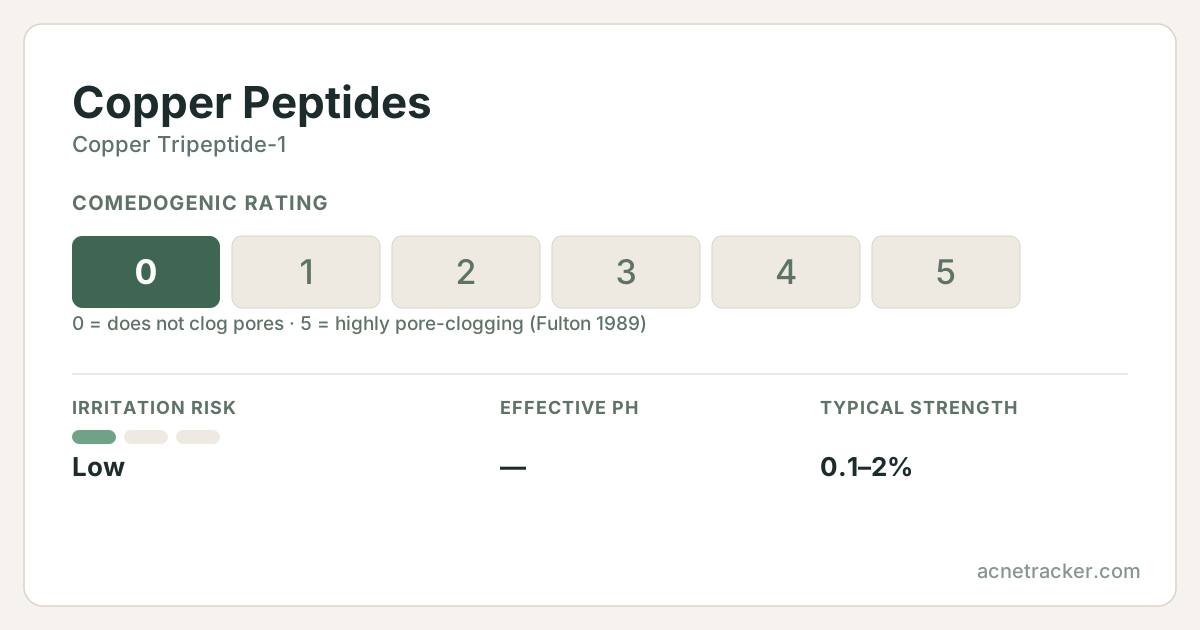
Copper peptides, most often the form known as GHK-Cu, are among the most talked-about peptides in skincare, prized for their association with wound healing and skin repair. GHK-Cu pairs a small tripeptide with a copper ion, and it has a genuinely interesting research background compared with many cosmetic peptides. In skincare it is used in serums aimed at firmness, repair support and overall skin quality. It is gentle, with a comedogenic rating of 0 and low irritation risk, though it comes with a couple of practical formulation quirks, including sensitivity to being combined with certain other actives.
Quick facts
- Comedogenic rating
- our estimate — not measured
- Irritation risk
- Low
- Effective pH
- —
- Typical strength
- 0.1–2%
- Pregnancy
- Ask your doctor
- Suits skin types
- drycombinationnormalsensitivemature
Where this number comes from
No one has published a comedogenic rating for this ingredient. Fulton's 1989 table tested about 250 raw materials and this was not among them, and we found no later study measuring it. The figure shown is our own reasoning from the ingredient's chemistry and how it is used — treat it as an estimate, not a measurement.
Fulton read his own scale as 0-1 not significant, 2-3 borderline, 4-5 positive. The assay is the rabbit ear at 10% dilution, which the paper itself calls extremely sensitive and not fully predictive of human skin. Ratings describe the raw ingredient; concentration and formulation change real-world behaviour.
Caution profile
The four published fields on this page, on one 0–5 scale. Further from the centre means more care is needed — never that the ingredient is worse.
Derived, not measured: pore-clogging is the published comedogenic rating; irritation maps low/moderate/high to 1/3/5; pregnancy maps safe/caution/avoid to 0/3/5; skin-type limits is how many of the seven skin types this entry does NOT list. Every input is printed in words in the quick-facts card above.
Show the numbers
| Metric | 0–5 | Published field |
|---|---|---|
| Pore-clogging | 0 | 0/5 |
| Irritation | 1 | Low |
| Skin-type limits | 1.4 | 5/7 |
| Pregnancy | 3 | Ask your doctor |
Working pH and typical strength
Where this ingredient is formulated to sit, and at what concentration.
Both bars come from the fields above: the pH window and the typical strength range published for this ingredient. The tinted column is healthy skin's surface pH (about 4.7–5.75).
Show the numbers
| Metric | 0–5 |
|---|---|
| Typical strength | 0.1–2% |
What is it?
GHK is a naturally occurring tripeptide in the body that binds copper, forming the copper complex GHK-Cu. Copper is a trace element involved in many skin processes, and the GHK-Cu complex has been studied for roles in tissue repair, collagen support and antioxidant defense, with a research history that extends into wound-healing science. In cosmetics it is used at low concentrations for firmness and skin-quality benefits. The distinctive blue color of copper peptides is a giveaway of their presence. Because the copper complex can be destabilized by some ingredients, formulation and how you layer it both matter more than with a simple peptide.
Benefits
Supports skin repair
GHK-Cu is best known for its association with tissue repair, and in skincare it is used to support the skin's own recovery and renewal processes.
Encourages firmness
By supporting collagen and the skin's structural proteins, copper peptides aim to improve firmness and the look of resilience over time.
Antioxidant defense
The copper complex contributes antioxidant activity, helping protect the skin from the oxidative stress involved in aging and dullness.
Improves overall skin quality
With consistent use, copper peptides are aimed at a smoother, healthier-looking complexion as part of a repair-focused routine.
How to use
Apply copper peptide serums after cleansing, on their own or with hydrators, morning or night. The key practical rule is separation: copper peptides are traditionally not layered in the same routine as direct-acid vitamin C or strong exfoliating acids, which can destabilize the copper complex, so use them at different times of day or on alternate days. They pair well with hydrators, niacinamide and other peptides. As with all peptides, benefits are gradual, so consistency over months is what counts. Give the serum a few minutes to absorb before layering.
Side effects
Copper peptides are generally gentle and well tolerated, with low irritation risk. Side effects are uncommon, though very sensitive individuals could react to a specific formula. The main issues are practical rather than safety-related: the copper complex can be destabilized by certain other actives, and the blue color can occasionally transfer. As with other peptides, marketing claims often run ahead of the strength of independent evidence, so keep expectations realistic.
Who should avoid it
There is no strong safety reason for most people to avoid copper peptides. Those who want to build a routine around high-strength vitamin C or strong acids may find copper peptides awkward to fit in. As a general precaution some prefer to avoid it during pregnancy given limited data; confirm with your doctor if unsure.
Avoid combining with
Frequently asked questions
What are copper peptides good for?
They are best known for supporting skin repair and firmness. GHK-Cu has an interesting research background in tissue healing, and in skincare it is used for overall skin quality and resilience.
Can I use copper peptides with vitamin C?
It is generally advised not to layer them in the same routine, as strong direct-acid vitamin C can destabilize the copper complex. Use them at separate times of day or on alternate days.
Do copper peptides really work?
GHK-Cu has more research behind it than many cosmetic peptides, but results in skincare are still gradual and modest. Treat it as supportive care alongside proven basics like sunscreen and retinoids.
Do copper peptides clog pores?
No. They have a comedogenic rating of 0 and are used at low concentrations, so they are suitable even for blemish-prone skin.
Are copper peptides safe during pregnancy?
Data is limited, so some prefer caution during pregnancy even though topical use is generally considered low risk. Your doctor is better placed than a product label to weigh copper peptides against the alternatives you could reach for instead.
Where this ingredient shows up here
Counted across this database, not the web — these are the pages on this site that reason about this ingredient.
Combination guides 4
Sources & further reading
Medical disclaimer
Find your personal acne triggers
Our free Acne Tracker lets you log breakouts, sleep, stress and diet, and shows you which factors correlate with your flare-ups.