Can You Mix Copper Peptides and Vitamin C?
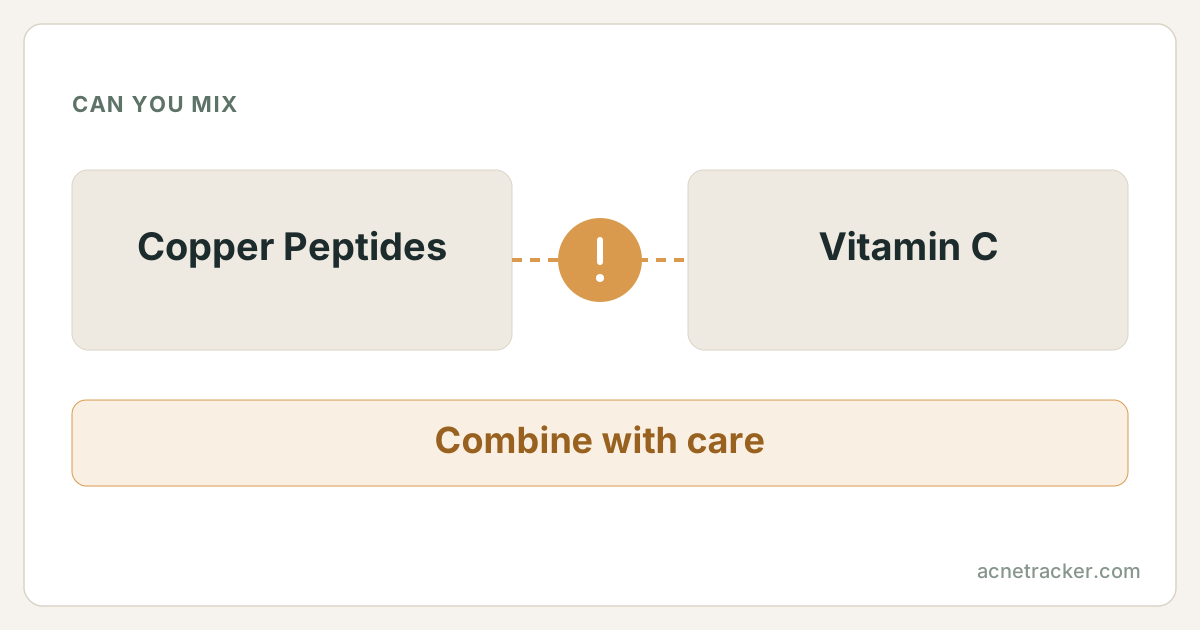
Use both, but not in the same layer. Copper peptides and vitamin C are the textbook example of ingredients best kept apart in a routine: vitamin C is a strong antioxidant and reducing agent, while copper peptides rely on copper's oxidation state, so applied together they can theoretically interfere. The simple, widely recommended solution is to separate them — vitamin C in the morning, copper peptides at night.
How this pairing resolves
The two ingredients, their published numbers, and where they land together.
The numbers beside each ingredient are its published comedogenic rating and effective pH window, taken from its own profile page.
Show the numbers
| Ingredients | Metric | 0–5 |
|---|---|---|
| Copper Peptides | Comedogenic rating | 0/5 |
| Copper Peptides | Effective pH | no published pH |
| Vitamin C | Comedogenic rating | 0/5 |
| Vitamin C | Effective pH | 2.5–3.5 |
Why
The concern here is a redox interaction. Copper peptides, such as GHK-Cu, are small chains carrying a copper ion, and their signaling activity is tied to copper being in a particular oxidation state. Vitamin C (L-ascorbic acid) is a potent reducing antioxidant — its whole job is to donate electrons. When a strong reducing agent meets a copper complex, it can in principle reduce the copper and disrupt the peptide, while the copper can in turn oxidize the vitamin C, so each may blunt the other. The evidence for how much this matters in real formulas is debated, and some argue the effect is overstated, but because both ingredients are valuable and the fix is so easy, the standard advice is simply not to layer them wet-on-wet. Separated by time, both perform normally: vitamin C delivers daytime antioxidant defense and brightening, while copper peptides support collagen, wound healing, and skin firmness overnight. There is no need to choose between them.
How to combine them
Keep them in different routines. The cleanest split is vitamin C in the morning — cleanse, serum on dry skin, moisturizer, SPF 30+ — and copper peptides in the evening, applied to clean skin and followed by moisturizer. If you want to use both at the same time of day for some reason, apply one, wait until it has fully absorbed and skin is dry (ideally 20–30 minutes), then the other — but the AM/PM split is easier and removes any doubt. Do not mix them in your palm or layer them immediately wet-on-wet. Because copper peptides also pair poorly with strong acids and direct vitamin C, building your routine around a morning antioxidant step and an evening peptide step keeps everything simple and effective.
Example routine
| When | Steps |
|---|---|
| Morning | Cleanser → Vitamin C → Moisturizer → SPF 30+ |
| Evening | Cleanser → Copper peptides → Moisturizer |
| If same time | Apply one, wait 20–30 min until dry, then the other |
| Simplest rule | Antioxidant in the AM, peptides in the PM |
Warning signs
Frequently asked questions
Why shouldn't I layer copper peptides and vitamin C?
Vitamin C is a strong reducing antioxidant and copper peptides depend on copper's oxidation state, so applied together they can interfere with each other. Putting the antioxidant and the peptide in separate routines removes the overlap entirely.
Is the interaction proven or overstated?
It is debated. The redox concern is real in principle, but its impact in finished formulas is argued. Since separating them is easy and both are useful, the AM/PM split is the safe default.
How long should I wait between them?
If you must use both in one session, apply one, wait until skin is fully dry — around 20 to 30 minutes — then the other. Using vitamin C in the morning and copper peptides at night is simpler.
Can I still get results from both?
Yes. Kept in separate routines, vitamin C provides daytime antioxidant and brightening benefits while copper peptides support collagen and repair at night, so you lose nothing by separating them.
Sources & further reading
There is no single study of this exact question. The guidance here is reasoned from the ingredient profiles below, each of which carries its own references:
- Copper Peptides2 refs
- Vitamin C3 refs
Show every reference behind this page (4)
- European Commission CosIng database — Copper Tripeptide-1cited by Copper Peptides, Vitamin C
- PubMed — The human tri-peptide GHK and tissue remodeling (J Biomater Sci Polym Ed, 2008)cited by Copper Peptides
- PubChem — Ascorbic Acid compound summarycited by Vitamin C
- DermNet — Topical vitamin Ccited by Vitamin C
Medical disclaimer
Ingredients mentioned on this page
Find your personal acne triggers
Our free Acne Tracker lets you log breakouts, sleep, stress and diet, and shows you which factors correlate with your flare-ups.