Camellia Oil: Comedogenic Rating & Ingredient Analysis
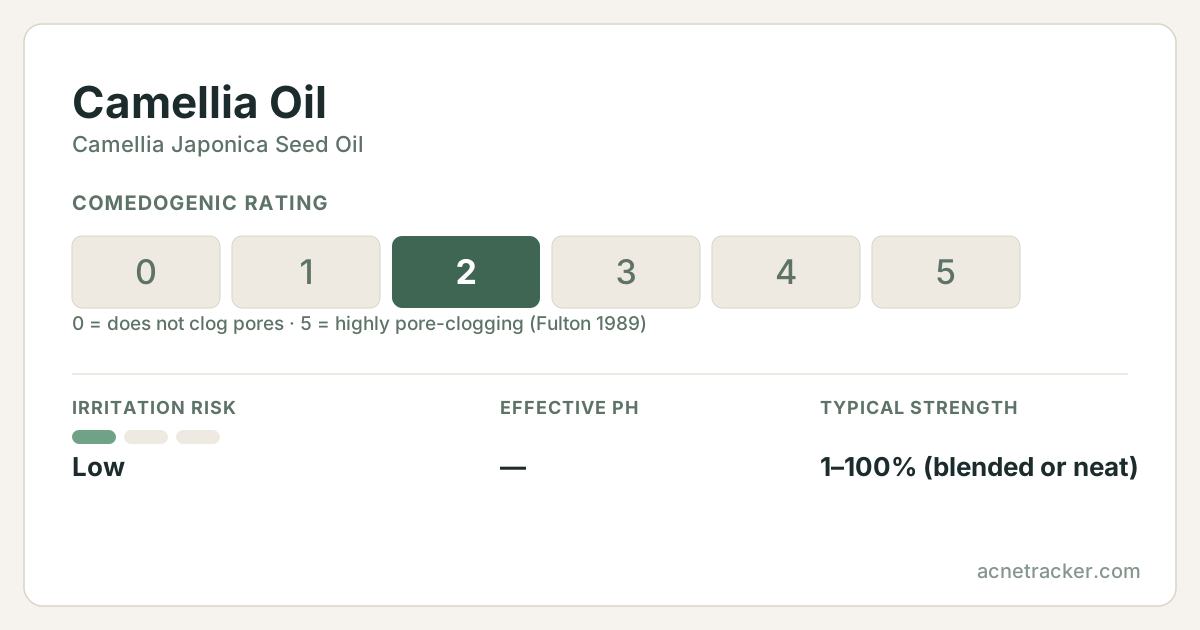
Camellia oil, known in Japan as tsubaki oil, is a silky, fast-absorbing oil pressed from the seeds of the camellia plant. It has been a staple of Japanese beauty for centuries, used on skin, hair and nails, and it is admired for a light, elegant feel that belies its oleic-rich composition. It suits dry, normal, combination and mature skin, and its refined texture makes it a pleasant everyday facial oil. Note that camellia seed oil is different from green-tea extract, even though the plants are related.
Quick facts
- Comedogenic rating
- our estimate — not measured
- Irritation risk
- Low
- Effective pH
- —
- Typical strength
- 1–100% (blended or neat)
- Pregnancy
- Considered safe
- Suits skin types
- drynormalcombinationmaturesensitive
Where this number comes from
No one has published a comedogenic rating for this ingredient. Fulton's 1989 table tested about 250 raw materials and this was not among them, and we found no later study measuring it. The figure shown is our own reasoning from the ingredient's chemistry and how it is used — treat it as an estimate, not a measurement.
Fulton read his own scale as 0-1 not significant, 2-3 borderline, 4-5 positive. The assay is the rabbit ear at 10% dilution, which the paper itself calls extremely sensitive and not fully predictive of human skin. Ratings describe the raw ingredient; concentration and formulation change real-world behaviour.
Caution profile
The four published fields on this page, on one 0–5 scale. Further from the centre means more care is needed — never that the ingredient is worse.
Derived, not measured: pore-clogging is the published comedogenic rating; irritation maps low/moderate/high to 1/3/5; pregnancy maps safe/caution/avoid to 0/3/5; skin-type limits is how many of the seven skin types this entry does NOT list. Every input is printed in words in the quick-facts card above.
Show the numbers
| Metric | 0–5 | Published field |
|---|---|---|
| Pore-clogging | 2 | 2/5 |
| Irritation | 1 | Low |
| Skin-type limits | 1.4 | 5/7 |
| Pregnancy | 0 | Considered safe |
Working pH and typical strength
Where this ingredient is formulated to sit, and at what concentration.
Both bars come from the fields above: the pH window and the typical strength range published for this ingredient. The tinted column is healthy skin's surface pH (about 4.7–5.75).
Show the numbers
| Metric | 0–5 |
|---|---|
| Typical strength | 1–100% (blended or neat) |
What is it?
Camellia oil is high in oleic acid, often around 80 percent, with smaller amounts of linoleic and palmitic acids, which gives it good stability and a smooth, non-greasy slip. It also carries antioxidants including polyphenols and tocopherols. Despite being oleic-rich, its texture is lighter and silkier than many oleic oils, which is part of its appeal. Its comedogenic rating is not in Fulton's tables; given the high oleic content balanced against its light feel, we estimate it at around 2, low-to-moderate. Several camellia species are used, including Camellia japonica and Camellia oleifera.
Benefits
Silky, fast-absorbing feel
Despite its oleic-rich makeup, camellia oil has a light, elegant slip that sinks in quickly, making it a pleasant facial oil that does not sit heavily on the skin.
Antioxidant support
It carries polyphenols and tocopherols that help protect the skin surface from everyday oxidative stress while conditioning it, part of its long beauty reputation.
Multi-use for skin, hair and nails
A traditional Japanese all-rounder, it smooths dry skin, tames frizz on hair ends and softens cuticles, making it a versatile addition to a routine.
Stable and comforting
Its high oleic content gives it good resistance to oxidation and a soft, comforting finish suited to dry and mature skin.
How to use
Warm two or three drops in the palms and press them into cleansed, still-damp skin, either neat or thinned with a lighter fluid like squalane. Its silky feel makes it comfortable under makeup for dry skin when used sparingly. It also works smoothed through damp hair ends or massaged into cuticles. Combination skin can focus it on drier zones, and oily skin should keep the amount modest. It keeps well thanks to its oleic content, but store it cool and dark anyway, and prove it on a small area first if your skin is reactive.
Side effects
Camellia oil is gentle and low-irritation for most people. Being oleic-rich, it can feel a little heavy or contribute to congestion on very oily or acne-prone skin if overused, so keep the amount modest on those skin types. Sensitivity to camellia itself is uncommon, but reactive skin should prove it on a small facial area first — tolerating it on hair ends or cuticles says nothing about how a cheek will take it.
Who should avoid it
Very oily and acne-prone skin should use it sparingly, as its high oleic content raises the pore-clogging risk somewhat; a lighter, linoleic-rich oil may suit better. If oleic-rich oils have felt heavy or congesting on you before, test camellia on a small area for a week before committing to it. It is the oil itself that is regarded as fine to use while pregnant — a finished facial oil is rarely camellia alone, so take a specific product to your doctor if you want certainty.
Pairs well with
Avoid combining with
Frequently asked questions
What is tsubaki oil?
Tsubaki is the Japanese name for camellia oil, pressed from camellia seeds and used for centuries in Japan on skin, hair and nails. Tsubaki and camellia oil are the same thing, just different names.
Is camellia oil the same as green tea?
No. Camellia oil is pressed from the seeds of camellia plants, while green-tea extract is made from the leaves of Camellia sinensis. The plants are related but the two ingredients are different and used differently.
Does camellia oil clog pores?
It is oleic-rich, with an estimated comedogenic rating of 2, but its light, silky feel makes it more agreeable than many oleic oils. Very oily or acne-prone skin should still apply it thinly and watch how it responds.
Can I use camellia oil on my hair?
Yes. A tiny amount smoothed through damp hair ends helps tame frizz and add shine without weighing hair down, which is one of its traditional uses alongside skin and nail care.
Where this ingredient shows up here
Counted across this database, not the web — these are the pages on this site that reason about this ingredient.
Buying guides 1
Sources & further reading
Medical disclaimer
Find your personal acne triggers
Our free Acne Tracker lets you log breakouts, sleep, stress and diet, and shows you which factors correlate with your flare-ups.