Rice Bran Oil: Comedogenic Rating & Ingredient Analysis
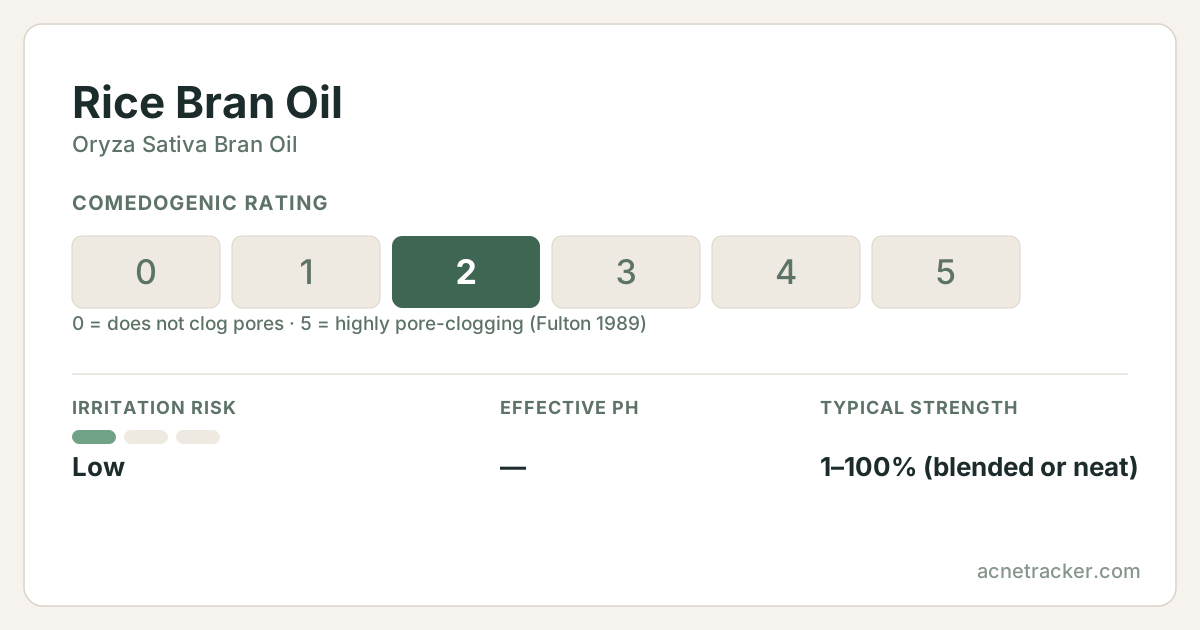
Rice bran oil is a light, pale oil extracted from the bran, the outer layer of the rice grain that is removed during milling. It has a long history in East Asian skin and hair care and has become a well-regarded, affordable facial oil. Its appeal lies in a balanced fatty-acid profile and an unusually rich mix of antioxidants, including gamma-oryzanol, tocopherols and tocotrienols. It suits a wide range of skin types, absorbs at a moderate pace and has a mild scent, making it an easy, versatile everyday oil.
Quick facts
- Comedogenic rating
- our estimate — not measured
- Irritation risk
- Low
- Effective pH
- —
- Typical strength
- 1–100% (blended or neat)
- Pregnancy
- Considered safe
- Suits skin types
- drynormalcombinationmaturesensitive
Where this number comes from
No one has published a comedogenic rating for this ingredient. Fulton's 1989 table tested about 250 raw materials and this was not among them, and we found no later study measuring it. The figure shown is our own reasoning from the ingredient's chemistry and how it is used — treat it as an estimate, not a measurement.
Fulton read his own scale as 0-1 not significant, 2-3 borderline, 4-5 positive. The assay is the rabbit ear at 10% dilution, which the paper itself calls extremely sensitive and not fully predictive of human skin. Ratings describe the raw ingredient; concentration and formulation change real-world behaviour.
Caution profile
The four published fields on this page, on one 0–5 scale. Further from the centre means more care is needed — never that the ingredient is worse.
Derived, not measured: pore-clogging is the published comedogenic rating; irritation maps low/moderate/high to 1/3/5; pregnancy maps safe/caution/avoid to 0/3/5; skin-type limits is how many of the seven skin types this entry does NOT list. Every input is printed in words in the quick-facts card above.
Show the numbers
| Metric | 0–5 | Published field |
|---|---|---|
| Pore-clogging | 2 | 2/5 |
| Irritation | 1 | Low |
| Skin-type limits | 1.4 | 5/7 |
| Pregnancy | 0 | Considered safe |
Working pH and typical strength
Where this ingredient is formulated to sit, and at what concentration.
Both bars come from the fields above: the pH window and the typical strength range published for this ingredient. The tinted column is healthy skin's surface pH (about 4.7–5.75).
Show the numbers
| Metric | 0–5 |
|---|---|
| Typical strength | 1–100% (blended or neat) |
What is it?
Rice bran oil has a fairly even balance of oleic and linoleic acids with some palmitic acid, which gives it a versatile, medium feel that is neither very light nor very heavy. Its standout feature is gamma-oryzanol, a group of antioxidant compounds unique to rice bran, alongside a rich blend of vitamin E forms. These give it strong antioxidant character and reasonable stability. Its comedogenic rating is not listed by Fulton; based on the balanced fatty-acid profile we estimate it at around 2, low-to-moderate, which makes it broadly agreeable across skin types.
Benefits
Rich in gamma-oryzanol antioxidants
Gamma-oryzanol is a group of antioxidant compounds distinctive to rice bran, giving the oil a strong antioxidant character that helps protect and condition the skin surface.
Balanced, versatile feel
Its even oleic-linoleic profile gives a medium texture that suits many skin types, sitting comfortably between the lightest and richest facial oils.
Full spectrum of vitamin E
It carries both tocopherols and tocotrienols, a broad vitamin E complex that supports the skin surface against everyday oxidative stress.
Affordable and easy to use
Widely available, mild-smelling and inexpensive, rice bran oil is a practical everyday oil that layers well over serums and under creams.
How to use
A few drops on cleansed, slightly damp skin is enough, morning or night, whether neat or stirred into a moisturiser or a lighter fluid like squalane. Its balanced feel suits most skin types, though very oily skin should keep the amount modest and combination skin can focus it on drier zones. It works nicely as a final step over a hydrating serum with hyaluronic-acid. It is reasonably stable thanks to its antioxidants, but still store it cool and dark, and patch test first if your skin is reactive.
Side effects
Rice bran oil is gentle and low-irritation for most people. Its balanced richness rarely feels heavy, though very oily skin may still prefer a lighter oil. People with a rice allergy should be cautious. Sensitivity to the oil itself is uncommon; reactive skin should still prove it on a small area, since the rice question above is the only predictable reason to expect trouble.
Who should avoid it
There are few restrictions. Very oily, congestion-prone skin should use modest amounts or choose a lighter, linoleic-rich oil. People with a known rice allergy should patch test carefully or avoid it. Rice bran is one of the gentler oils to reach for if your skin is unsettled, and applying it is regarded as fine during pregnancy; ask your doctor if a particular product still worries you.
Pairs well with
Avoid combining with
Frequently asked questions
What is gamma-oryzanol in rice bran oil?
Gamma-oryzanol is a group of antioxidant compounds unique to rice bran. It is the main reason rice bran oil has a strong antioxidant character and is prized in skincare for helping protect and condition the skin surface.
Is rice bran oil good for sensitive skin?
Yes. Its mild, low-irritation character and balanced profile make it suitable for sensitive skin. As with any oil, patch test first if your skin is highly reactive, and choose a fresh, well-stored product.
Does rice bran oil clog pores?
Its comedogenic rating is an estimated 2, a low-to-moderate risk. Most skin types tolerate it well; very oily or acne-prone skin should apply it thinly and monitor how congestion-prone areas respond.
Can I use rice bran oil on my hair?
Yes. A small amount smoothed through damp hair ends can add softness and shine, one of its traditional uses in East Asian care, alongside its role as a facial and body oil.
Sources & further reading
Medical disclaimer
Find your personal acne triggers
Our free Acne Tracker lets you log breakouts, sleep, stress and diet, and shows you which factors correlate with your flare-ups.