Can You Mix Glycolic Acid and Vitamin C?
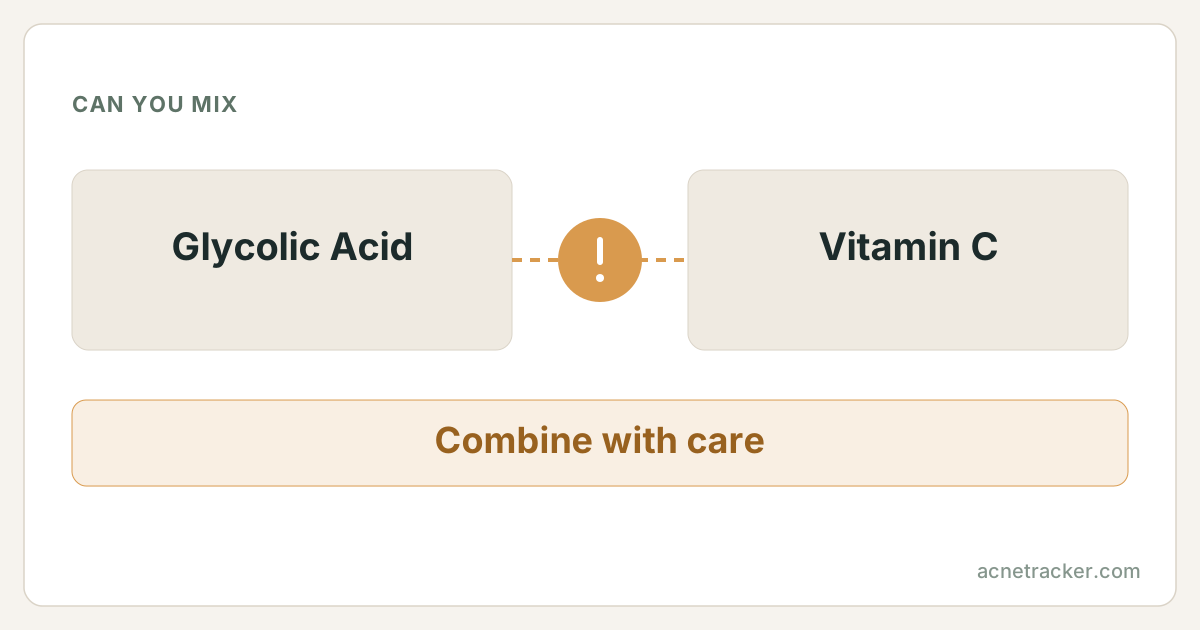
Yes, with care — but rarely in the same layer. Glycolic acid is a small, fast-penetrating AHA, and L-ascorbic acid is an acidic antioxidant, so stacking them piles on irritation and can leave the barrier raw. The dependable routine is vitamin C in the morning and glycolic acid at night. A gentler vitamin C derivative makes same-routine use more realistic.
How this pairing resolves
The two ingredients, their published numbers, and where they land together.
The numbers beside each ingredient are its published comedogenic rating and effective pH window, taken from its own profile page.
Show the numbers
| Ingredients | Metric | 0–5 |
|---|---|---|
| Glycolic Acid | Comedogenic rating | 0/5 |
| Glycolic Acid | Effective pH | 3.0–4.0 |
| Vitamin C | Comedogenic rating | 0/5 |
| Vitamin C | Effective pH | 2.5–3.5 |
Why
Glycolic acid is the smallest alpha hydroxy acid, so it penetrates quickly and exfoliates aggressively, working best around pH 3–4. L-ascorbic acid sits at pH 2.5–3.5 for stability and uptake. The two are chemically compatible in the sense that both like an acidic environment, but that is exactly why layering them is risky: you are asking already-acidic skin to absorb two potent low-pH actives at once. Glycolic acid strips the outer corneocytes and accelerates turnover, which removes some of the buffer that normally softens ascorbic acid's sting, so the combination often produces sharp burning, redness, and peeling. Over time, repeated over-exfoliation thins and sensitizes the barrier, which undermines the brightening both ingredients are meant to deliver. Functionally they also belong at different times: vitamin C is a daytime antioxidant that supports sunscreen against UV and pollution, while glycolic acid resurfaces overnight and makes skin more sun-sensitive. Separating them keeps the total acid load in check and lets each do its distinct job.
How to combine them
Split them across the day. Morning: cleanse, apply vitamin C to dry skin, wait a few minutes, moisturize, and always finish with SPF 30+, since glycolic acid increases photosensitivity. Evening: cleanse, apply glycolic acid, then moisturizer, starting one or two nights a week and increasing slowly. Never introduce both actives in the same week — add one, let skin adjust for a month, then add the other. If you specifically want a single evening routine, use glycolic acid on some nights and a gentle vitamin C derivative on others rather than stacking pure ascorbic acid on top of a strong AHA. When in doubt, less frequency beats more product.
Example routine
| When | Steps |
|---|---|
| Morning | Cleanser → Vitamin C serum → Moisturizer → SPF 30+ |
| Evening (1–2x/week) | Cleanser → Glycolic acid → Moisturizer |
| Evening (other days) | Cleanser → Moisturizer (barrier recovery) |
| Introduction | Add one active, wait 4 weeks, then add the other |
Warning signs
Frequently asked questions
Is stacking two low-pH acids dangerous?
Not chemically dangerous, but it is easy to over-exfoliate. Two acidic actives at once often cause stinging and barrier damage, which is why separating them by time of day is safer.
Can I alternate vitamin C and glycolic acid at night?
Yes. Alternating nights — glycolic acid on some, a gentle vitamin C on others — is a good way to get both benefits without the irritation of same-layer stacking.
Does glycolic acid make vitamin C work better?
Removing dead surface cells can help serums absorb, but that benefit is easily outweighed by irritation. It is safer to let each work in its own routine rather than chase a small penetration boost.
Which should acne-prone skin prioritize?
If clogged pores and rough texture dominate, glycolic acid at night is the priority. Use vitamin C in the morning for antioxidant defense and to fade post-acne marks over time.
Sources & further reading
There is no single study of this exact question. The guidance here is reasoned from the ingredient profiles below, each of which carries its own references:
- Glycolic Acid3 refs
- Vitamin C3 refs
Show every reference behind this page (5)
- PubChem — Glycolic acid compound summarycited by Glycolic Acid
- DermNet — Alpha hydroxy acidscited by Glycolic Acid
- European Commission CosIng database — Glycolic Acidcited by Glycolic Acid, Vitamin C
- PubChem — Ascorbic Acid compound summarycited by Vitamin C
- DermNet — Topical vitamin Ccited by Vitamin C
Medical disclaimer
Ingredients mentioned on this page
Find your personal acne triggers
Our free Acne Tracker lets you log breakouts, sleep, stress and diet, and shows you which factors correlate with your flare-ups.