Can You Mix Mandelic Acid and Retinal?
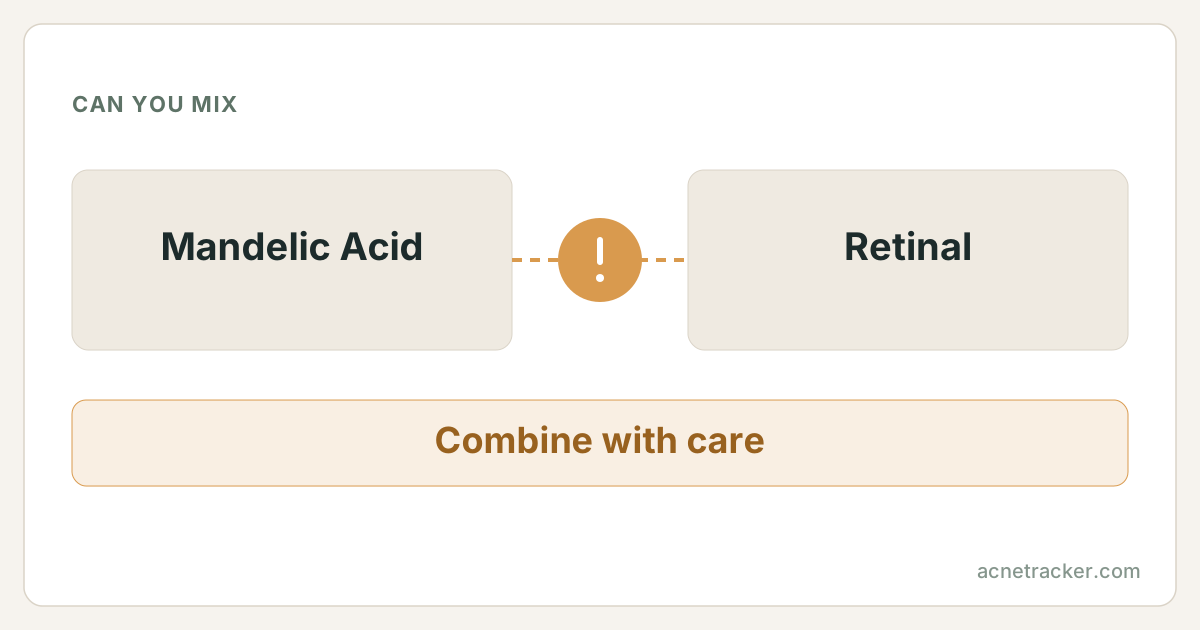
Use caution. Retinal (retinaldehyde) is one of the strongest over-the-counter retinoids, and mandelic acid is an exfoliating acid, so combining two renewal-driving actives can overwhelm the skin. There is no chemical incompatibility, but the irritation adds up quickly. Alternate them on different nights and build tolerance slowly rather than layering both at once.
How this pairing resolves
The two ingredients, their published numbers, and where they land together.
The numbers beside each ingredient are its published comedogenic rating and effective pH window, taken from its own profile page.
Show the numbers
| Ingredients | Metric | 0–5 |
|---|---|---|
| Mandelic Acid | Comedogenic rating | 0/5 |
| Mandelic Acid | Effective pH | 3.0–4.0 |
| Retinal | Comedogenic rating | 1/5 |
| Retinal | Effective pH | 5.0–6.0 |
Why
Retinal sits just one conversion step away from retinoic acid, the active form, which makes it noticeably more potent and fast-acting than retinol while remaining available without a prescription. It drives cell turnover and remodelling from within the cell. Mandelic acid works at the surface, dissolving the bonds between dead cells. The reason to be careful is not a reaction between them but the combined biological demand: two turnover accelerators together commonly produce dryness, flaking and stinging, and pushing through that damages the barrier. Chemically they are compatible — the notion that acids destroy retinoids mostly concerns fragile retinol, and while retinal is more delicate than adapalene, sequential use on skin does not recreate the lab conditions that degrade it. This keeps the verdict at caution, not no. Mandelic acid is the mildest acid you could pair with a retinoid, which makes this more forgiving than, say, glycolic acid plus retinal, but most skins still do best treating them as an either/or on any given night rather than a stack.
How to combine them
Let retinal settle in first: use it alone two or three nights a week for a month or more until your skin stops reacting, since adding an acid before then invites trouble. Then introduce mandelic acid on the nights you are not using retinal — a simple alternating pattern that gives each active its own evening and keeps the barrier intact. Avoid layering both in one session until you are very experienced, and even then keep it occasional. Buffer with moisturiser if retinal feels drying, moisturise well after either active, and wear broad-spectrum SPF 30+ daily, because both raise sun sensitivity. Add only one new product at a time. If your skin gets angry, retinal is usually the keeper for acne and ageing, so drop the mandelic acid first and rebuild from there.
Example routine
| When | Steps |
|---|---|
| Evening A | Cleanser → (optional moisturizer buffer) → Retinal → Moisturizer |
| Evening B | Cleanser → Mandelic acid → wait 5–10 min → Moisturizer |
| Every morning | Cleanser → Moisturizer → SPF 30+ |
Warning signs
Frequently asked questions
Is retinal stronger than retinol when paired with mandelic acid?
Yes. Retinal is one step closer to active retinoic acid, so it works faster and stronger than retinol. That extra potency is exactly why you should not stack it nightly with an exfoliating acid at first.
Can I layer mandelic acid and retinal together?
Not at the start. Both accelerate turnover, so same-night layering usually over-irritates. Alternate them on separate evenings, and only try layering once your skin fully tolerates each one alone.
Does mandelic acid break down retinal?
Sequential use on skin does not degrade it in any meaningful way. Retinal is more delicate than adapalene but robust enough for real routines; the true issue is combined irritation, not chemical breakdown.
Should I start with retinal or mandelic acid first?
Establish retinal alone for a month or more until reactions settle, then add mandelic acid on alternate nights. Starting both together almost always causes dryness and flaking you could have avoided.
Sources & further reading
There is no single study of this exact question. The guidance here is reasoned from the ingredient profiles below, each of which carries its own references:
- Mandelic Acid2 refs
- Retinal3 refs
Show every reference behind this page (5)
- Mandelic acid — PubChem compound summarycited by Mandelic Acid
- DermNet — Alpha hydroxy acidscited by Mandelic Acid
- European Commission CosIng database — Retinalcited by Retinal
- PubChem — Retinaldehydecited by Retinal
- Kwon HS et al. Efficacy and safety of retinaldehyde 0.1% and 0.05% creams used to treat photoaged skin: A randomized double-blind controlled trial. J Cosmet Dermatol 2018 Jun (PubMed)cited by Retinal
Medical disclaimer
Ingredients mentioned on this page
Find your personal acne triggers
Our free Acne Tracker lets you log breakouts, sleep, stress and diet, and shows you which factors correlate with your flare-ups.