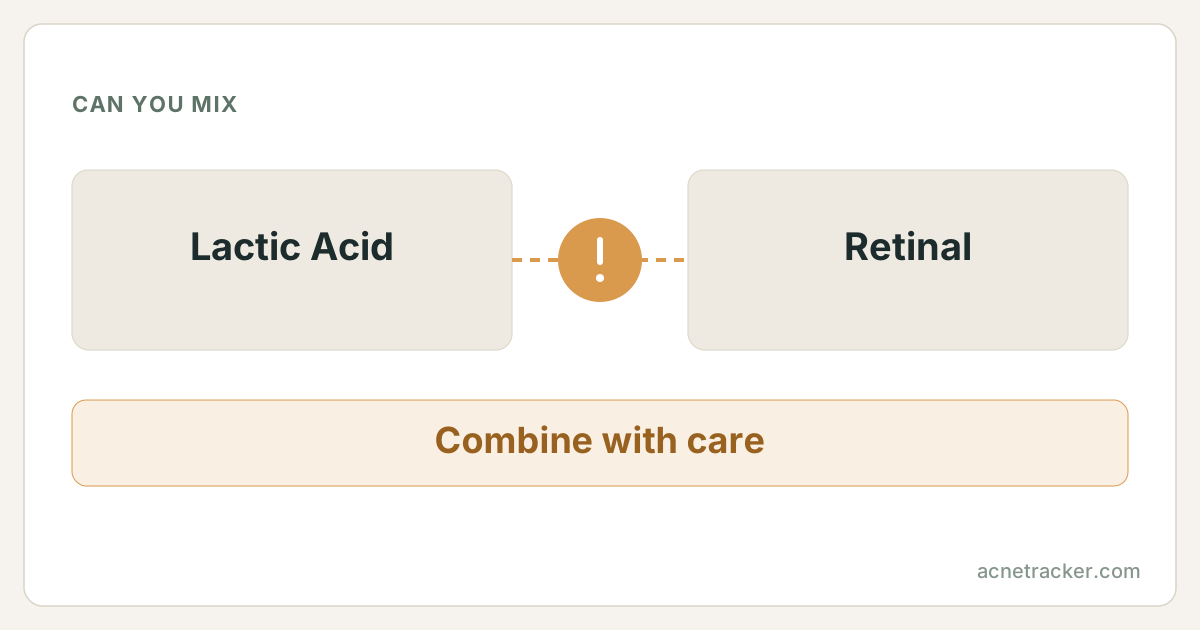
Can You Mix Lactic Acid and Retinal?
Yes, with care. Lactic acid and retinal can share a routine, but keep them mostly on separate nights at first. A short lactic-acid layer does not pH-destroy retinaldehyde the way people fear; the genuine problem is that both accelerate turnover, so simultaneous use stacks irritation and flaking. Alternate, buffer, and wear daily SPF.
How this pairing resolves
The two ingredients, their published numbers, and where they land together.
The numbers beside each ingredient are its published comedogenic rating and effective pH window, taken from its own profile page.
Show the numbers
| Ingredients | Metric | 0–5 |
|---|---|---|
| Lactic Acid | Comedogenic rating | 0/5 |
| Lactic Acid | Effective pH | 3.0–4.0 |
| Retinal | Comedogenic rating | 1/5 |
| Retinal | Effective pH | 5.0–6.0 |
Why
Retinal, or retinaldehyde, is one conversion step from retinoic acid, which makes it more potent per percentage than retinol and faster to show results. A common worry is that a low-pH lactic-acid product will chemically wreck it. In practice a brief acid layer applied and absorbed does not sit long enough to meaningfully oxidise retinaldehyde, and retinal is more stable than its reputation suggests — the interaction that actually matters is biological, not a pH knockout. Lactic acid loosens the corneocyte glue in the stratum corneum while retinal ramps up cell renewal from below. Together they can strip the surface faster than skin rebuilds it, and retinal's higher potency means the irritation ceiling arrives sooner than with retinol. There is a bonus, though: lactic acid's exfoliation can smooth the flaky texture that early retinal use causes, so once skin is adjusted, careful pairing gives brighter, more even results than either alone. The key word is adjusted — rushing this pairing is what triggers stinging and barrier damage.
How to combine them
Introduce retinal first and let skin adapt for several weeks before adding lactic acid. Once both are tolerated, run them on alternating nights: retinal on its nights, a pea-sized amount on dry skin followed by moisturiser; lactic acid on separate nights, absorbed before moisturiser. A workable pattern is retinal three nights, lactic acid one to two nights, recovery nights between. If you want them the same night, apply retinal first on dry skin, wait until it settles, then a mild lactic acid over the top — but only for skin that has proven it can handle both, and retreat to alternating at any sting. Because retinal degrades in light and both raise photosensitivity, keep them to the evening and apply broad-spectrum SPF every morning without exception.
Example routine
| When | Steps |
|---|---|
| Night 1 / 3 / 5 | Cleanser → Retinal (pea-size) → Moisturizer |
| Night 2 | Cleanser → Lactic acid → Moisturizer |
| Other nights | Cleanser → Moisturizer (recovery) |
| Every morning | Cleanser → Moisturizer → SPF 30+ |
Warning signs
Frequently asked questions
Will lactic acid's low pH destroy retinal?
Not meaningfully. A short lactic-acid layer that absorbs does not linger long enough to oxidise retinaldehyde in any practical sense. With lactic acid and retinal, stacked irritation is the real limit, not a pH knockout of the retinoid.
Is retinal stronger than retinol when paired with lactic acid?
Yes. Retinal is one step from retinoic acid, so it acts faster and stronger per percentage than retinol. That means the irritation ceiling arrives sooner, so pace lactic acid more cautiously with retinal than you would with retinol.
Can lactic acid help with retinal flaking?
Once your skin is adjusted, yes. Lactic acid can smooth the dry, flaky texture that early retinal use causes and boost radiance. Introduce it only after retinal is well tolerated, or it worsens the flaking instead of fixing it.
Should retinal and lactic acid go on the same night?
Not while adjusting. Keep lactic acid and retinal on separate nights first. If you later combine them, apply retinal first on dry skin, let it settle, then a mild lactic acid, and stop same-night use at the first sting.
Sources & further reading
There is no single study of this exact question. The guidance here is reasoned from the ingredient profiles below, each of which carries its own references:
- Lactic Acid3 refs
- Retinal3 refs
Show every reference behind this page (5)
- PubChem — Lactic acid compound summarycited by Lactic Acid
- DermNet — Alpha hydroxy acidscited by Lactic Acid
- European Commission CosIng database — Lactic Acidcited by Lactic Acid, Retinal
- PubChem — Retinaldehydecited by Retinal
- Kwon HS et al. Efficacy and safety of retinaldehyde 0.1% and 0.05% creams used to treat photoaged skin: A randomized double-blind controlled trial. J Cosmet Dermatol 2018 Jun (PubMed)cited by Retinal
Medical disclaimer
Ingredients mentioned on this page
Find your personal acne triggers
Our free Acne Tracker lets you log breakouts, sleep, stress and diet, and shows you which factors correlate with your flare-ups.