Can You Mix Hyaluronic Acid and Lactic Acid?
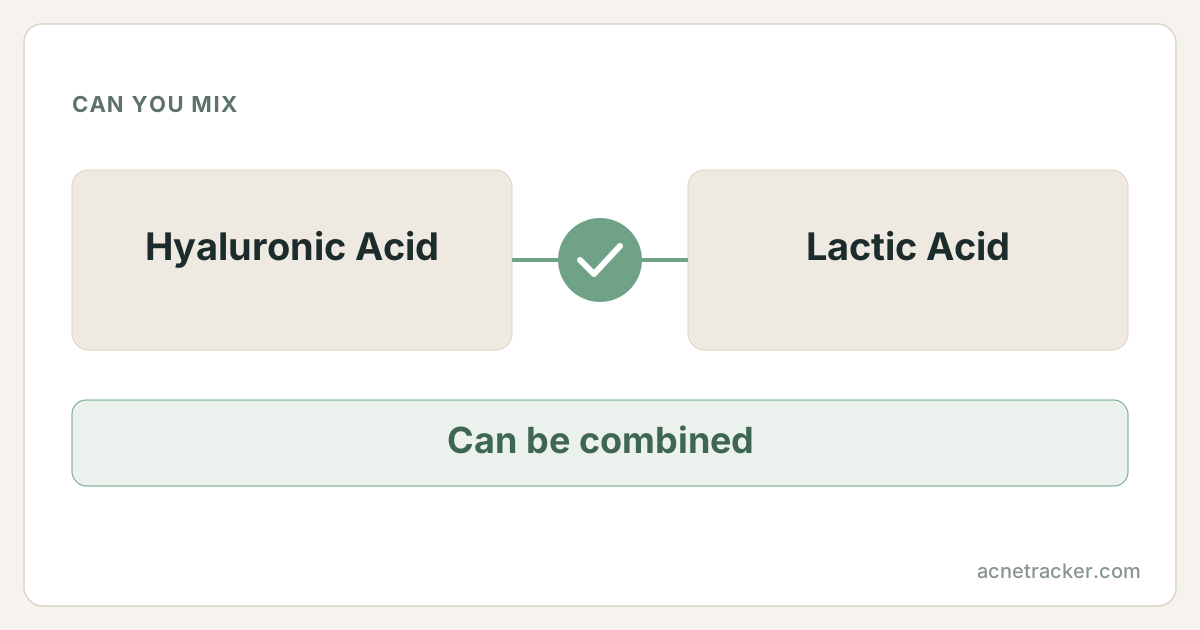
Yes, and this is the most natural fit of any acid-plus-hyaluronic-acid pairing, for a reason most guides miss: lactic acid is not only an exfoliant. Its salt form, sodium lactate, is a component of the skin's own natural moisturising factor. You are combining a humectant with an acid that is itself partly a humectant — which is why lactic acid is the AHA usually recommended for dry skin.
How this pairing resolves
The two ingredients, their published numbers, and where they land together.
The numbers beside each ingredient are its published comedogenic rating and effective pH window, taken from its own profile page.
Show the numbers
| Ingredients | Metric | 0–5 |
|---|---|---|
| Hyaluronic Acid | Comedogenic rating | 0/5 |
| Hyaluronic Acid | Effective pH | no published pH |
| Lactic Acid | Comedogenic rating | 0/5 |
| Lactic Acid | Effective pH | 3.0–4.0 |
Why
Alpha hydroxy acids loosen the bonds between corneocytes so dead cells shed more readily. Lactic acid does that job, but it arrives with a second identity that glycolic acid does not have. Your stratum corneum contains a mixture called natural moisturising factor — free amino acids, pyrrolidone carboxylic acid, urea, and lactate among them — which sits inside the corneocytes and pulls water in. Sodium lactate is a genuine NMF constituent, and topical lactic acid has been reported to raise ceramide levels in the stratum corneum, which is a barrier effect rather than a peeling one. So lactic acid exfoliates and hydrates, and it is the AHA dermatologists tend to reach for when skin is dry rather than merely congested. Where does hyaluronic acid fit? At a different level, and with different demands. The acid needs a low pH — somewhere around 3 to 4 — to stay largely un-ionised and do its work; hyaluronate has no such requirement and is unbothered by the acidity around it. That is the practical takeaway: a hyaluronic acid serum will not raise the pH of a lactic acid product in any way that blunts it, because a hyaluronate gel is nearly pH-neutral and contributes almost no buffering capacity. The two occupy the same routine without negotiating.
How to combine them
Acid first on dry skin, hyaluronic acid second. Cleanse, let skin dry, apply the lactic acid and give it ten to fifteen minutes; then hyaluronic acid and moisturiser. Applying the humectant first is the common error — it dilutes the acid layer and adds an unnecessary film between the acid and the cells it needs to reach. Two or three nights a week is plenty for most people; lactic acid at low single-digit percentages is a leave-on exfoliant, while the high-percentage products are a different proposition entirely and belong to a professional. On the nights you exfoliate, the hyaluronic acid afterwards is not optional pampering — freshly exfoliated skin loses water faster, and this is exactly when the humectant plus moisturiser combination earns its place. Daily sunscreen matters more than usual: AHAs increase UV sensitivity, and the effect persists for about a week after you stop.
Example routine
| When | Steps |
|---|---|
| Evening (Mon/Thu) | Cleanser → dry skin → Lactic acid → wait 10–15 min → Hyaluronic acid → Moisturiser |
| Evening (other days) | Cleanser → Hyaluronic acid on damp skin → Moisturiser |
| Morning | Cleanser → Hyaluronic acid → Moisturiser → SPF 30+ (AHAs raise UV sensitivity) |
| Wrong order | Hyaluronic acid before lactic acid — dilutes the acid and adds a barrier |
Warning signs
Frequently asked questions
Is lactic acid really a moisturiser as well as an exfoliant?
In part, yes. Lactate is a constituent of the skin's natural moisturising factor, and topical lactic acid has been reported to increase stratum corneum ceramides. It still exfoliates like an AHA — but it is the AHA with a hydrating side, which is why dry skin tolerates it best.
Does hyaluronic acid raise the pH and cancel my lactic acid?
No. A hyaluronate gel is close to pH-neutral and carries almost no buffering capacity, so it cannot meaningfully shift an acid formula. Applied after the acid has had its ten to fifteen minutes, the question does not arise at all.
Which comes first, lactic acid or hyaluronic acid?
Lactic acid, on dry skin, then hyaluronic acid once it has had time to work. Reversing it dilutes the acid and puts a polymer film between it and the corneocytes it is meant to loosen.
Can I use lactic acid every night with a hyaluronic acid serum?
The hyaluronic acid is fine nightly — it has no adjustment period. The lactic acid usually is not: two or three nights weekly suits most people, and daily leave-on AHA is how barriers get wrecked in a fortnight.
Is lactic acid gentler than glycolic acid to pair with hyaluronic acid?
Generally, yes. Lactic acid's molecule is larger than glycolic acid's, so it penetrates more slowly and tends to irritate less at comparable strengths — plus it contributes hydration that glycolic acid does not. Formulation and pH still decide the real-world sting.
Sources & further reading
There is no single study of this exact question. The guidance here is reasoned from the ingredient profiles below, each of which carries its own references:
- Hyaluronic Acid3 refs
- Lactic Acid3 refs
Show every reference behind this page (5)
- PubChem — Hyaluronic acid compound summarycited by Hyaluronic Acid
- European Commission CosIng database — Hyaluronic Acidcited by Hyaluronic Acid, Lactic Acid
- DermNet — Moisturisers and humectantscited by Hyaluronic Acid
- PubChem — Lactic acid compound summarycited by Lactic Acid
- DermNet — Alpha hydroxy acidscited by Lactic Acid
Medical disclaimer
Ingredients mentioned on this page
Find your personal acne triggers
Our free Acne Tracker lets you log breakouts, sleep, stress and diet, and shows you which factors correlate with your flare-ups.