Can You Mix Azelaic Acid and Lactic Acid?
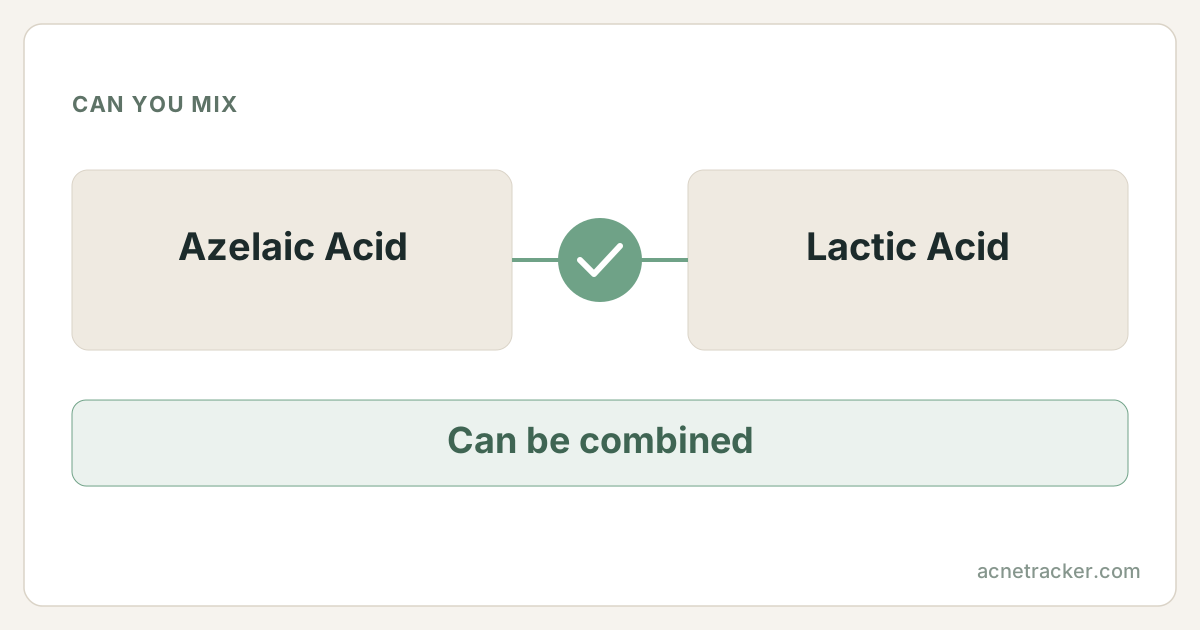
Yes. The word 'acid' in both names is doing more scaremongering than the chemistry deserves. Azelaic acid is not an AHA and does not exfoliate by dissolving desmosomes, so it neither needs nor steals lactic acid's low pH. They coexist happily. The only real limit is comfort: two things that tingle, applied to one face, tingle more.
How this pairing resolves
The two ingredients, their published numbers, and where they land together.
The numbers beside each ingredient are its published comedogenic rating and effective pH window, taken from its own profile page.
Show the numbers
| Ingredients | Metric | 0–5 |
|---|---|---|
| Azelaic Acid | Comedogenic rating | 0/5 |
| Azelaic Acid | Effective pH | 4.0–5.0 |
| Lactic Acid | Comedogenic rating | 0/5 |
| Lactic Acid | Effective pH | 3.0–4.0 |
Why
Lactic acid is a two-carbon alpha hydroxy acid with a pKa of about 3.86, and that number is the whole story of how it works. In a formula buffered to pH 3.5–4, a large fraction of it stays in the un-ionised free-acid form that can cross into the stratum corneum and loosen the protein bonds holding dead corneocytes together. Push the pH up and it stops exfoliating. Lactic acid is also unusual among AHAs in being a genuine humectant — it is a natural moisturising factor component, so it hydrates while it exfoliates, which is why it is the AHA people with dry skin get on with. Azelaic acid operates on a different plane entirely. Its two carboxyl groups have pKa values around 4.5 and 5.6, but its effects are not pH-driven surface exfoliation at all — it inhibits tyrosinase, quiets the oxidative burst of inflammation, and mildly normalises follicular keratinisation through routes that do not depend on being protonated at the skin surface. That is why a mildly alkaline drift from a moisturiser blunts lactic acid but does very little to azelaic acid. Practically: no chemical antagonism, no pH tug-of-war, just two independent jobs.
How to combine them
Treat lactic acid as the occasional treatment and azelaic acid as the daily one. Azelaic acid rewards consistency — the pigment and redness work happens over months of daily use — while lactic acid delivers most of its benefit at two or three applications a week. So: azelaic acid every morning under sunscreen, lactic acid on two or three evenings. On a lactic acid night, skip azelaic acid entirely rather than layering it; you lose almost nothing across a month and you avoid a stinging face. If you want them in one sitting, lactic acid goes first on dry skin — it needs unbuffered contact — then wait ten to fifteen minutes before azelaic acid and moisturiser. Start lactic acid at 5–10%; the 10%+ leave-on formulas are not a beginner's product on top of an active. Azelaic acid does not make skin photosensitive, but lactic acid does, so sunscreen is not optional on this routine.
Example routine
| When | Steps |
|---|---|
| Morning | Cleanser → Azelaic acid 10% → Moisturiser → SPF 30+ |
| Evening (Tue/Sat) | Cleanser → Lactic acid 5–10% → Moisturiser. Skip azelaic acid |
| Evening (other days) | Cleanser → Moisturiser |
| Same-routine option | Lactic acid → wait 10–15 min → Azelaic acid → Moisturiser |
Warning signs
Frequently asked questions
Are azelaic acid and lactic acid both AHAs?
No. Lactic acid is an alpha hydroxy acid. Azelaic acid is a saturated dicarboxylic acid — a different structure with a different mechanism. Grouping them as 'acids' is a naming accident, not a chemical relationship.
Does lactic acid's low pH stop azelaic acid working?
There is no evidence that it does. Azelaic acid's tyrosinase inhibition and anti-inflammatory action are not surface-pH-dependent the way AHA exfoliation is, so a low-pH neighbour does not disable it.
Can I use a lactic acid toner every night alongside azelaic acid?
You can, but most skin will not thank you. Nightly leave-on AHA plus a daily active is where over-exfoliation starts. Two or three lactic acid nights a week gets you the same result with an intact barrier.
Which one helps more with post-acne marks?
Azelaic acid, for brown marks specifically — it inhibits the pigment-forming enzyme, which lactic acid does not. Lactic acid speeds the shedding of already-pigmented cells, so it is a helper, not the lead.
Is this pair safe for dry or dehydrated skin?
It is a good pairing for dry skin as acids go, since lactic acid is a humectant as well as an exfoliant. Keep the frequency low, put a real moisturiser on top, and stop if the surface starts feeling tight rather than soft.
Sources & further reading
There is no single study of this exact question. The guidance here is reasoned from the ingredient profiles below, each of which carries its own references:
- Azelaic Acid3 refs
- Lactic Acid3 refs
Show every reference behind this page (5)
- PubChem — Azelaic acid compound summarycited by Azelaic Acid
- DermNet — Azelaic acidcited by Azelaic Acid
- European Commission CosIng database — Azelaic Acidcited by Azelaic Acid, Lactic Acid
- PubChem — Lactic acid compound summarycited by Lactic Acid
- DermNet — Alpha hydroxy acidscited by Lactic Acid
Medical disclaimer
Ingredients mentioned on this page
Find your personal acne triggers
Our free Acne Tracker lets you log breakouts, sleep, stress and diet, and shows you which factors correlate with your flare-ups.