Can You Mix Bakuchiol and Salicylic Acid?
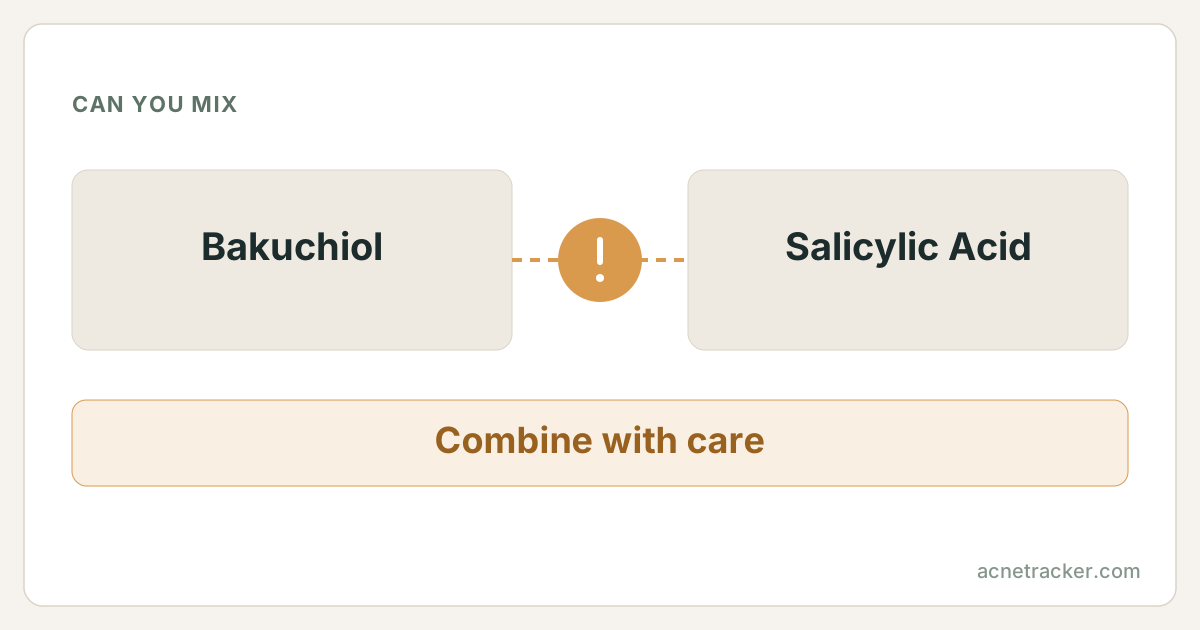
Mostly yes, with monitoring. Bakuchiol is a plant-derived, gentler alternative to retinol that supports smoothing and firmness, and it pairs more easily with salicylic acid than retinol does. Salicylic acid clears pores and oil while bakuchiol works on texture and fine lines. The combination is usually well tolerated, but stacking any active on an exfoliating acid can still irritate sensitive skin, so watch for dryness.
How this pairing resolves
The two ingredients, their published numbers, and where they land together.
The numbers beside each ingredient are its published comedogenic rating and effective pH window, taken from its own profile page.
Show the numbers
| Ingredients | Metric | 0–5 |
|---|---|---|
| Bakuchiol | Comedogenic rating | 0/5 |
| Bakuchiol | Effective pH | no published pH |
| Salicylic Acid | Comedogenic rating | 0/5 |
| Salicylic Acid | Effective pH | 3.0–4.0 |
Why
Bakuchiol is often marketed as a natural retinol alternative because it triggers some of the same gene pathways that boost collagen and cell renewal, yet it does so without the classic retinoid irritation, and unlike retinol it is reasonably stable in light and not strongly pH-sensitive. Salicylic acid is an oil-soluble beta-hydroxy acid that exfoliates the pore lining and reduces oil. Because bakuchiol is far gentler than retinol and does not depend on a narrow pH like retinoids do, it coexists with salicylic acid more comfortably than a true retinoid would — there is no meaningful chemical incompatibility. The reason this stays a caution rather than a clear yes is cumulative irritation: bakuchiol still nudges cell turnover, and salicylic acid still exfoliates and dries, so on reactive or already-compromised skin the two together can push past comfort. For most people the pair is workable, especially since bakuchiol tends to soothe, but sensitive skin should introduce them carefully and be ready to alternate.
How to combine them
You can often layer them: on clean skin apply salicylic acid first, let it absorb, then bakuchiol, then moisturizer. Because bakuchiol is stable in daylight, you can also use it in the morning and reserve salicylic acid for the evening, which spreads out the actives. If your skin is sensitive, alternate them on different nights instead of layering. Start each at a low frequency and build slowly, keeping a good moisturizer in the routine and daily SPF 30+ in the morning; even though bakuchiol is not as photosensitizing as retinol, salicylic acid raises sun sensitivity. Add one active first, let skin adjust for a couple of weeks, then introduce the second.
Example routine
| When | Steps |
|---|---|
| Morning | Cleanser → Bakuchiol → Moisturizer → SPF 30+ |
| Evening | Cleanser → Salicylic acid → Moisturizer |
| Layered option | Salicylic acid → Bakuchiol → Moisturizer (PM) |
| Sensitive skin | Alternate the two on different nights |
Warning signs
Frequently asked questions
Is bakuchiol safe to use with acids like retinol is not?
Bakuchiol is gentler and more pH-stable than retinol, so it layers with salicylic acid more easily. The pairing is usually fine, though sensitive skin should still watch for combined dryness and consider alternating.
Should I layer bakuchiol and salicylic acid or use them separately?
Many people layer salicylic acid then bakuchiol at night, or use bakuchiol in the morning and salicylic acid at night. Sensitive skin does better alternating them on different evenings.
Can bakuchiol replace retinol next to my salicylic acid?
Bakuchiol offers milder smoothing and firming benefits and is easier to combine with salicylic acid. It is not identical to retinol in strength, but it is a good option if retinol plus an acid irritates you.
Is bakuchiol a better choice than retinol during pregnancy?
Some people prefer bakuchiol because retinoids are avoided in pregnancy, but plant actives are not automatically proven safe. Discuss any pregnancy routine, including leave-on salicylic acid, with your healthcare provider first.
Sources & further reading
There is no single study of this exact question. The guidance here is reasoned from the ingredient profiles below, each of which carries its own references:
- Bakuchiol3 refs
- Salicylic Acid2 refs
Show every reference behind this page (5)
- PubChem — Bakuchiol compound summarycited by Bakuchiol
- Bakuchiol: a retinol-like functional compound (PubMed)cited by Bakuchiol
- DermNet — Cosmeceuticalscited by Bakuchiol
- Salicylic acid as a peeling agent: a comprehensive review (PubMed)cited by Salicylic Acid
- FDA OTC monograph — acne drug products (salicylic acid 0.5–2%)cited by Salicylic Acid
Medical disclaimer
Ingredients mentioned on this page
Find your personal acne triggers
Our free Acne Tracker lets you log breakouts, sleep, stress and diet, and shows you which factors correlate with your flare-ups.