Whiteheads on the Cheeks
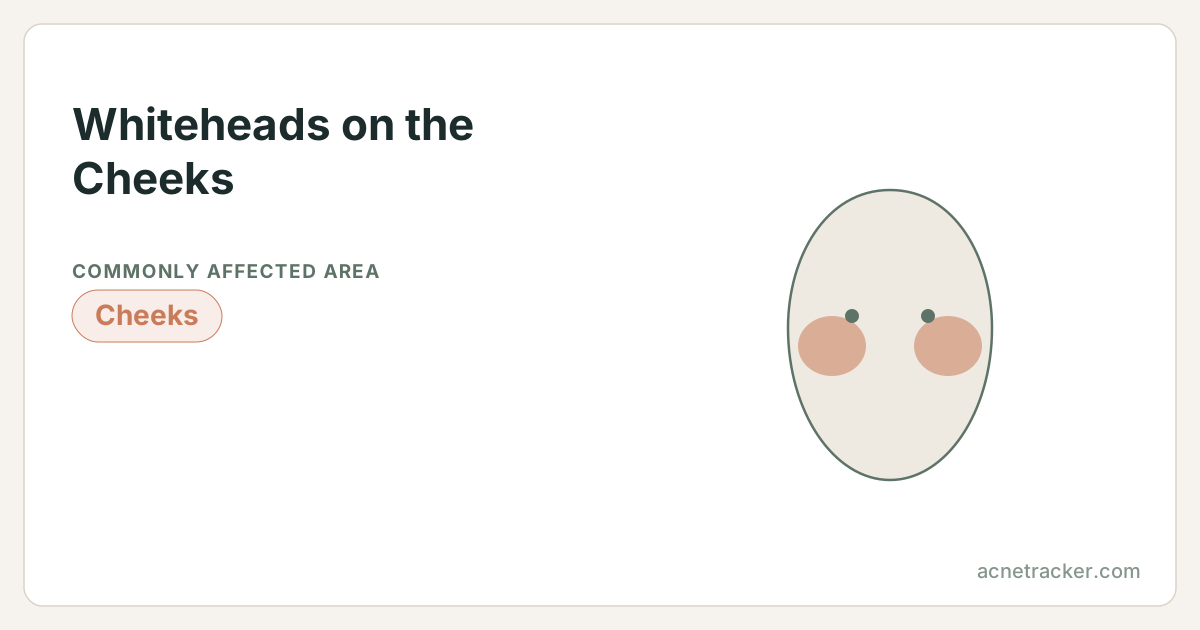
Whiteheads on the cheeks are closed comedones: small plugs of oil and dead skin trapped just under an intact surface, so the top stays pale rather than darkening in the air. They show up as little white or skin-toned bumps, often across the fuller part of the cheek, and unlike an angry pustule they are not red or painful. On the cheeks they are frequently a product of what touches the skin, from makeup and rich creams to pillows and phones, layered on top of an oily base. The reassuring part is that closed comedones respond well to steady, gentle exfoliation, so the fix is patience and the right actives rather than harder scrubbing.
How to recognize it
Cheek whiteheads are small, raised, round bumps with a whitish or flesh-coloured top and no dark opening, scattered or clustered across the mid to outer cheek. They feel slightly firm and are not sore. Stretch the skin in side light and they stand out as a bumpy texture. The main lookalikes are milia, which are harder, whiter, pinpoint cysts that sit deeper and resist acids, and small pustules, which are red-based with a genuine pus tip. If bumps are itchy and uniform rather than varied, a fungal cause is worth considering instead.
What causes it
Trapped oil and dead cells
When the pore opening stays closed over a plug of sebum and dead skin, the contents cannot oxidize, so the bump stays pale. This retention under intact skin is what makes a comedone a whitehead rather than a blackhead.
Comedogenic products on the cheeks
Rich creams, some facial oils and heavy makeup sit longest on the cheeks and can seal follicles closed. On this zone especially, switching to lighter non-comedogenic formulas often reduces the bumps.
Surface friction and occlusion
Pillowcases, phone screens, hands and masks press against the cheek for long stretches, trapping oil and encouraging plugs to form under the covered skin without ever opening to the air.
Sluggish exfoliation
If dead cells shed too slowly, they accumulate in the follicle and keep the opening plugged. This is why gentle chemical exfoliation clears whiteheads more reliably than any amount of washing.
Ingredients with evidence
| Ingredient | Role |
|---|---|
| Salicylic acid (BHA) | Oil-soluble, it slips into the pore and dissolves the plug behind each whitehead. A 2% leave-on a few evenings weekly is the most effective single step. |
| Adapalene / retinoids | Normalizes shedding so new closed comedones stop forming; the core long-term treatment for recurring cheek whiteheads. Expect 8 to 12 weeks. |
| Mandelic acid (AHA) | A gentle large-molecule acid that refines surface texture with less sting, suited to sensitive cheek skin that reacts to stronger exfoliants. |
| Niacinamide | Lowers oil and steadies the barrier so the exfoliants above are better tolerated over time. |
Building the routine
Cleanse gently twice a day and resist scrubbing, which irritates without reaching the plugs. In the evening introduce salicylic acid two to three nights a week, then add a low-strength retinoid on alternate nights once your skin adapts, building up slowly to avoid flaking. Follow every active with a light, non-comedogenic moisturizer, and never skip morning SPF. Cut back rich creams and heavy makeup on the cheeks while you clear the bumps, change pillowcases often, and wipe your phone. Give any routine a full eight weeks before judging it, because closed comedones clear gradually. Do not squeeze them; forcing a closed bump usually inflames it into a red spot that heals more slowly.
When to see a doctor
Frequently asked questions
Why do I have small white bumps on my cheeks that are not painful?
They are usually closed comedones: plugs of oil and dead skin trapped under intact skin. Because the plug never opens to the air, it stays pale and painless, reading as texture rather than an active spot, and it responds to gentle exfoliation.
Are cheek whiteheads the same as milia?
No. Milia are hard, white, pinpoint cysts that sit deeper and do not respond to exfoliating acids, often needing professional removal. Press one gently: a whitehead on the cheek gives slightly and sits under a thin closed surface, which is why salicylic acid and retinoids reach it and a patient routine clears it.
Should I squeeze whiteheads on my cheeks?
Better not. Forcing a closed comedone usually pushes it into inflammation, turning a quiet bump into a red spot that heals more slowly and can mark. Dissolving the plug with salicylic acid or a retinoid is safer and more lasting.
Could my moisturizer be causing cheek whiteheads?
Quite possibly. Rich creams and facial oils sit longest on the cheeks and can seal follicles closed. Switching to a lighter non-comedogenic moisturizer and removing makeup thoroughly often reduces the bumps within a few weeks.
Sources & further reading
What this page cites about the condition itself:
There is no single study of this exact question. The guidance here is reasoned from the ingredient profiles below, each of which carries its own references:
- Salicylic Acid2 refs
- Adapalene3 refs
- Mandelic Acid2 refs
- Niacinamide2 refs
Show every reference behind this page (8)
- Salicylic acid as a peeling agent: a comprehensive review (PubMed)cited by Salicylic Acid
- FDA OTC monograph — acne drug products (salicylic acid 0.5–2%)cited by Salicylic Acid, Adapalene
- PubChem — Adapalene compound summarycited by Adapalene
- DermNet — Adapalenecited by Adapalene
- Mandelic acid — PubChem compound summarycited by Mandelic Acid
- DermNet — Alpha hydroxy acidscited by Mandelic Acid
- Niacinamide: mechanisms of action and its topical use in dermatology (PubMed)cited by Niacinamide
- European Commission CosIng database — Niacinamidecited by Niacinamide
Medical disclaimer
Ingredients mentioned on this page
Find your personal acne triggers
Our free Acne Tracker lets you log breakouts, sleep, stress and diet, and shows you which factors correlate with your flare-ups.