Cystic Acne on the Forehead
Cystic acne on the forehead shows up as deep, tender lumps that sit under the skin and rarely come to a head. Instead of a surface plug, inflammation reaches into the lower part of the follicle, where a clog ruptures and the immune system floods the area, creating a firm, sore nodule or cyst. The forehead's heavy oil flow and its exposure to hats, hair products and sweat all feed the process. Because the inflammation is deep, over-the-counter products often are not enough on their own — but they still matter, and early medical treatment makes the biggest difference in preventing the scars cystic acne can leave.
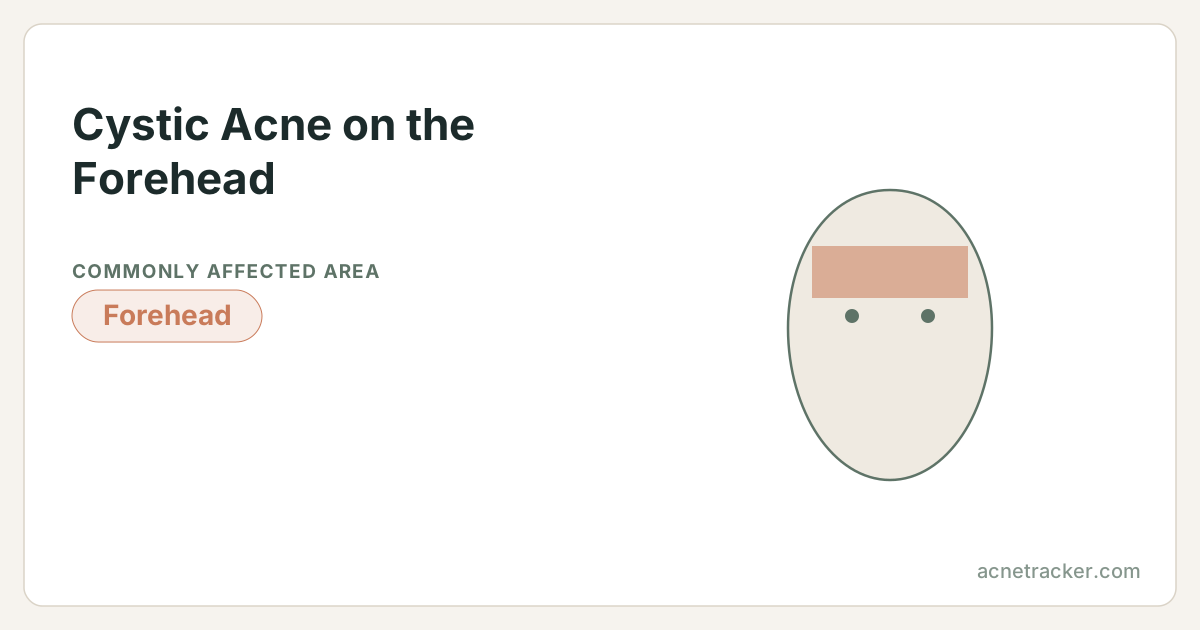
How to recognize it
Cystic forehead lesions are large, deep and painful, often with no visible white or black top. They may look like a red, swollen mound or feel like a hard knot beneath otherwise smooth skin, and they can persist for weeks. Several can appear together, sometimes joining into a broader inflamed patch. Unlike whiteheads or pustules, you cannot squeeze anything out, and trying only worsens swelling and scarring. If deep bumps are accompanied by widespread nodules on the jaw, cheeks and back, this points to more extensive nodulocystic acne that benefits from a dermatologist's care.
What causes it
Deep follicular inflammation
When a clogged follicle ruptures beneath the surface, its contents spill into surrounding tissue and trigger an intense immune response. This deep reaction, not a surface plug, is what forms a cyst.
Hormonal and oil-gland activity
Androgens drive the forehead's oil glands to overproduce, feeding larger, deeper clogs. Hormonal peaks in adolescence, cycles and stress can push mild acne into cystic territory.
Occlusion and pressure
Helmets, tight caps, sweatbands and constant forehead friction press oil and bacteria deep into follicles, a mechanical trigger sometimes called acne mechanica that can worsen cystic flares.
Genetics and severity
A tendency toward strong inflammation and severe acne runs in families. Some people simply form deeper, more reactive lesions and need earlier, stronger treatment to limit scarring.
Ingredients with evidence
| Ingredient | Role |
|---|---|
| Benzoyl peroxide | Reduces acne bacteria and inflammation; useful as an adjunct across the forehead, though deep cysts usually need more than topical care alone. |
| Adapalene / retinoids | Normalizes follicle turnover to prevent new deep clogs; a foundational long-term treatment, often combined with other actives under guidance. |
| Niacinamide | Calms redness and supports the barrier alongside stronger treatments, helping the skin tolerate them. |
| Azelaic acid | Anti-inflammatory and gentle, it helps reduce redness and post-inflammatory marks while other treatments work. |
| Prescription options (ask your dermatologist) | Oral or topical treatments such as prescription retinoids, hormonal therapy or isotretinoin are frequently needed for true cystic acne; a doctor determines what is appropriate. |
Building the routine
Keep the surface routine gentle and steady: a mild cleanser twice daily, a light non-comedogenic moisturizer, and daily SPF to protect healing skin. A retinoid at night and benzoyl peroxide can help prevent new lesions, but introduce them slowly so an already inflamed forehead is not further irritated. Do not attempt to squeeze or lance cysts; it deepens inflammation and almost guarantees scarring. A cold compress can ease a painful flare. The single most useful step for genuinely cystic acne is booking a dermatologist early, because prescription treatment works on the deep inflammation that topicals cannot reach and protects against permanent scars.
When to see a doctor
Frequently asked questions
Why do I get deep, painful cysts on my forehead but no whiteheads?
Cystic acne is inflamed deep in the follicle rather than plugged at the surface, so there is no top to come to a head. The lump you feel is swelling and immune activity in the lower follicle, which is why it is sore and slow to resolve.
Can I treat forehead cystic acne with over-the-counter products alone?
Topicals like retinoids and benzoyl peroxide help prevent new lesions, but they often cannot fully control true cystic acne because the inflammation sits too deep. Most people need prescription treatment, which is why seeing a dermatologist early is worthwhile.
Will squeezing a forehead cyst help it heal faster?
No. There is nothing at the surface to extract, and pressure ruptures the lesion further into the skin, increasing swelling, prolonging healing and making scarring much more likely. Leave cysts alone and treat the inflammation instead.
Does cystic forehead acne leave scars?
It can, because deep inflammation damages surrounding tissue. Early, effective treatment is the best way to reduce scarring, so prompt care matters. Avoid picking, protect healing skin with SPF, and address marks once active breakouts are controlled.
Sources & further reading
What this page cites about the condition itself:
There is no single study of this exact question. The guidance here is reasoned from the ingredient profiles below, each of which carries its own references:
- Benzoyl Peroxide3 refs
- Adapalene3 refs
- Niacinamide2 refs
- Azelaic Acid3 refs
Show every reference behind this page (9)
- PubChem — Benzoyl peroxide compound summarycited by Benzoyl Peroxide
- DermNet — Benzoyl peroxidecited by Benzoyl Peroxide
- FDA — Drugs (OTC acne products)cited by Benzoyl Peroxide, Adapalene
- PubChem — Adapalene compound summarycited by Adapalene
- DermNet — Adapalenecited by Adapalene
- Niacinamide: mechanisms of action and its topical use in dermatology (PubMed)cited by Niacinamide
- European Commission CosIng database — Niacinamidecited by Niacinamide, Azelaic Acid
- PubChem — Azelaic acid compound summarycited by Azelaic Acid
- DermNet — Azelaic acidcited by Azelaic Acid
Medical disclaimer
Ingredients mentioned on this page
Find your personal acne triggers
Our free Acne Tracker lets you log breakouts, sleep, stress and diet, and shows you which factors correlate with your flare-ups.