Hormonal Acne on the Forehead
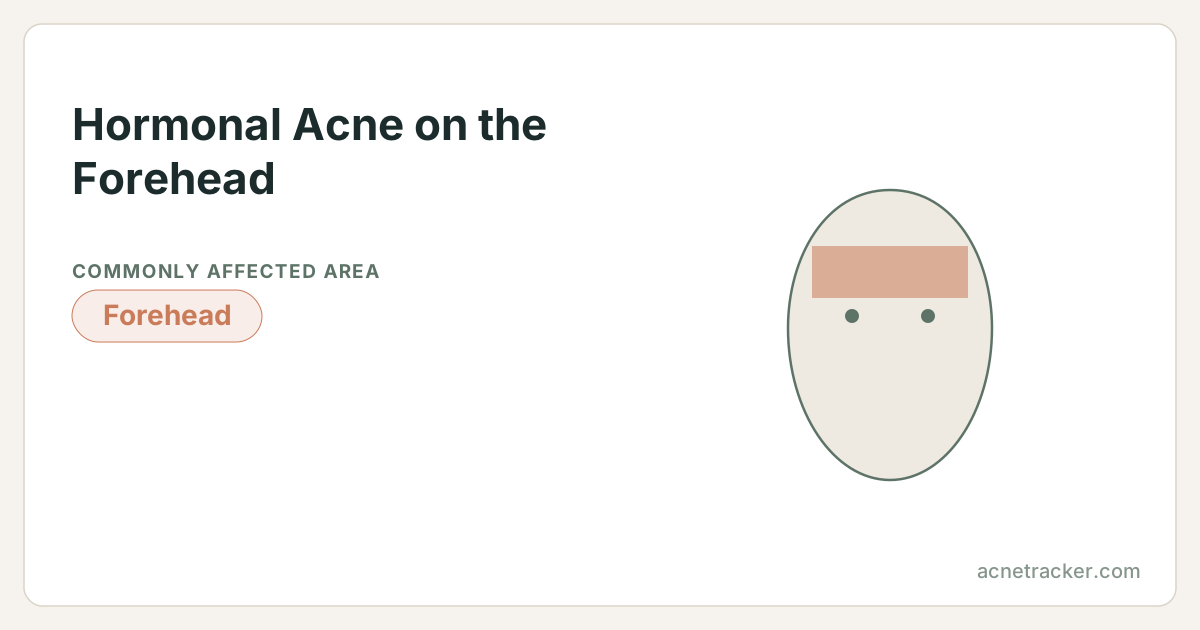
Hormonal acne is best known on the jawline and chin, but it can flare on the forehead too, especially in people whose whole T-zone runs oily. Hormones like androgens raise sebum output across the face, and the forehead's many oil glands respond readily, tipping into breakouts that track the menstrual cycle, stress or shifts in contraception. Forehead lesions in a hormonal pattern tend to be a mix of congestion and deeper, sorer bumps rather than pure surface blackheads. Recognizing the hormonal driver matters because it shifts the plan toward oil regulation, cell turnover and, when needed, medical hormonal therapy rather than harsher scrubbing.
How to recognize it
Hormonally influenced forehead acne often combines clusters of closed comedones with occasional deeper, tender papules, flaring on a fairly predictable schedule — the week before a period, during stressful stretches, or after starting or stopping hormonal birth control. Breakouts may spread from the forehead down into the T-zone. Distinguish this from purely product-driven forehead congestion, which is steadier and tied to hair products or hats, and from fungal folliculitis, which itches and looks uniform. Timing and depth are the biggest clues that hormones are involved rather than surface factors alone.
What causes it
Androgen-driven oil production
Androgens stimulate oil glands throughout the T-zone, including the forehead. Even normal hormone fluctuations can push these glands to overproduce, seeding clogs that become breakouts.
Menstrual cycle timing
In the days before a period, shifting estrogen and progesterone leave relative androgen activity higher, which is why many notice a reliable premenstrual forehead flare.
Stress hormones
Cortisol raises both oil output and inflammation, so demanding periods and poor sleep can drive forehead breakouts independent of the menstrual window.
Contraceptive changes
Starting, switching or stopping hormonal birth control shifts the hormonal balance, and the skin can react with a wave of breakouts for a few months while it adjusts.
Underlying endocrine conditions
Persistent hormonal acne alongside irregular cycles, excess hair growth or thinning scalp hair can signal PCOS and deserves a medical work-up rather than more products.
Ingredients with evidence
| Ingredient | Role |
|---|---|
| Salicylic acid (BHA) | Keeps forehead pores clear and calms inflammation; used a few nights weekly as prevention around expected flares. |
| Retinol / retinoids | The core long-term treatment: normalizes turnover so hormone-driven clogs form less readily. Give it 8–12 weeks. |
| Niacinamide | Reduces oil output and redness while steadying the barrier against stronger actives. |
| Azelaic acid | A well-tolerated anti-inflammatory choice and the go-to during pregnancy when retinoids are avoided. |
| Hormonal therapy (ask your doctor) | For stubborn hormonal acne, prescription options such as combined contraceptives or spironolactone target the root driver; a clinician decides suitability. |
Building the routine
Build a calm, consistent routine rather than chasing each spot: gentle cleanser morning and night, a niacinamide serum daily, a retinoid two to three nights a week ramped up slowly, and salicylic acid on one or two other evenings. Moisturize every time and use SPF 30+ each morning, since retinoids and acids raise sun sensitivity. Track your cycle and start prevention a week before your usual flare window rather than reacting afterward. Avoid harsh drying hacks, which damage the barrier while deeper hormonal bumps sit out of reach. If topicals plateau after a few months, that is the signal to discuss hormonal treatment with a doctor.
When to see a doctor
Frequently asked questions
Can hormonal acne really appear on the forehead?
Yes. While the jaw and chin are most classic, androgens raise oil across the whole T-zone, so people with an oily forehead can get hormonally driven breakouts there too, often mixed with deeper bumps and flaring on a cyclical schedule.
How do I know if my forehead acne is hormonal or from hair products?
Hormonal breakouts flare on a predictable timeline — before periods or under stress — and include deeper, tender bumps. Product-driven congestion is steadier, concentrates along the hairline, and eases when you keep hair products off the skin.
Does the pill help forehead hormonal acne?
Certain combined contraceptives can improve hormonal acne by lowering androgen activity, and are prescribed for this reason. They are not right for everyone, so a doctor weighs your health history before recommending them. Full effect usually takes a few months.
How long before hormonal forehead acne improves?
With a consistent topical routine, expect gradual improvement over 8–12 weeks. Because it is managed rather than cured, maintenance matters, and prescription hormonal therapy typically reaches full effect after three to six months.
Sources & further reading
What this page cites about the condition itself:
There is no single study of this exact question. The guidance here is reasoned from the ingredient profiles below, each of which carries its own references:
- Salicylic Acid2 refs
- Retinol2 refs
- Niacinamide2 refs
- Azelaic Acid3 refs
Show every reference behind this page (8)
- Salicylic acid as a peeling agent: a comprehensive review (PubMed)cited by Salicylic Acid
- FDA OTC monograph — acne drug products (salicylic acid 0.5–2%)cited by Salicylic Acid
- Improvement of naturally aged skin with vitamin A (retinol) (PubMed)cited by Retinol
- European Commission SCCS opinion on vitamin A in cosmeticscited by Retinol
- Niacinamide: mechanisms of action and its topical use in dermatology (PubMed)cited by Niacinamide
- European Commission CosIng database — Niacinamidecited by Niacinamide, Azelaic Acid
- PubChem — Azelaic acid compound summarycited by Azelaic Acid
- DermNet — Azelaic acidcited by Azelaic Acid
Medical disclaimer
Ingredients mentioned on this page
Find your personal acne triggers
Our free Acne Tracker lets you log breakouts, sleep, stress and diet, and shows you which factors correlate with your flare-ups.