Cystic Acne on the Chest
Cystic acne on the chest means deep, tender lumps that sit under the skin rather than surface bumps you can see the top of. The upper chest has large, active oil glands, and when a clog forms deep in one of these follicles and becomes inflamed, it can swell into a painful nodule or cyst that lasts for weeks. Because these lesions form so deep and the chest is constantly warmed and rubbed by clothing, they are slow to settle and prone to leaving marks or scars. Cystic chest acne is the type most likely to need prescription help, so it is worth taking seriously early rather than waiting it out.
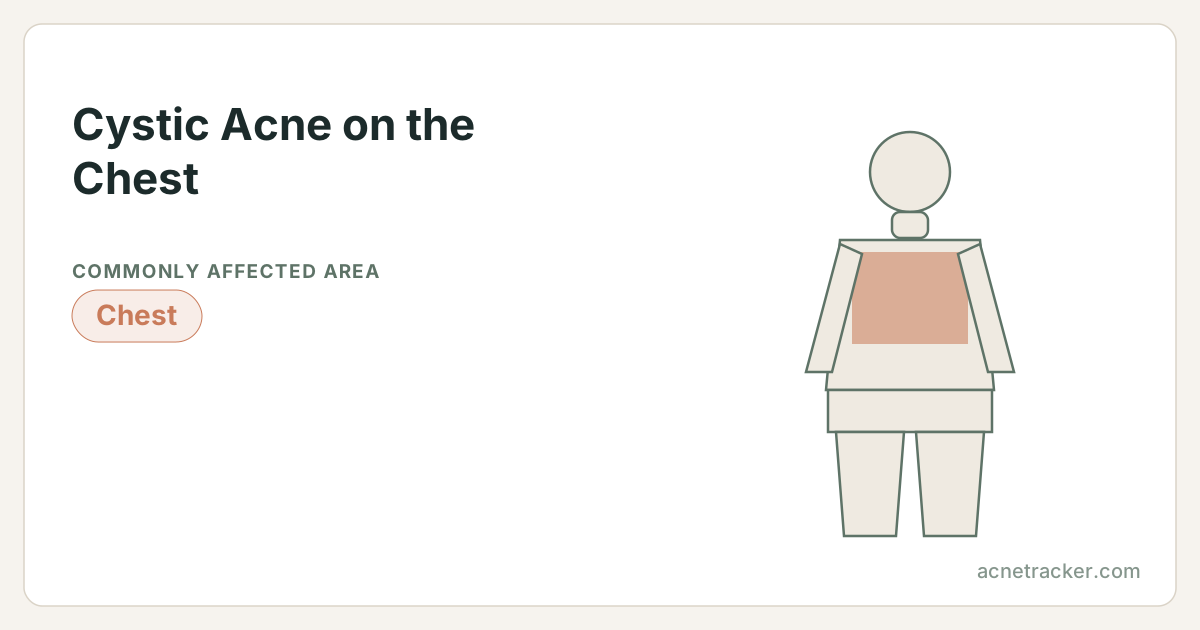
How to recognize it
Cystic chest acne shows as large, sore, deep-seated lumps, sometimes reddish or skin-coloured, that feel firm or fluid-filled under the fingertip and often have no clear head. They recur in the same areas of the upper chest and may join into tender clusters. Unlike surface whiteheads, you cannot squeeze them out, and trying only pushes inflammation deeper and worsens scarring. If the bumps are small, uniform and itchy instead of deep and painful, the problem is more likely fungal folliculitis; true cysts are big, sore and stubborn.
What causes it
Deep follicular inflammation
When a clog forms deep in a chest follicle and the wall ruptures, inflammation spreads into the surrounding tissue, creating the large, painful cysts that define this type rather than a simple surface spot.
Hormonal drive
Androgens push the chest's oil glands into overdrive, so hormonal shifts around the menstrual cycle, stress or conditions like PCOS often sit behind recurrent cystic breakouts on the chest and trunk.
Heat, sweat and occlusion
Clothing traps heat and sweat against the chest, feeding inflammation in already congested follicles, which is why cystic flares often worsen in summer or with heavy training.
Picking and pressure
Squeezing deep chest lumps or letting tight straps press on them drives inflammation deeper and greatly increases the chance of a permanent scar.
Ingredients with evidence
| Ingredient | Role |
|---|---|
| Benzoyl peroxide wash | A 4–5% wash lowers the bacteria feeding inflamed chest cysts; helpful as a base layer, though deep cysts usually need more than washes alone. |
| Adapalene | A retinoid that reduces the deep clogs cysts grow from over time; apply thinly at night, but expect it to work slowly and pair it with medical care for true cysts. |
| Azelaic acid | Anti-inflammatory and helpful for the dark marks cysts leave on the chest; gentle enough for daily use alongside other treatment. |
| Niacinamide | Calms redness around deep lesions and supports the barrier during stronger treatment. |
| Salicylic acid (BHA) | Keeps surrounding follicles clear to limit new lesions, though it cannot reach an established deep cyst on its own. |
Building the routine
Be gentle and consistent, and treat over-the-counter care as support rather than a full solution for true cysts. Use a benzoyl-peroxide wash a few times a week and a thin layer of adapalene at night to reduce new clogs, with azelaic acid and niacinamide to calm inflammation and fade marks. Moisturise lightly and use SPF on the exposed chest to stop marks darkening. Do not squeeze deep lumps or apply harsh scrubs — both worsen scarring. Loosen tight straps and change out of sweaty clothes quickly. Most importantly, if cysts are large, painful or recurring, book a dermatologist early, because prescription treatment prevents far more scarring than any home routine.
When to see a doctor
Frequently asked questions
Can I pop a cyst on my chest?
No. Cysts sit too deep to drain by squeezing, and pressing them pushes inflammation into the surrounding tissue, prolongs healing and greatly raises the risk of a permanent scar. Treat them gently and see a doctor if they are large or recurring.
Why do I keep getting deep painful lumps on my chest?
The chest has large, active oil glands, and when clogs form deep in them and rupture, they inflame into cysts. Hormones, heat, sweat and pressure from clothing all drive this. Recurrent cysts usually need prescription help rather than washes alone.
Will cystic chest acne leave scars?
Cysts on the chest can, because their inflammation sits deep in the follicle rather than on the surface. The best way to limit scarring is to avoid squeezing, treat early and see a dermatologist for recurring cysts. Once active acne is controlled, marks and scars can be addressed with dedicated treatments.
What is the strongest treatment for cystic chest acne?
For severe, scarring cases dermatologists sometimes prescribe oral treatment, and isotretinoin is the most powerful option — but it is a specialist decision, prescribed and monitored by a doctor. There is no over-the-counter equivalent, so persistent cysts warrant a referral.
Sources & further reading
What this page cites about the condition itself:
There is no single study of this exact question. The guidance here is reasoned from the ingredient profiles below, each of which carries its own references:
- Benzoyl Peroxide3 refs
- Adapalene3 refs
- Azelaic Acid3 refs
- Niacinamide2 refs
- Salicylic Acid2 refs
Show every reference behind this page (10)
- PubChem — Benzoyl peroxide compound summarycited by Benzoyl Peroxide
- DermNet — Benzoyl peroxidecited by Benzoyl Peroxide
- FDA — Drugs (OTC acne products)cited by Benzoyl Peroxide, Adapalene, Salicylic Acid
- PubChem — Adapalene compound summarycited by Adapalene
- DermNet — Adapalenecited by Adapalene
- PubChem — Azelaic acid compound summarycited by Azelaic Acid
- DermNet — Azelaic acidcited by Azelaic Acid
- European Commission CosIng database — Azelaic Acidcited by Azelaic Acid, Niacinamide
- Niacinamide: mechanisms of action and its topical use in dermatology (PubMed)cited by Niacinamide
- Salicylic acid as a peeling agent: a comprehensive review (PubMed)cited by Salicylic Acid
Medical disclaimer
Ingredients mentioned on this page
Find your personal acne triggers
Our free Acne Tracker lets you log breakouts, sleep, stress and diet, and shows you which factors correlate with your flare-ups.