Fungal Acne on the Chest
A crop of tiny, itchy bumps that appears on the chest after every workout and never quite clears is frequently not acne at all, but fungal folliculitis — more precisely Malassezia folliculitis. It comes from an overgrowth of a yeast that lives on everyone's skin and thrives in the warm, damp, oil-rich pocket between a shirt and the chest. The chest is one of its favourite sites because sweat gathers there under tops and bras with little airflow. This matters because ordinary acne treatments, and especially oils and antibiotics, can make it worse rather than better; the fix is to recognise the yeast and switch to anti-fungal care.
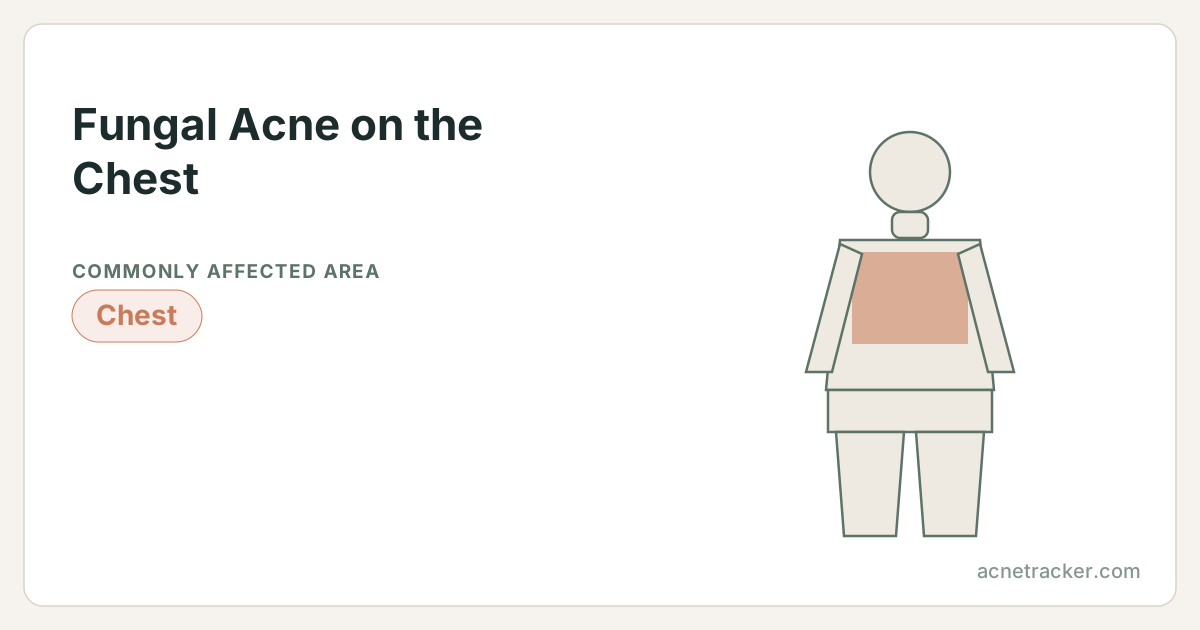
How to recognize it
Fungal folliculitis on the chest looks like clusters of small, dome-shaped bumps that are all strikingly similar in size, often with a pinpoint whitehead centred on a hair follicle. Unlike ordinary chest acne it usually itches rather than aches, rarely forms true blackheads, and appears in even sheets across the upper chest and neckline. It flares after sweating, heat, occlusive clothing or a course of antibiotics. If you instead see a jumble of different-sized spots, blackheads and deep cysts together, bacterial acne is the more likely explanation; the uniformity and the itch are the telltale signs of yeast.
What causes it
Malassezia yeast overgrowth
Malassezia normally lives on the skin, but when it multiplies inside chest follicles it produces the itchy, uniform bumps of fungal folliculitis. The oil-rich chest gives it exactly the sebum it feeds on.
Sweat and occlusion on the chest
Damp skin under a shirt or sports bra, with almost no ventilation, creates ideal conditions for the yeast to bloom. This is why chest fungal folliculitis is classically a summer and post-exercise problem.
Antibiotics
Oral or topical antibiotics taken for acne suppress bacteria but leave yeast unchecked, so Malassezia flourishes. Chest bumps that got worse after antibiotics are a strong hint the problem was fungal.
Oils and rich chest products
Malassezia feeds on certain fatty acids, so facial oils, body oils and heavy chest creams can fuel it. Removing oil-based products from the chest is often part of bringing it under control.
Ingredients with evidence
| Ingredient | Role |
|---|---|
| Ketoconazole (anti-fungal) | An anti-Malassezia agent, often a 2% shampoo used as a chest wash; lather on, leave several minutes so it can act, then rinse. Targets the yeast that acne products miss. |
| Zinc pyrithione | A wash-off anti-fungal in medicated washes that lowers yeast on the chest with regular short-contact use. |
| Selenium sulfide | An anti-dandruff active used as a brief chest wash to reduce Malassezia levels; rinse fully after a few minutes. |
| Salicylic acid (BHA) | Keeps follicle openings clear so yeast is less able to build up; a useful maintenance layer once the flare has settled. |
| Niacinamide | Calms surrounding redness and supports the barrier, but does not treat the yeast itself. |
Building the routine
Treat the yeast and take oils off the chest. Use an anti-fungal wash — ketoconazole, zinc pyrithione or selenium sulfide — a few times a week: lather it over the chest, leave it three to five minutes so it can work, then rinse. Just as important, stop applying leave-on oils and rich creams to the chest, since they feed Malassezia. Shower straight after sweating, change out of a damp sports bra or shirt at once, and choose loose, breathable fabrics that let the chest dry. Once the itchy bumps settle, keep a maintenance wash once or twice weekly, because fungal folliculitis readily returns in warm, sweaty conditions.
When to see a doctor
Frequently asked questions
How do I know if my chest acne is fungal?
Look for small bumps that all look the same size, itch rather than hurt, lack blackheads and flare after sweating or antibiotics. A mix of varied spots with blackheads and cysts points to ordinary acne instead. If you are unsure, a doctor can confirm quickly.
Why won't my chest acne clear with normal treatments?
Because the bumps on your chest are yeast-driven, not bacterial, so acne care is aimed at the wrong organism. Antibiotics reduce bacteria and let yeast spread, and oils in some products feed Malassezia, so standard acne care can even worsen it. Anti-fungal washes are what actually help this type of chest bump.
Can I use dandruff shampoo on my chest?
Yes, that is a common approach. Anti-dandruff shampoos with ketoconazole, zinc pyrithione or selenium sulfide target the same yeast; used as a short-contact chest wash a few times a week, they can clear fungal folliculitis there.
Does fungal acne on the chest keep coming back?
It can. The yeast is a permanent resident of everyone's skin, and a chest sealed under a shirt or sports bra with almost no ventilation hands it the warm, sweaty conditions it needs to climb back. Keeping a maintenance anti-fungal wash once or twice a week, showering after sweat and avoiding oils on the chest reduces how often it returns.
Sources & further reading
What this page cites about the condition itself:
There is no single study of this exact question. The guidance here is reasoned from the ingredient profiles below, each of which carries its own references:
- Salicylic Acid2 refs
- Niacinamide2 refs
Show every reference behind this page (4)
- Salicylic acid as a peeling agent: a comprehensive review (PubMed)cited by Salicylic Acid
- FDA OTC monograph — acne drug products (salicylic acid 0.5–2%)cited by Salicylic Acid
- Niacinamide: mechanisms of action and its topical use in dermatology (PubMed)cited by Niacinamide
- European Commission CosIng database — Niacinamidecited by Niacinamide
Medical disclaimer
Ingredients mentioned on this page
Find your personal acne triggers
Our free Acne Tracker lets you log breakouts, sleep, stress and diet, and shows you which factors correlate with your flare-ups.