Chest Acne
The chest is one of the most breakout-prone stretches of skin below the neck, and for good reason. The upper chest and décolletage sit over a band of active oil glands, they stay covered by bras, collars and layered tops for most of the day, and they collect sweat that has nowhere to evaporate. Add sunscreen, body lotion and necklace metal into the mix, and follicles here clog easily. Most chest breakouts are ordinary comedonal and inflammatory acne, but the warm, damp conditions also make fungal folliculitis unusually common in this exact spot, which is why a chest that will not clear sometimes needs a different approach than the face.
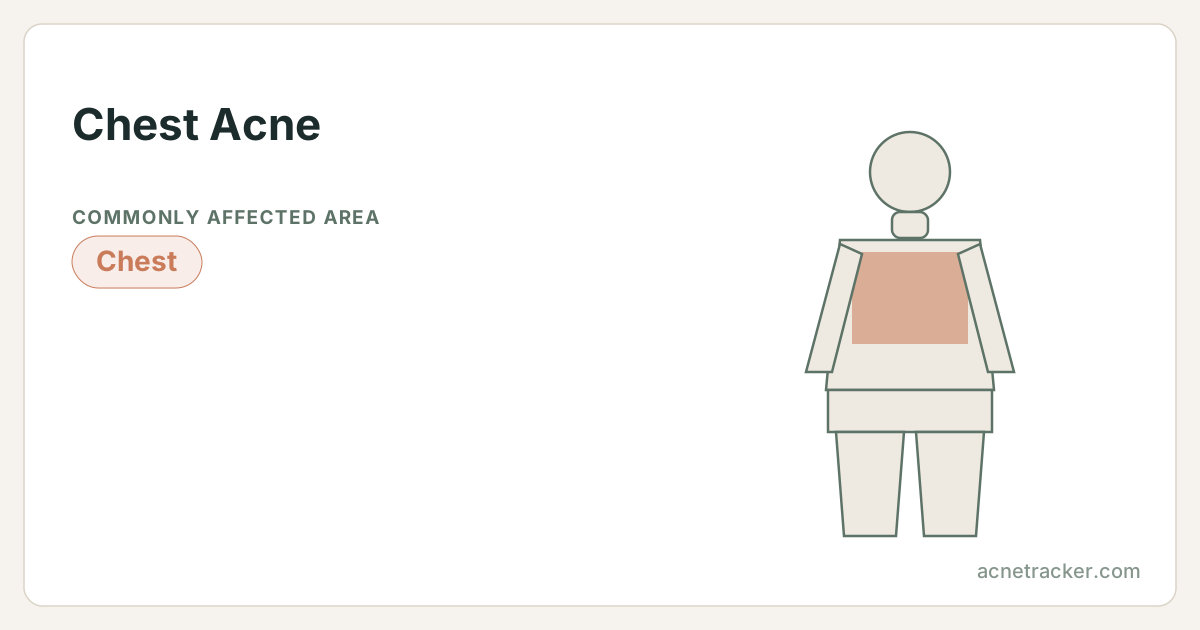
How to recognize it
Chest acne typically shows as a scatter of blackheads, small closed bumps and red inflamed spots across the upper chest and the V of the neckline. It tends to concentrate where clothing presses or where sweat pools between the collarbones. Marks and brown discolouration linger afterwards because the chest catches sun through open necklines. If the bumps are strikingly uniform in size, itchy rather than tender and flare after workouts, suspect fungal folliculitis rather than classic acne. Deep, painful lumps that recur in the same place point toward more stubborn cystic acne.
What causes it
Active oil glands under occlusion
The upper chest carries a dense band of sebaceous glands, and keeping it covered by tops and bras traps the oil and heat those glands produce, so pores clog more readily than on exposed skin.
Sweat trapped against the skin
Sweat that cannot evaporate under a shirt softens the follicle opening and lets debris and microbes build up. This is why chest breakouts flare in summer, during workouts and in anyone who runs warm.
Fabric, friction and detergent
Rough seams, synthetic fabrics and stiff collars rub the chest, while residue from heavily fragranced detergents and fabric softeners can irritate the skin and inflame follicles along contact lines.
Products left on the chest
Heavy body lotions, hair conditioner rinsing down the chest in the shower, and thick sunscreens can all sit in pores. Comedogenic residue is a frequent, overlooked driver of chest congestion.
Yeast overgrowth
The warm, occluded chest is a favourite site for Malassezia yeast, so a proportion of stubborn chest breakouts are actually fungal folliculitis that will not respond to ordinary acne products.
Ingredients with evidence
| Ingredient | Role |
|---|---|
| Benzoyl peroxide wash | A 4–5% wash used on the chest a few times a week lowers the bacteria that turn clogged pores into inflamed spots; rinse well to avoid bleaching tops and towels. |
| Salicylic acid (BHA) | A leave-on 2% liquid or spray clears blackheads and closed bumps and gets into oily follicles across the chest; the chest is easy to reach, so application is simple. |
| Azelaic acid | Calms inflammation and fades the brown marks left behind on sun-exposed chest skin, and is a good option in pregnancy when retinoids are avoided. |
| Adapalene | A retinoid that gradually stops chest follicles from clogging; apply a thin layer at night and expect eight to twelve weeks before judging it. |
| Niacinamide | Supports oil balance and evens tone across the chest while stronger actives do the clearing work. |
Building the routine
Keep the chest cool, clean and lightly treated. In the shower, cleanse the chest last so hair conditioner and oily runoff rinse away rather than settling into pores. Use a benzoyl-peroxide wash two or three times a week, and apply a leave-on salicylic-acid liquid on other evenings — the chest is easy to reach, so you can treat it thoroughly. Add a thin layer of adapalene or azelaic acid a few nights a week to slow new clogs and fade marks, then a light non-greasy moisturiser. Change out of sweaty clothes promptly, choose breathable cotton over tight synthetics, and rinse fragranced detergent well. Give any routine eight to twelve weeks of consistency before switching.
When to see a doctor
Frequently asked questions
How do I get rid of acne on my chest?
Use a benzoyl-peroxide wash and a leave-on salicylic-acid product consistently, keep the chest cool and dry, change out of sweaty clothes quickly and choose breathable fabrics. Give it a couple of months, and see a doctor if deep or scarring spots persist or if itchy uniform bumps suggest a fungal cause.
Why do I suddenly have acne on my chest?
A sudden crop often follows a change in heat, sweat, clothing or products — a new gym habit, a warmer season, a rich body lotion or a heavily fragranced detergent. Trapped sweat and residue clog chest follicles quickly, so tracing the recent change usually points to the trigger.
Is chest acne a sign of something serious?
Usually not; it is ordinary acne driven by oil, sweat and friction. Persistent severe chest acne alongside irregular periods or other hormonal signs is worth a medical check, and any deep, scarring or rapidly worsening breakout deserves a doctor's assessment rather than continued self-treatment.
Can body lotion or sunscreen cause chest acne?
Yes. Thick, oily lotions and heavy sunscreens can sit in chest pores and clog them. Switching to lighter, non-comedogenic formulas on the chest, and letting products absorb before dressing, often reduces breakouts in this area.
Sources & further reading
What this page cites about the condition itself:
There is no single study of this exact question. The guidance here is reasoned from the ingredient profiles below, each of which carries its own references:
- Benzoyl Peroxide3 refs
- Salicylic Acid2 refs
- Azelaic Acid3 refs
- Adapalene3 refs
- Niacinamide2 refs
Show every reference behind this page (10)
- PubChem — Benzoyl peroxide compound summarycited by Benzoyl Peroxide
- DermNet — Benzoyl peroxidecited by Benzoyl Peroxide
- FDA — Drugs (OTC acne products)cited by Benzoyl Peroxide, Salicylic Acid, Adapalene
- Salicylic acid as a peeling agent: a comprehensive review (PubMed)cited by Salicylic Acid
- PubChem — Azelaic acid compound summarycited by Azelaic Acid
- DermNet — Azelaic acidcited by Azelaic Acid
- European Commission CosIng database — Azelaic Acidcited by Azelaic Acid, Niacinamide
- PubChem — Adapalene compound summarycited by Adapalene
- DermNet — Adapalenecited by Adapalene
- Niacinamide: mechanisms of action and its topical use in dermatology (PubMed)cited by Niacinamide
Medical disclaimer
Ingredients mentioned on this page
Find your personal acne triggers
Our free Acne Tracker lets you log breakouts, sleep, stress and diet, and shows you which factors correlate with your flare-ups.