Tremella Mushroom Extract: Comedogenic Rating & Ingredient Analysis
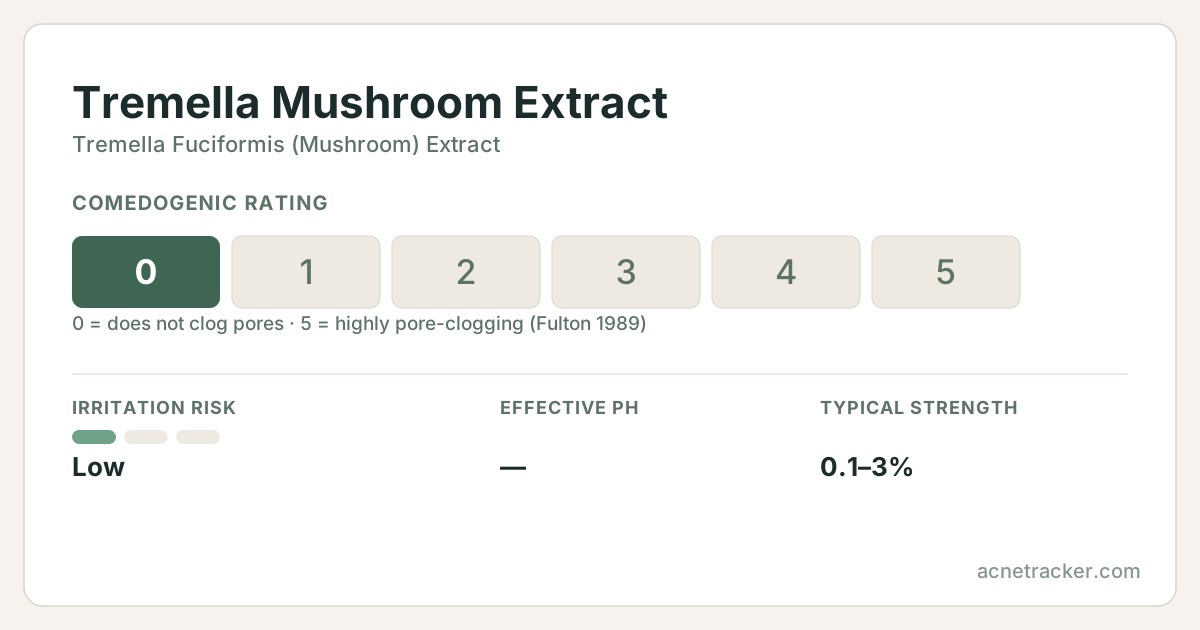
Tremella, better known as snow mushroom, is a translucent, frilly fungus long used in Chinese beauty traditions and now popular in modern hydrating skincare. Tremella fuciformis extract appears in essences, serums, sheet masks and moisturisers marketed for plump, dewy, well-hydrated skin. It is frequently compared to hyaluronic acid because its polysaccharides are excellent at holding water, and some sources suggest the particles are small enough to sit comfortably on the skin. As a gentle, non-comedogenic ingredient, snow mushroom is a favourite among people looking for lightweight but effective hydration, especially for dry and dehydrated skin.
Quick facts
- Comedogenic rating
- our estimate — not measured
- Irritation risk
- Low
- Effective pH
- —
- Typical strength
- 0.1–3%
- Pregnancy
- Considered safe
- Suits skin types
- drynormalcombinationsensitivemature
Where this number comes from
No one has published a comedogenic rating for this ingredient. Fulton's 1989 table tested about 250 raw materials and this was not among them, and we found no later study measuring it. The figure shown is our own reasoning from the ingredient's chemistry and how it is used — treat it as an estimate, not a measurement.
Fulton read his own scale as 0-1 not significant, 2-3 borderline, 4-5 positive. The assay is the rabbit ear at 10% dilution, which the paper itself calls extremely sensitive and not fully predictive of human skin. Ratings describe the raw ingredient; concentration and formulation change real-world behaviour.
Caution profile
The four published fields on this page, on one 0–5 scale. Further from the centre means more care is needed — never that the ingredient is worse.
Derived, not measured: pore-clogging is the published comedogenic rating; irritation maps low/moderate/high to 1/3/5; pregnancy maps safe/caution/avoid to 0/3/5; skin-type limits is how many of the seven skin types this entry does NOT list. Every input is printed in words in the quick-facts card above.
Show the numbers
| Metric | 0–5 | Published field |
|---|---|---|
| Pore-clogging | 0 | 0/5 |
| Irritation | 1 | Low |
| Skin-type limits | 1.4 | 5/7 |
| Pregnancy | 0 | Considered safe |
Working pH and typical strength
Where this ingredient is formulated to sit, and at what concentration.
Both bars come from the fields above: the pH window and the typical strength range published for this ingredient. The tinted column is healthy skin's surface pH (about 4.7–5.75).
Show the numbers
| Metric | 0–5 |
|---|---|
| Typical strength | 0.1–3% |
What is it?
Snow mushroom (Tremella fuciformis) is rich in a distinctive polysaccharide that can hold a large amount of water relative to its weight, which is the basis for its reputation as a natural humectant comparable to hyaluronic-acid. In cosmetics, this polysaccharide forms a light, breathable film that draws and holds moisture at the skin surface, giving a soft, plumped feel without heaviness. Tremella also carries antioxidant activity in laboratory studies. Its water-holding capacity is genuinely impressive, though direct head-to-head cosmetic trials against hyaluronic acid are limited, so the comparison is best treated as a helpful analogy rather than a proven equivalence. It has a comedogenic rating of 0 and a low irritation profile.
Benefits
Powerful natural hydration
Tremella's polysaccharide holds a large amount of water, giving skin a soft, plumped, dewy feel and making it a plant-based alternative to hyaluronic-acid.
Lightweight, breathable feel
It forms a thin, non-sticky film that hydrates without heaviness, suiting people who want moisture but dislike rich, occlusive creams.
Antioxidant support
Snow mushroom contributes antioxidant activity that helps defend against everyday environmental stress, complementing actives like niacinamide.
Gentle and non-comedogenic
With a rating of 0 and low irritation risk, tremella suits dry, sensitive and combination skin and layers easily with other hydrators like beta-glucan.
How to use
Tremella extract works beautifully in a hydrating step: apply an essence, serum or moisturiser containing it onto slightly damp skin after cleansing, morning or night, then seal with a moisturiser if your skin is dry. Like other humectants, it performs best when there is moisture to draw on, so it pairs naturally with hyaluronic-acid and beta-glucan. A humectant has nothing for skin to build tolerance to, and holding water at the surface has no bearing on how skin responds to light. Tremella has very little allergy signal beyond mushroom allergy itself, so patch testing is a light precaution rather than a real flag.
Side effects
Topical tremella extract is very well tolerated, and irritation is rare. People with a specific mushroom allergy should patch test carefully, but the polysaccharide-focused extract is gentle. As with any pure humectant, in very dry air a humectant-heavy layer can occasionally feel tight if not sealed with a moisturiser, because it draws moisture from wherever it can. This is easily solved by applying a cream on top.
Who should avoid it
Almost everyone can use topical tremella extract, including dry, sensitive and mature skin. People with a known mushroom allergy should patch test or avoid it. Pregnancy makes no difference to a polysaccharide that sits on the skin surface holding water. There are no special cautions beyond sealing it with a moisturiser in very dry conditions to get the most comfortable hydration.
Pairs well with
Frequently asked questions
Does tremella mushroom extract clog pores?
No. Tremella extract has a comedogenic rating of 0 and does not clog pores, so it is suitable for all skin types including combination and sensitive.
Is snow mushroom better than hyaluronic acid?
It is a comparable natural humectant with impressive water-holding capacity, and some prefer its lightweight feel. Direct cosmetic trials against hyaluronic acid are limited, so treat it as a good alternative rather than a proven upgrade.
Is tremella the same as snow mushroom?
Yes. Tremella fuciformis is commonly known as snow mushroom or silver ear fungus. All refer to the same hydrating fungal ingredient used in skincare.
How do I get the most from tremella?
Apply it to slightly damp skin and seal with a moisturiser, especially in dry air. Like all humectants it works best when there is moisture for it to draw and hold at the skin surface.
Sources & further reading
Medical disclaimer
Find your personal acne triggers
Our free Acne Tracker lets you log breakouts, sleep, stress and diet, and shows you which factors correlate with your flare-ups.