Fig Extract: Comedogenic Rating & Ingredient Analysis
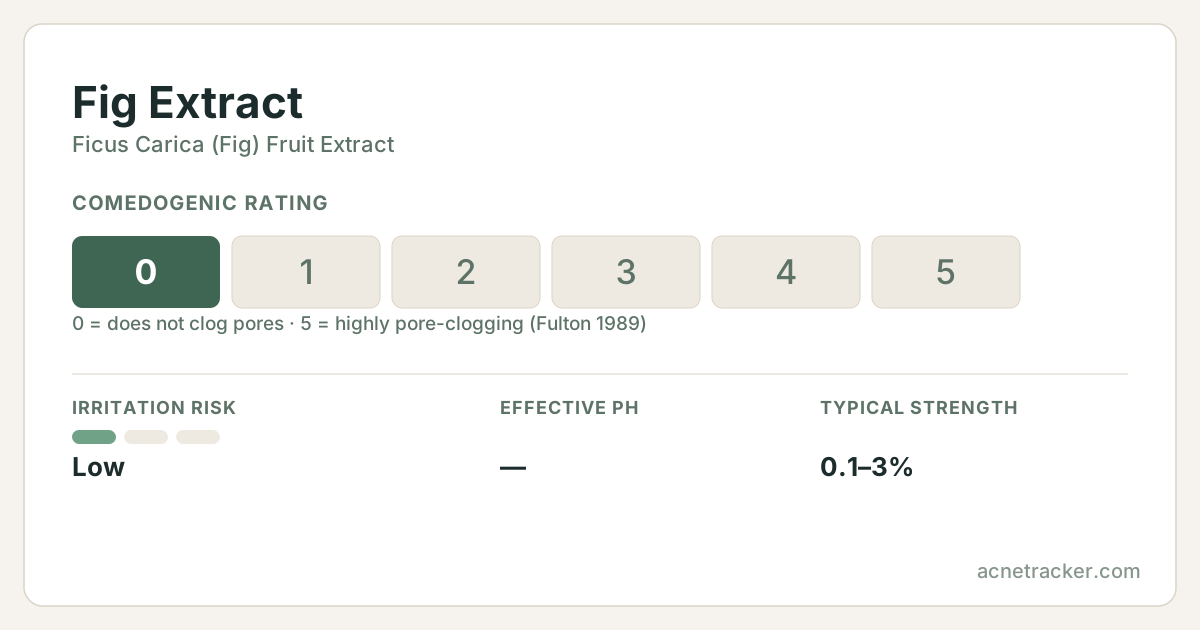
Fig extract brings a soft, sweet Mediterranean fruit into skincare, where it is used as an antioxidant and conditioning ingredient with a naturally hydrating character. Drawn from the fruit of Ficus carica, it appears in nourishing creams, brightening serums and products marketed for dull, dry or tired skin. Figs have a long place in traditional diets and folk skincare, and the modern cosmetic version leans on the fruit's sugars, vitamins and antioxidant compounds. It is a gentle, non-comedogenic extract that suits routines focused on comfort and radiance rather than exfoliation. Note that fig leaf and fig sap are different, more irritating parts of the plant than the fruit extract.
Quick facts
- Comedogenic rating
- our estimate — not measured
- Irritation risk
- Low
- Effective pH
- —
- Typical strength
- 0.1–3%
- Pregnancy
- Considered safe
- Suits skin types
- normaldrycombinationmature
Where this number comes from
No one has published a comedogenic rating for this ingredient. Fulton's 1989 table tested about 250 raw materials and this was not among them, and we found no later study measuring it. The figure shown is our own reasoning from the ingredient's chemistry and how it is used — treat it as an estimate, not a measurement.
Fulton read his own scale as 0-1 not significant, 2-3 borderline, 4-5 positive. The assay is the rabbit ear at 10% dilution, which the paper itself calls extremely sensitive and not fully predictive of human skin. Ratings describe the raw ingredient; concentration and formulation change real-world behaviour.
Caution profile
The four published fields on this page, on one 0–5 scale. Further from the centre means more care is needed — never that the ingredient is worse.
Derived, not measured: pore-clogging is the published comedogenic rating; irritation maps low/moderate/high to 1/3/5; pregnancy maps safe/caution/avoid to 0/3/5; skin-type limits is how many of the seven skin types this entry does NOT list. Every input is printed in words in the quick-facts card above.
Show the numbers
| Metric | 0–5 | Published field |
|---|---|---|
| Pore-clogging | 0 | 0/5 |
| Irritation | 1 | Low |
| Skin-type limits | 2.1 | 4/7 |
| Pregnancy | 0 | Considered safe |
Working pH and typical strength
Where this ingredient is formulated to sit, and at what concentration.
Both bars come from the fields above: the pH window and the typical strength range published for this ingredient. The tinted column is healthy skin's surface pH (about 4.7–5.75).
Show the numbers
| Metric | 0–5 |
|---|---|
| Typical strength | 0.1–3% |
What is it?
The fig fruit (Ficus carica) contains natural sugars that act as humectants, along with vitamins, flavonoids and antioxidant polyphenols. In cosmetics, the fruit extract provides a light hydrating and conditioning effect together with antioxidant support, which is why it appears in nourishing and brightening formulas. It is important to distinguish the fruit extract from fig leaf extract and especially fig latex or sap, which contain furanocoumarins and can be phototoxic and irritating — those are not what a well-formulated fig fruit product uses. The fruit extract itself is gentle, with a comedogenic rating of 0 and a low irritation profile, suiting normal, dry and mature skin.
Benefits
Antioxidant polyphenols
Fig fruit supplies flavonoids and polyphenols that help defend skin against everyday oxidative stress, complementing brightening antioxidants like vitamin-c.
Natural humectant sugars
The fruit's natural sugars draw and hold moisture at the skin surface, giving a soft, conditioned feel that pairs well with hyaluronic-acid.
Conditions dull, dry skin
Its nourishing character helps skin look fresher and more supple, which is why fig features in comforting creams and radiance-focused products.
Gentle and non-comedogenic
With a rating of 0 and low irritation risk, the fruit extract suits dry and mature skin and layers easily with soothers like niacinamide.
How to use
Fig fruit extract is easy to use in a serum, essence or moisturiser after cleansing, morning or night. It layers comfortably with hydrating and brightening actives such as hyaluronic-acid, niacinamide and vitamin-c, and needs no adjustment period. Choose products that specify the fruit extract; be more cautious with fig leaf or sap-based products, which can be irritating or phototoxic. Patch testing is more pointed here than for most botanicals: fig is botanically related to natural latex, so anyone with a latex allergy should test a small area first. Continue using daily sunscreen, especially if a product also contains other potentially photosensitising ingredients.
Side effects
Topical fig fruit extract is generally well tolerated, with irritation being uncommon. The key caution relates to other parts of the fig plant: fig leaf extract and particularly fig latex or sap contain furanocoumarins that can cause phototoxic reactions and irritation. The fruit extract used in cosmetics does not carry the same risk. Very reactive skin should patch test any new product, and any stinging usually traces to other formula ingredients.
Who should avoid it
Most people can use topical fig fruit extract, including dry and mature skin. People with a specific fig or latex allergy should patch test or avoid it, since fig is related to natural latex and cross-reactions are possible. The fruit extract is considered safe for cosmetic use during pregnancy. Be more cautious with fig-leaf or fig-sap products because of their phototoxic potential.
Pairs well with
Frequently asked questions
Does fig extract clog pores?
No. Fig fruit extract has a comedogenic rating of 0 and does not clog pores, so it is suitable for combination, normal and dry skin.
Is fig extract phototoxic?
The fruit extract is not. However, fig leaf and especially fig latex or sap contain furanocoumarins that can be phototoxic and irritating, so it matters which part of the plant a product uses.
What does fig extract do for skin?
It hydrates and conditions using natural fruit sugars, and provides antioxidant support from flavonoids and polyphenols, helping skin look fresher and more supple.
Can people with a latex allergy use fig extract?
They should be cautious. Fig is botanically related to natural latex, and cross-reactions are possible, so anyone with a latex or fig allergy should patch test carefully or avoid it.
Sources & further reading
Medical disclaimer
Find your personal acne triggers
Our free Acne Tracker lets you log breakouts, sleep, stress and diet, and shows you which factors correlate with your flare-ups.