Reishi Mushroom Extract: Comedogenic Rating & Ingredient Analysis
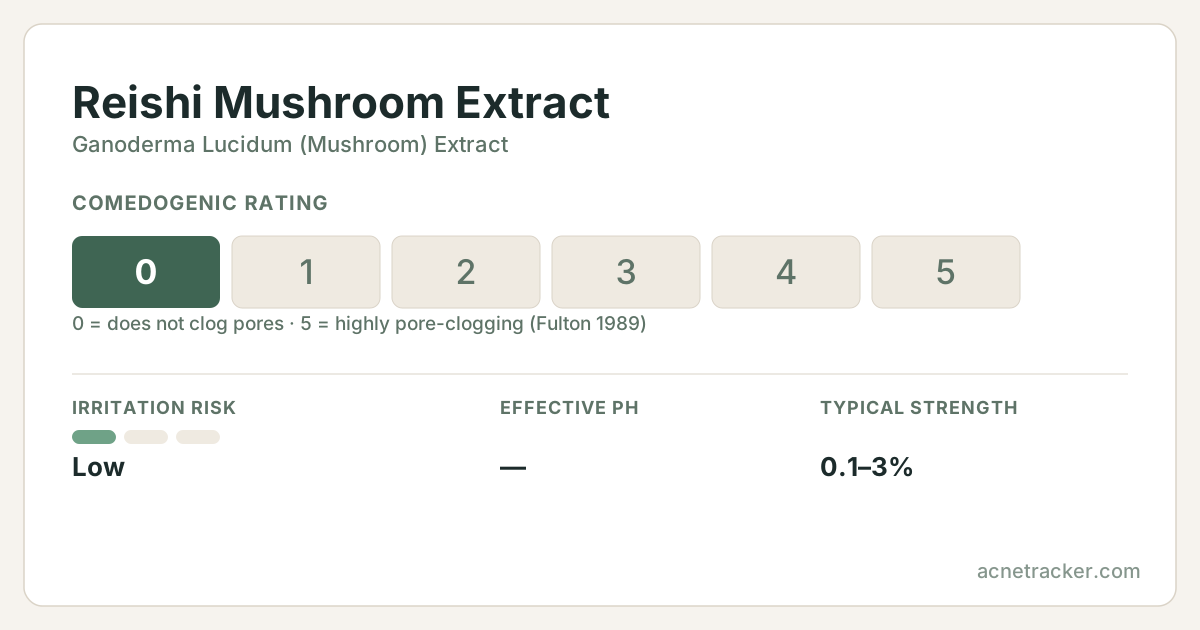
Reishi, known in Chinese medicine as lingzhi or the mushroom of immortality, has moved from wellness shelves into skincare as part of the wider interest in adaptogenic and functional-mushroom ingredients. Ganoderma lucidum extract appears in soothing serums, hydrating creams and products marketed for stressed, dull or sensitive skin. Its appeal is a blend of hydrating polysaccharides and antioxidant compounds that leave skin feeling calm and comfortable. As with most botanical and fungal extracts, the cosmetic evidence is early-stage and best described honestly as promising, so reishi is a gentle, non-comedogenic supporting ingredient rather than a proven active for any specific concern.
Quick facts
- Comedogenic rating
- our estimate — not measured
- Irritation risk
- Low
- Effective pH
- —
- Typical strength
- 0.1–3%
- Pregnancy
- Considered safe
- Suits skin types
- normaldrycombinationsensitivemature
Where this number comes from
No one has published a comedogenic rating for this ingredient. Fulton's 1989 table tested about 250 raw materials and this was not among them, and we found no later study measuring it. The figure shown is our own reasoning from the ingredient's chemistry and how it is used — treat it as an estimate, not a measurement.
Fulton read his own scale as 0-1 not significant, 2-3 borderline, 4-5 positive. The assay is the rabbit ear at 10% dilution, which the paper itself calls extremely sensitive and not fully predictive of human skin. Ratings describe the raw ingredient; concentration and formulation change real-world behaviour.
Caution profile
The four published fields on this page, on one 0–5 scale. Further from the centre means more care is needed — never that the ingredient is worse.
Derived, not measured: pore-clogging is the published comedogenic rating; irritation maps low/moderate/high to 1/3/5; pregnancy maps safe/caution/avoid to 0/3/5; skin-type limits is how many of the seven skin types this entry does NOT list. Every input is printed in words in the quick-facts card above.
Show the numbers
| Metric | 0–5 | Published field |
|---|---|---|
| Pore-clogging | 0 | 0/5 |
| Irritation | 1 | Low |
| Skin-type limits | 1.4 | 5/7 |
| Pregnancy | 0 | Considered safe |
Working pH and typical strength
Where this ingredient is formulated to sit, and at what concentration.
Both bars come from the fields above: the pH window and the typical strength range published for this ingredient. The tinted column is healthy skin's surface pH (about 4.7–5.75).
Show the numbers
| Metric | 0–5 |
|---|---|
| Typical strength | 0.1–3% |
What is it?
Reishi mushroom (Ganoderma lucidum) contains beta-glucans and other polysaccharides that hydrate and condition the skin surface, along with triterpenes and antioxidant compounds studied for anti-inflammatory activity in the laboratory. The polysaccharide content links reishi to other soothing, hydrating ingredients like beta-glucan, which is a comparable fungal-derived molecule. Traditional use of reishi is extensive in East Asian medicine, though those internal-use claims do not automatically translate to topical skin benefits. In cosmetics, reishi is valued for a soft, comforting hydration and light antioxidant support. As a water- or glycol-based extract it has a comedogenic rating of 0 and a low irritation profile, suiting sensitive and dry skin well.
Benefits
Hydrating polysaccharides
Reishi's beta-glucans and polysaccharides hold water at the skin surface for a soft, plumped feel, pairing naturally with humectants like hyaluronic-acid.
Soothes stressed skin
Its triterpene and antioxidant compounds show anti-inflammatory activity in the lab, helping calm the look of reactive, tired skin.
Antioxidant support
Reishi contributes antioxidant defence against everyday environmental stress, complementing soothing actives such as niacinamide.
Gentle and non-comedogenic
With a rating of 0 and low irritation risk, reishi suits sensitive, dry and mature skin and layers easily with other calming ingredients like beta-glucan.
How to use
Reishi mushroom extract fits into a soothing, hydrating routine: use it in a serum, essence or moisturiser after cleansing, morning or night. It layers comfortably with hydrating and calming actives such as hyaluronic-acid, niacinamide and beta-glucan, and needs no adjustment period. There is no photosensitivity concern. As with any botanical or fungal extract, patch test if your skin is very reactive. It works well as part of a barrier-supporting routine that offsets the drying effects of stronger acne actives.
Side effects
Topical reishi extract is generally well tolerated, with irritation being uncommon. People with a specific mushroom or fungal allergy should patch test carefully. Beyond that, any stinging from a reishi product usually comes from other ingredients such as fragrance or alcohol rather than the extract itself. There is no photosensitivity or exfoliation-related risk with reishi, so it is a low-maintenance addition to a routine.
Who should avoid it
Most people can use topical reishi extract, including sensitive, dry and mature skin. Those with a known mushroom allergy should patch test or avoid it. Pregnancy raises no concern for the topical extract, which is a world away from the concentrated lingzhi preparations of traditional medicine. If you take oral reishi supplements and are on medication, note that any interaction cautions relate to internal use, not to a topical cosmetic extract.
Pairs well with
Frequently asked questions
Does reishi mushroom extract clog pores?
No. Water- or glycol-based reishi extract has a comedogenic rating of 0 and does not clog pores, so it is suitable for combination and sensitive skin.
What does reishi do for skin?
It mainly hydrates and soothes, using beta-glucans and polysaccharides to condition the surface and antioxidant triterpenes to calm the look of stressed skin. Its wellness reputation does not directly translate topically.
Is reishi good for sensitive skin?
Yes. It is a gentle, non-comedogenic, hydrating extract with a low irritation profile, which makes it a comfortable choice for sensitive and dry skin, ideally patch tested first.
Are functional mushroom extracts proven to work?
The cosmetic evidence for reishi and similar mushrooms is early-stage and promising rather than definitive. They offer genuine hydration and antioxidant support, but should be seen as pleasant supporting ingredients, not miracle actives.
Sources & further reading
Medical disclaimer
Find your personal acne triggers
Our free Acne Tracker lets you log breakouts, sleep, stress and diet, and shows you which factors correlate with your flare-ups.